Where to see manatees in south Florida
I want to get one thing out of the way before anything else: I’m not going to tell you a beach, a dock, or a week of the year where you’re guaranteed to see a manatee near Miami. I don’t have that information, and I don’t trust anyone who claims to. What I can do is walk you through where it makes sense to look, why that place makes sense, and what questions to ask before you hand over money for a “manatee tour.”
Why I keep this vague on purpose
Every other page on this site tries to be specific: exact walking distances, exact ferry times, exact entrance fees. Here I’m deliberately not doing that, because wild animal sightings don’t work that way. Manatees move with water temperature, food availability, and boat traffic, and none of that is fixed enough for me to print a season or a spot and have it still be true when you read this next year. If a tour listing promises a sighting, that’s marketing, not biology.
The honest starting point: Biscayne Bay
If I had to point you somewhere, it would be Biscayne National Park, just south of Miami, in the Homestead–South Dade area. Here’s why it’s a reasonable answer rather than a guess: about 95% of the park is water — open bay, mangrove shoreline, seagrass flats, and offshore reef around keys like Boca Chita and Elliott Key. There’s no entrance fee to the park itself, and there’s no way to drive to most of it. You see it by boat, by snorkeling, or by kayak, which happens to be exactly the kind of shallow, calm, food-rich water that manatees use.
That’s the whole case, and it’s a habitat argument, not a sighting guarantee. Seagrass flats and calm channels are the right kind of place. Whether an animal happens to be there the morning you go is not something I, or anyone selling you a ticket, can promise.
What this looks like in practice
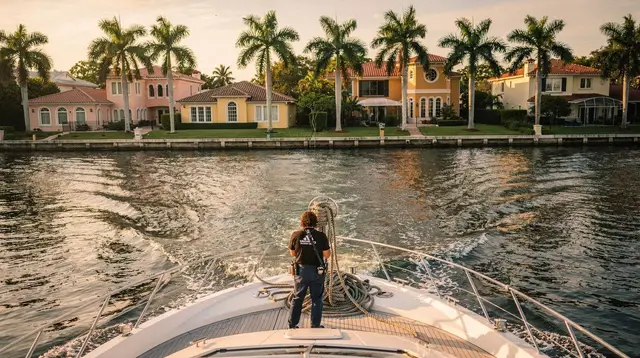
Most people don’t book a dedicated “manatee tour” near Miami — they book a boat trip, a sandbar day, or a paddling outing on Biscayne Bay and treat wildlife as a possibility, not the reason for going. That’s the right frame of mind. A morning on a chartered boat, moving slowly through bay channels, gives you a realistic shot at manatees, dolphins, or rays, without the disappointment of a promise that didn’t pan out.
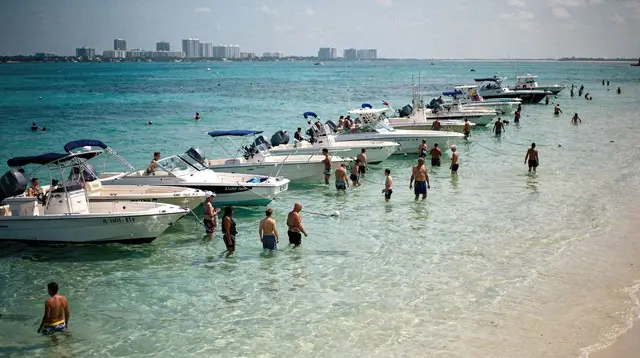
If you want to be on the water yourself rather than on a set group schedule, a private yacht rental out of Miami lets you move at a slower pace through the bay’s calmer channels, which is where a sighting is more plausible than out in open water. For something faster and shorter, a guided speedboat run around Biscayne Bay covers more ground, though speed and wildlife-watching don’t always mix — ask the operator how they handle slow zones. And if a sandbar stop is more your speed, an outing like the private sandbar trip out toward Raccoon Island puts you in shallow bay water for a few hours, which is again the right kind of habitat, without anyone on board claiming a sighting is part of the package.
Before booking any of these specifically for wildlife, read the operator’s current GetYourGuide or Viator listing and recent reviews. I’m naming those platforms here, not linking to them directly, because their listings change week to week and mine doesn’t — an operator’s own recent traveler photos and comments are a far more current source on “did people actually see manatees last week” than anything printed on a travel blog.
Where this is different from the Everglades
It’s worth being precise about which animal and which water we’re talking about. Alligators and near-Miami alligator and crocodile country live in the freshwater Everglades — the sawgrass marsh, canals, and the Tamiami Trail corridor west of the city. Manatees are a different, marine and estuarine story: Biscayne Bay, the Intracoastal, and the channels around Key Biscayne and the Florida Keys. Don’t conflate the two trips. If someone offers you an airboat ride and calls it a manatee tour, be skeptical — airboats work the freshwater marsh, not the bay.
If your interest is broader marine wildlife rather than manatees specifically, dolphin and manatee watching in south Florida covers both animals together, and a Biscayne Bay cruise from Bayside is a more structured, shorter option if a half-day or full-day charter is more time than you want to commit.
Other ways onto the same water
Boats aren’t the only route into manatee habitat. Kayaking and paddleboarding around Miami puts you at water level in shallow bay areas, quietly enough that you might notice a manatee before it notices you — though again, that’s a possibility, not a promise. Snorkeling trips around Key Largo and the John Pennekamp Coral Reef Park area put you in similarly calm, shallow water further south, and a slower sunset cruise or a sandbar day trip covers the same bay habitat at an easier pace.
For general orientation on what else is worth doing in this part of the water, wildlife and nature activities around Miami and the Keys are grouped together, and the broader travel tips section covers practical planning if this is one piece of a longer south Florida trip.
What I’d actually do
If seeing a manatee matters to you, I’d build a morning around a slow boat, kayak, or snorkel outing on Biscayne Bay rather than a tour sold specifically as a manatee sighting. Ask the operator, in plain terms, how often their guests actually see one that time of year, and treat the answer as a probability, not a guarantee. That’s the most honest advice I have, and it’s more useful, I think, than a confident-sounding promise that isn’t backed by anything.
tours.Nature
Verified deep-linked GetYourGuide tours. Book through these links and we earn a small commission at no cost to you.
GetYourGuide does not provide a product photo for this activity — the image shows the meeting point, photographed by us.