Sandbar days in Biscayne Bay and the Keys
What is a sandbar day near Miami?
It is a boat trip built around anchoring or mooring at a shallow sandbar to swim, wade, and socialize between boats, rather than a scenic ride. Sandbars sit both close to Miami inside Biscayne Bay and farther south toward the Florida Keys, and most trips run 3 to 5 hours.
What a sandbar day actually means in Miami
Ask ten people in Miami what a “sandbar day” is and most will describe the same scene: a cluster of boats anchored side by side in shallow, turquoise water, people standing chest-deep with a drink in hand, music carrying between hulls. That is the point of the trip. Unlike a sightseeing boat tour or a sunset run past the Downtown skyline, a sandbar outing is built around stopping, not moving. The boat gets you to a shallow flat, then the engine goes quiet for most of the afternoon.
This is worth separating clearly from other Miami boat experiences, because the trip length, the gear you need, and what you actually do on board are different in each case:
| Trip type | Typical length | Time underway vs. anchored | What you do |
|---|---|---|---|
| Sunset cruise | 1.5–2 hours | Almost entirely underway | Watch the skyline and sky, no swimming |
| Sandbar day | 3–5 hours | Mostly anchored | Swim, wade, socialize between boats |
| Sightseeing/city tour | 1–2 hours | Entirely underway | Pass celebrity homes, Downtown, Port of Miami |
| Speedboat ride | 45 minutes–1.5 hours | Entirely underway | Fast runs through the bay, minimal stopping |
If you want to get in the water, a sandbar trip is the category to book. If you want photos of the city from the water without changing into a swimsuit, it is not.
Where the sandbars actually are
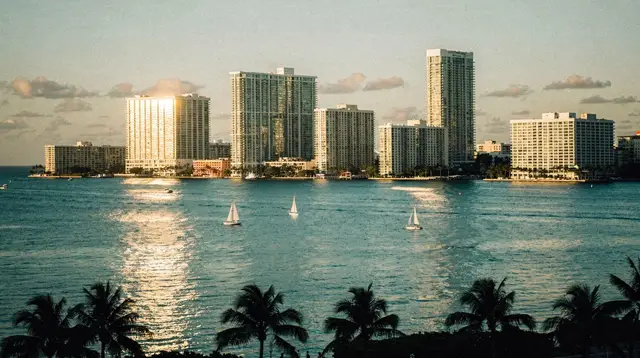
This is the detail most short write-ups skip, and it matters for planning: Miami-area sandbars are not one single spot. They spread across a long stretch of shallow water from inside Biscayne Bay near Miami down toward the upper Florida Keys, and each cluster has a different feel and a different run time from the marina.
Close to the city, several shallow flats sit within 15 to 30 minutes of Downtown or Miami Beach marinas. These are the easiest to reach for a half-day trip and tend to be busiest on weekends, with dozens of boats rafted together by early afternoon. Farther south and east, some of the better-known sandbars sit near or inside the waters of Biscayne National Park, where the water tends to be clearer because there is less boat traffic and less runoff. Continuing south toward Key Biscayne and the upper Keys near Key Largo, sandbar spots get quieter again, though reaching them from a Miami marina eats more of the day in transit.
None of this makes the sandbar itself a park feature. A sandbar is just a shallow, unmarked patch of sand under a few feet of water — nobody owns it, nobody charges an entry fee to stand on it. Where it gets confusing is that a route to a popular sandbar can cross into national park waters, and that is a separate matter from the sandbar day itself. If your trip actually enters Biscayne National Park or stops for snorkeling on a reef, that is closer to what our Biscayne National Park guide or John Pennekamp Coral Reef Park guide cover — this page stays on the sandbar-and-swim experience itself, not on a single protected site.
Which marina to leave from
Where you start matters almost as much as where you end up, because it sets how much of your 3-to-5-hour window is spent in transit rather than anchored. Marinas around Downtown and Brickell put you closest to the bay’s inner sandbars and are the easiest to combine with a hotel stay on the mainland side of the city. Marinas on the Miami Beach side, including those near South Beach, tend to sit a little closer to the barrier-island sandbars and to the run out toward Key Biscayne, which is the usual staging point for trips heading farther south toward the Florida Keys and spots near Key Largo. Neither side is objectively better — it comes down to which shore your hotel is on and how much extra transit time you are willing to spend for a quieter sandbar.
Private charter vs. group tiki boat
Most sandbar trips out of Miami fall into two formats.
Private charters book the whole boat for your group, usually with a captain and sometimes a mate. Pricing is per boat, not per head, so the math works best with a full group of family or friends splitting the cost. A private yacht tour that includes anchoring time at a sandbar or a faster speedboat run out to the sandbar and back both fall in this category. You set the pace, the music, and who’s on board.
Tiki-style boats are a Miami specialty: slow, open-deck party boats, often with a bar setup on board, built specifically around anchoring at a sandbar rather than covering distance. A private tiki boat sandbar cruise is usually priced for a set headcount and a set number of hours, and the captain will pick the sandbar based on that day’s wind, tide, and crowding — worth asking about up front if you have a specific spot in mind.
A third option worth knowing about: some operators run trips to more secluded, less-crowded sandbar spots away from the main weekend crowd, sometimes bundled with a private island stop. A private sandbar tour built around a quieter island stop is the example to look at if the packed weekend scene near Downtown isn’t what you’re after.
If you’d rather see the general lay of the land before booking anything specific, our Miami boat tours and yacht charters guide covers the wider range of charter styles beyond sandbar days.
How long it really takes, and why that matters
Plan on 3 to 5 hours door to door for most sandbar charters, and treat any listing promising much less with some skepticism — getting from a Miami marina out to open, shallow water and back eats real time even before you factor in anchoring, swimming, and getting everyone back aboard. A short run to a nearby bay sandbar might total 3 hours; a trip toward a quieter spot near Key Biscayne or the upper Keys can run closer to 5, mostly because of the extra transit.
Weather changes the picture too. Miami’s wet season, roughly May through October, brings short, sharp afternoon thunderstorms that can cut a sandbar day off early — captains will typically head back at the first sign of lightning, and that is the right call, not a service failure. The drier season, roughly November through April, tends to give steadier, calmer water, which is also why it is the busiest and priciest stretch for boat charters generally.
Either way, this sits inside the Atlantic hurricane season window of June 1 through November 30, with the highest activity from August through October — not a reason to avoid booking, but a reason to keep plans flexible and travel insurance in mind if you’re booking a boat day around a specific date months out. Our Miami hurricane season guide and the hurricane myths for travellers piece both go into what that season actually means for a trip booked months ahead, which is worth reading if a boat day is anchoring your whole itinerary rather than being one afternoon among several.
If you are trying to fit a sandbar afternoon into a short visit, our three days in Miami and weekend in Miami itineraries both show where a half-day on the water slots in around the rest of a first trip, and how many days in Miami covers the broader question of trip length if you have not settled on that yet.
Sun, water, and what to actually bring
Anchored in open bay water with no shade for hours, sun exposure at a sandbar is stronger than most people expect, even on a breezy or overcast day, because the glare bounces straight off the water. Reef-safe sunscreen, reapplied, a hat with a strap, and sunglasses that won’t float away if you go in the water are the basics. Bring more drinking water than seems necessary — a few hours standing in the sun with alcohol in hand is a fast way to end the day dehydrated and sunburned.
A dry bag or waterproof phone case is worth the few dollars if you plan to swim near the boat, and non-slip water shoes help on sandbar bottoms that can shift between soft sand and the occasional patch of shell or grass. Life jackets should be available on board for anyone not confident in open water — ask the crew before you leave the dock if none are visible.
Two conditions worth knowing about before you get in the water: jellyfish and sea lice show up unpredictably in bay and nearshore waters at certain times of year, and mats of sargassum seaweed sometimes drift in and pile up in shallower spots. Neither is specific to sandbar days, but both are more noticeable when you are standing still in the water for hours rather than passing through on a moving boat — our jellyfish and rip currents and sargassum and seaweed pieces cover what to expect and how crews usually handle it.
What it actually costs, beyond the sticker price
Sandbar charter prices vary by boat size, group size, and trip length, so check the current listing on GetYourGuide or Viator for the day’s rate rather than relying on a number here. What’s worth flagging honestly: the price you see is rarely the full bill. Florida’s sales tax adds 7% in Miami-Dade County, and crew gratuity — typically in the same 18 to 20% range expected at restaurants — is standard on top of the charter fee, not optional.
Fuel surcharges or extra hours if you run long are also common add-ons on private charters. Ask what’s included before you book, especially if a listing’s price looks unusually low compared to similar trips. Our Miami sales tax and resort fees explained and how much to tip in Miami pieces walk through both of those add-ons in more detail, and the Miami tipping, taxes, and resort fees guide covers the same ground for the rest of a trip beyond just the boat.
Pairing a sandbar stop with other Miami water activities
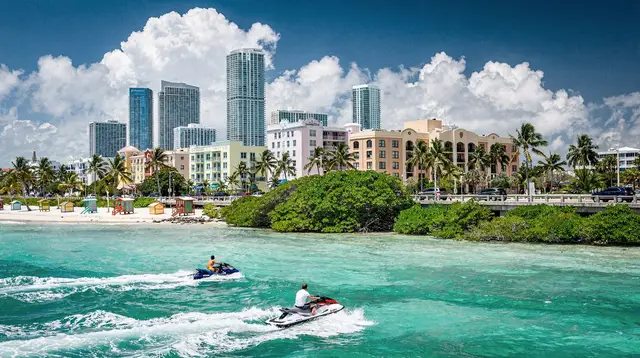
Because a sandbar day is mostly anchored time, several operators build other activities directly around it rather than treating it as a standalone trip. Jet skis are the most common add-on — riders take turns running laps near the anchored boat while others stay in the water, and our Miami jet ski and water sports guide covers what that usually looks like and how it is normally priced separately from the boat charter itself. Some groups instead pair a sandbar stop with time on the water via a broader Miami boat tours and yacht charters booking that includes both a scenic run and anchored swim time in one afternoon.
If your trip is based on the beach side rather than the mainland, the same logic applies to charters leaving from South Beach boat tours and cruises — the format is the same, only the marina and the run out to the sandbar differ. And if the group wants to end the day on a high note rather than heading straight back to the dock, our Miami sunset cruises guide explains how a shorter, moving sunset run compares to the anchored sandbar format covered on this page, in case an afternoon sandbar stop followed by a separate evening cruise fits the trip better than trying to combine both into one long outing.
Booking with the right expectations
A few honest notes worth setting before you go: a sandbar trip is not a snorkeling trip, even though some routes pass near reef areas — if seeing marine life underwater is the goal, look at a dedicated outing like a sightseeing boat tour paired with a separate snorkel trip, or our Key Largo snorkeling and diving guide. It is also not a wildlife tour — dolphins and manatees do turn up in the bay sometimes, but they are not the point of the day and no operator can promise a sighting.
Weekend afternoons at the closest, most popular sandbars get genuinely crowded, with boats rafted three and four deep and speakers competing with each other. If a quieter scene matters more than proximity, ask an operator directly about less-trafficked spots, or consider a weekday trip. And because the whole appeal of a sandbar day is standing in the water for hours, skip it entirely if a thunderstorm is forecast — captains will usually reschedule rather than run a compromised trip, and that is worth accepting gracefully rather than pushing for a refund fight.
For getting from the airport to a Miami marina before any of this, our Miami airport and cruise port transfers guide covers the practical side of arrival day.
Sandbar days in Biscayne Bay and the Keys: frequently asked questions
How is a sandbar trip different from a sunset cruise?
A sunset cruise stays underway, lasts about 1.5 to 2 hours, and does not involve swimming. A sandbar trip anchors for most of the outing so passengers can get in the water, which is why it needs more time and different gear.
Are Biscayne Bay sandbars the same as Biscayne National Park?
No. Some popular sandbars sit inside or near Biscayne National Park waters, but many others are closer to Miami in open bay areas with no park boundary. The sandbar itself carries no entry fee; only certain park-adjacent anchorages might.
Do I need to know how to swim?
Sandbars are shallow, often waist- to chest-deep, but conditions vary with the tide, so basic swimming comfort and a life jacket for weaker swimmers are recommended. Crews generally carry life jackets in child and adult sizes.
What should I bring on a sandbar boat day?
Reef-safe sunscreen, a hat, sunglasses with a strap, drinking water, a dry bag for phones, and cash for tipping the crew. Full sun exposure on open water is stronger than it feels, even with a breeze.
How much does a private sandbar charter cost in Miami?
Private charters are typically priced per boat for a set number of hours rather than per person, so cost depends on boat size and trip length. Check the current listing on GetYourGuide or Viator for the day’s rate, and add sales tax and crew gratuity on top.
Can I combine a sandbar stop with jet skiing or a tiki boat?
Yes. Several Miami operators run tiki-style boats or add jet ski time around a sandbar stop, since the anchored time at the sandbar is exactly when those extras fit in.
Do sandbar trips run near Miami Beach or only in the Keys?
Both. Some of the closest sandbars are a short run from Downtown Miami or Miami Beach marinas, while others favored for clearer water and a quieter scene sit farther south toward Key Biscayne and the upper Keys.
Boat tours and sunset cruises along Miami's coastline
Verified deep-linked GetYourGuide tours. Book through these links and we earn a small commission at no cost to you.
GetYourGuide does not provide a product photo for this activity — the image shows the meeting point, photographed by us.