Jellyfish and rip currents on Miami Beach: what actually matters
I want to write about something that gets far less attention than it should on Miami Beach: what happens when the water itself, not the crowds or the parking, is the thing you need to manage. This page is not about seaweed washing up on the sand — that is a real but cosmetic annoyance I cover separately. This is about two things that can actually hurt you: jellyfish and rip currents.
Two different problems, one beach
It is worth being precise here, because I see visitors lump every beach nuisance together. Sargassum and other seaweed piling up on the shoreline is unpleasant to look at and to walk through, but it is not dangerous. Jellyfish stings and rip currents are a different category entirely: one is a physical injury risk, the other is a drowning risk. I would rather spend this page on the two things that can genuinely put you in danger than pad it out with what is really a cleanliness complaint.
If you want the sand-quality version of this conversation, that is a separate page. Here, the question is simpler and more serious: how do you avoid getting stung, and how do you avoid getting pulled out past where you can swim back.
Jellyfish: what I actually do
I am not going to pretend I can tell you which week of the year you are more or less likely to see jellyfish on South Beach or anywhere else along Miami Beach. I have looked for a reliable seasonal pattern and I do not trust the ones I have seen repeated online — conditions shift with wind, currents, and water temperature in ways that do not reduce to a simple calendar. What I can tell you is what to do about it.
Lifeguards post visible signals when jellyfish or other hazards are present, and staffed beaches usually have a first-aid station. If you see one in the water, keep your distance and give it room — most stings happen when someone brushes against tentacles they did not see. If you do get stung, rinse with seawater, not fresh water, and do not rub the area. Tell a lifeguard. Most stings are painful but manageable; a small number of people react more severely, and that is when you stop treating it as a minor annoyance and call 911.
Rip currents: the one that actually worries me
Jellyfish stings are unpleasant. Rip currents are the one I actually worry about, because they are the leading cause of ocean rescues and drownings at beaches like this one, and because they are often invisible to someone standing on the sand. A rip current forms where water pushed onto the beach finds a narrow channel — often a gap in a sandbar — to rush back out to sea. From the shore it can look like nothing more than slightly calmer or slightly choppier water. From inside it, it can pull a confident swimmer out faster than they expect.
The single most useful thing I can tell you is this: if you feel yourself being pulled out, do not swim straight back toward the beach against the current. You will tire yourself fighting a force stronger than you. Swim parallel to the shoreline instead, out of the channel, and once the pull eases, angle back in. If you cannot make progress, float, wave for attention, and let a lifeguard come to you rather than exhausting yourself.
This is also the reason I do not swim at unguarded stretches of beach here, and I would not recommend it either. Staffed sections of South Beach and the beaches at Key Biscayne have lifeguard towers spaced along the sand specifically because conditions can change within the same day. Swimming in sight of one is not an overcautious habit; it is the plain, boring decision that actually reduces risk.
Read the flags, every time
Miami-Dade and Miami Beach lifeguards use a color-coded flag system at each lifeguard stand to communicate the day’s water conditions, from calm to hazardous. I check the flag at the nearest tower before I go in, and I check it again if I move to a different stretch of beach, because conditions posted at one stand do not automatically apply a quarter mile down the sand. This takes about ten seconds and it is the most consumer-protection-minded thing I can tell you about swimming here: read the sign that is already there for you before you decide the water looks fine.
What this means for boat time on the water
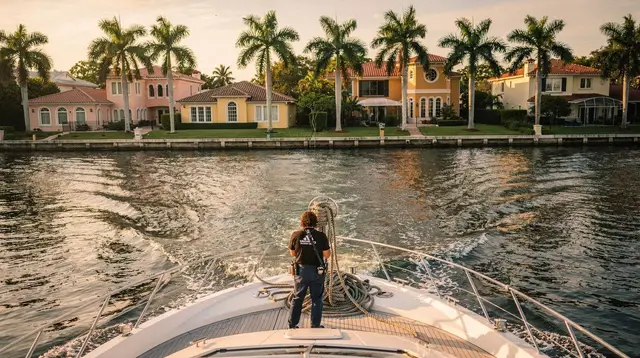
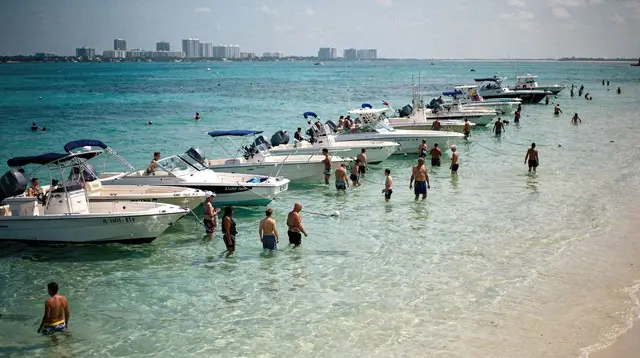
None of this should keep you off the water — it should just change how you think about unguarded swimming versus supervised activity. A lot of visitors get their open-water time on a chartered boat rather than swimming straight out from the sand, which sidesteps the rip-current question entirely since you are not fighting a current back to shore. If that appeals to you, a speedboat ride out on Biscayne Bay or a few hours on a private yacht rental gets you on the water with a crew who knows current conditions, rather than guessing from the beach. For a full day built around anchoring at a sandbar rather than open swimming from shore, a private sandbar tour out to Raccoon Island is worth a look too. Prices and availability change, so check the current listing before you book.
When to actually call 911
I want to end on the point that matters most: this page is meant to make you more comfortable in the water, not more anxious. Most days, most swimmers, most beaches — nothing happens beyond a mildly annoying sting or a current you swim out of within a minute. But if a sting causes severe pain, spreads quickly, or comes with difficulty breathing, or if someone is genuinely struggling in a current and cannot get back, that is not a moment for self-treatment tips. Flag down a lifeguard immediately, or call 911. That is what the number is for, and it is worth knowing before you need it, not while you are looking for it.
For more on choosing a stretch of sand in the first place, see best beaches in Miami and South Florida, and for the broader safety picture beyond the water, is Miami safe for tourists covers the rest. If you are traveling with kids, Miami with kids has more on picking calmer, well-guarded beaches, and accessible Miami guide covers beach access more broadly. The seaweed-specific complaint, which is a different issue entirely, is covered in sargassum and seaweed on Miami beaches. For a wider list of easy-to-miss issues, Miami travel mistakes to avoid is a good companion read, and things to do in South Beach and things to do in Key Biscayne round out where these beaches sit within the wider Miami Beach area.
Frequently asked questions about jellyfish and rip currents on Miami Beach
Are jellyfish common on Miami Beach?
They show up from time to time, unpredictably, rather than on a fixed schedule. I have swum whole trips without seeing one, and other days I have seen lifeguards flag conditions because of them. There is no reliable calendar for it, so I do not trust anyone who gives you one.
What do I do if I get stung by a jellyfish?
Get out of the water, rinse the area with seawater (not fresh water), and remove any visible tentacle fragments without rubbing them. Tell a lifeguard, since most staffed beaches have a first-aid station and know the local protocol. If the pain is severe, spreads, or you have any trouble breathing, call 911.
What is a rip current, exactly?
It is a narrow, fast-moving channel of water flowing away from the shore, usually where a break in a sandbar lets water escape back out to sea. It can pull a strong swimmer out faster than they can swim back in, and it is often invisible from the beach.
What do I do if I get caught in a rip current?
Do not swim straight back toward shore against it. Swim parallel to the shoreline until you feel the pull ease, then angle back in. If you cannot get out, float and signal for help rather than exhausting yourself fighting the current.
What do the beach flags actually mean?
Miami-Dade and Miami Beach lifeguards use a color-coded flag system posted at the lifeguard stand to signal water conditions on that day, from calm to hazardous. I check the flag at the stand nearest to where I am swimming before going in, every time, rather than assuming yesterday’s conditions still apply.
Is it safe to swim without a lifeguard nearby?
I do not do it, and I would not recommend it to anyone else. Lifeguard towers are spaced along Miami Beach and South Beach for a reason, and swimming within sight of one is the single easiest safety decision you can make here.
Should I avoid the water entirely if I am worried?
No. Rip currents and jellyfish stings are real risks, not reasons to skip the beach. Respecting the flags, swimming near a lifeguard, and knowing the parallel-swim technique cover almost every situation you are likely to face.
tours.Practical
Verified deep-linked GetYourGuide tours. Book through these links and we earn a small commission at no cost to you.
GetYourGuide does not provide a product photo for this activity — the image shows the meeting point, photographed by us.