Best beaches in Miami and South Florida: an honest comparison
What is the best beach near Miami?
South Beach is the famous, free, public option with Ocean Drive and Lummus Park behind it, but it is also the most crowded. North Beach and Mid-Beach are quieter stretches of the same barrier island, and Key Biscayne, reached by the Rickenbacker Causeway, offers calmer water at Crandon Park and Bill Baggs Cape Florida State Park.
South Beach, North Beach, Mid-Beach or Key Biscayne
Every list of “best beaches near Miami” tends to point straight at Ocean Drive and stop there. That is not wrong, but it skips the actual decision most visitors face: South Beach is the famous stretch, not the only one, and it is not even the calmest. This guide compares the four realistic options — South Beach, North Beach, Mid-Beach and Key Biscayne — on the things that actually change a beach day: crowds, water, access, parking and what sits behind the sand. It leaves out packing advice and sunscreen tips (see what to pack for Miami) and any discussion of prices or resort fees, which belong elsewhere.
The first thing to get straight: Miami Beach is not a neighbourhood of Miami. It is its own city, sitting on a barrier island across Biscayne Bay, reached from the mainland by causeways — the MacArthur, the Venetian, the Julia Tuttle. South Beach, North Beach, Mid-Beach, Surfside and Bal Harbour are all part of or next to Miami Beach, not “Miami” in the strict sense. Key Biscayne is a separate island again, connected not to Miami Beach but to the mainland city of Miami, via the Rickenbacker Causeway. Getting this geography right matters for planning: a hotel in Downtown Miami is not a short walk from any of these beaches.
South Beach: the famous one, and what that actually means
South Beach is a public, free beach that runs along the Atlantic side of the southern tip of Miami Beach, roughly from 5th Street up past Lincoln Road. Lummus Park, the strip of grass and palm trees between the sand and Ocean Drive, is the main gathering point, and it is genuinely busy most of the year — beach chairs and umbrellas for rent, volleyball nets, a constant flow of joggers, cyclists and people just walking Ocean Drive itself.
Directly behind the beach sits the Art Deco Historic District, several hundred pastel-coloured buildings from the 1920s through 1940s along Ocean Drive and Collins Avenue, listed on the National Register of Historic Places. That proximity is South Beach’s real advantage: nowhere else on this list lets you go from swimming to a walk past genuine Art Deco architecture, a coffee on Lincoln Road and dinner within a ten-minute walk. For a closer look at the buildings themselves, see south beach art deco tours.
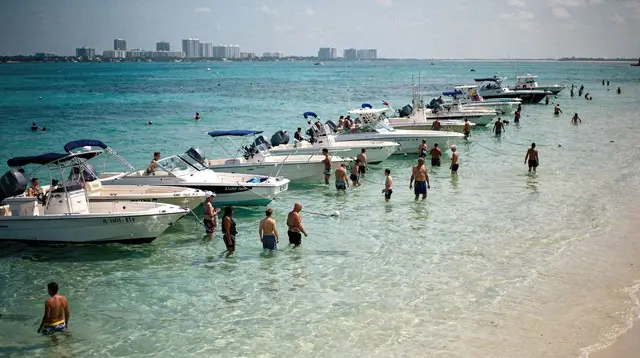
The honest trade-off: South Beach is crowded, the sand fills up fast on weekends and in the winter high season, and the water, while warm, is not the clearest around Miami. Parking near Ocean Drive is scarce and metered; most visitors staying elsewhere arrive by trolley, rideshare, or on foot from a Miami Beach hotel. If people-watching and nightlife within walking distance matter more than a quiet swim, South Beach wins outright. If not, keep reading.
One way to see South Beach without fighting for a sunbed is from a golf cart along Ocean Drive and South Pointe, which covers more ground than walking without the traffic of a car:
a guided golf cart ride along Ocean Drive and South PointeNorth Beach and Mid-Beach: the same island, far fewer people
Keep heading north along Miami Beach past Lincoln Road and the crowds thin out noticeably. Mid-Beach, roughly from the 20s through the 40s street numbers, and North Beach further north, are wider, quieter stretches of the same barrier island, with the same warm Atlantic water and the same public access, but without Ocean Drive’s crowd or its noise after dark.
This is not a secret upgrade — there is a reason South Beach gets the attention, and North Beach and Mid-Beach have less in the way of beachfront bars, souvenir shops or things to do without a car. What they do offer is space: it is realistic to find open sand on a Saturday afternoon in Mid-Beach when South Beach is fully packed. Hotels here tend to be quieter too, which is one reason the area comes up often in miami for couples and romantic trips — though that page, not this one, is the place for atmosphere and romantic picks.
Practically, North Beach and Mid-Beach are reached the same way as South Beach: by trolley along Collins Avenue, by rideshare, or on foot if staying nearby. There is no ticket, no entry fee, and no real difference in water quality from South Beach — the difference is entirely about how many people are also there.
Key Biscayne: calmer water, a real trip
Key Biscayne is a separate island south-east of Downtown Miami, reached only by the Rickenbacker Causeway, a toll road that also serves as a popular cycling route. Depending on traffic, the drive from South Beach takes 20 to 40 minutes; from Downtown it is closer to 15 to 25 minutes. This is not a beach to combine with a South Beach afternoon on the same day without planning for the crossing.
Two spots dominate here. Crandon Park, on the island’s ocean side, has a long, wide beach, picnic areas and a nature centre; it charges for vehicle parking. Bill Baggs Cape Florida State Park, at the island’s southern tip, adds a working 19th-century lighthouse and denser tree cover, and charges a Florida state park entry fee per vehicle — it also closes at sunset, unlike the public beaches in Miami Beach.
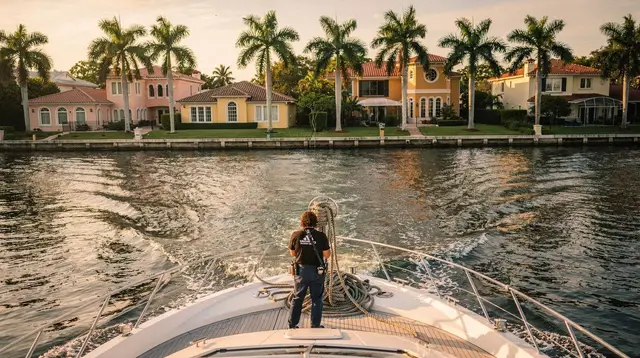
Because Key Biscayne sits closer to the mouth of Biscayne Bay and is more sheltered than the open Atlantic coastline of Miami Beach, the water here tends to run calmer, which suits families with small children or anyone who finds South Beach’s occasional chop and current unappealing — though conditions still vary with wind and tide, and lifeguards should always be checked before swimming. For a boat’s-eye view of both the skyline and the bay that separates these islands, a short cruise makes the geography click in a way no map does:
a private boat tour past the Miami skyline and Biscayne BaySide-by-side comparison
| Beach | Crowds | Water | Access | Parking/fees | Best for |
|---|---|---|---|---|---|
| South Beach | Busy, especially weekends and winter | Warm, moderate clarity, some chop | Walkable from most Miami Beach hotels, trolley, rideshare | Free beach; street parking scarce and metered | Ocean Drive, Art Deco district, nightlife nearby |
| North Beach / Mid-Beach | Light to moderate | Same as South Beach | Trolley along Collins Avenue, rideshare, on foot | Free beach; easier street parking | Space, quiet, fewer crowds without leaving Miami Beach |
| Key Biscayne (Crandon Park) | Light to moderate | Calmer, more sheltered | Car, rideshare or bike via Rickenbacker Causeway | Vehicle parking fee | Families, wide sand, a full afternoon trip |
| Key Biscayne (Bill Baggs) | Light | Calmer, more sheltered | Same causeway, park closes at sunset | Florida state park entry fee per vehicle | Lighthouse, shade, a quieter park setting |
What sits behind each beach
South Beach’s biggest advantage is what is walking distance behind it: the Art Deco Historic District, Lincoln Road’s shops and restaurants, and Lummus Park itself as a shaded gathering space. North Beach and Mid-Beach have far less immediately behind the sand — some hotels, some residential streets — which is exactly why they stay quieter.
Key Biscayne offers a different kind of backdrop. Beyond Crandon Park’s nature centre and Bill Baggs’ lighthouse and grounds, the island itself is mostly residential and low-key, without South Beach’s density of restaurants or nightlife. Anyone renting water sports equipment or wanting to explore the water itself rather than just sit on the sand has options on both islands:
a jet ski package that covers the water off Miami BeachFor more on getting into the water at South Beach specifically, see south beach jet ski water sports, and for Key Biscayne, key biscayne jet ski water sports.
Getting there without a car
None of these beaches require a rental car, though the experience differs. South Beach, North Beach and Mid-Beach are served by Miami Beach trolleys running along Collins Avenue and Washington Avenue, which are free or low-cost and frequent enough for beach-hopping along the island. Rideshare works everywhere on Miami Beach and is often the easiest way to reach North Beach or Mid-Beach without waiting on a trolley.
Key Biscayne is different: the only road on or off the island is the Rickenbacker Causeway, a toll road with no trolley service. A car, a rideshare, or a bicycle (the causeway is a well-used cycling route with a dedicated path) are the only realistic options. This single point of access is also why traffic on the causeway, especially on weekend mornings heading out and afternoons heading back, should factor into timing a Key Biscayne trip.
Best time of day and time of year to visit
Timing changes South Beach far more than it changes North Beach, Mid-Beach or Key Biscayne. Ocean Drive and Lummus Park fill in fast once the late morning sun is up, especially on weekends; arriving before mid-morning is the simplest way to find a stretch of open sand without paying for a beach club or cabana. North Beach and Mid-Beach rarely reach that point at all, so time of day matters far less there, and Key Biscayne’s two parks are large enough that a mid-morning arrival still usually finds space.
Season matters everywhere. Roughly November through April is South Florida’s drier, sunnier season and also its high season, which is when all four beaches — and the causeways and streets leading to them — carry the most visitors and hotels charge the most. Roughly May through October is the warmer, wetter season: the water is just as swimmable, but fast-moving afternoon thunderstorms are common, so mornings tend to be the more reliable window for a beach day in those months. This wetter stretch overlaps with the Atlantic hurricane season, which officially runs from 1 June to 30 November and peaks between August and October — worth checking a forecast before a Key Biscayne trip especially, since both Crandon Park and Bill Baggs Cape Florida State Park can close ahead of a storm. For a broader look at when to come, see best time to visit Miami.
Matching the beach to the trip
For a first Miami trip built around Ocean Drive, nightlife and the Art Deco district, South Beach is the obvious base, and it pairs naturally with the rest of a first visit covered in Miami for first-time visitors. For a trip with young children, Key Biscayne’s Crandon Park and its calmer, more sheltered water are usually the easier choice over the open Atlantic swell at South Beach, alongside the wider family planning in Miami with kids.
Travellers splitting a short stay between beach time and Miami’s other neighbourhoods — Wynwood’s street art, Little Havana, Downtown — tend to fit better with North Beach or Mid-Beach as a base, since both leave more of the day free for the rest of the city; see things to do in Wynwood and the Design District for that side of a trip. Anyone still working out how many days to give Miami overall, beaches included, can start with how many days in Miami, which weighs beach time against the rest of the city and its day trips.
None of this changes the core comparison above — it only adds a layer of when, on top of which, for anyone building an actual itinerary around these four options rather than picking a beach in isolation.
What this guide leaves out on purpose
This comparison sticks to where to swim and why, not the surrounding details covered better elsewhere. For packing lists, sunscreen and sun protection, see what to pack for Miami. For beach clubs, cabanas and pool day passes as an alternative to public sand, see miami beach clubs and pool day passes. For seasonal issues that affect swimming conditions, see sargassum and seaweed on miami beaches and jellyfish and rip currents on miami beaches. Quieter, more private options for couples are covered in miami for couples and romantic trips, and pricing or resort fees around any of these areas belong in miami tipping taxes and resort fees, not here.
Two more useful comparisons for planning a beach-focused trip: miami beach vs fort lauderdale for anyone weighing a stay further north, and south beach vs brickell where to stay for choosing a base. If bringing kids, miami with kids covers which of these beaches tend to work best for families in more detail than fits here. For sunset timing at any of them, best sunset spots in miami is the more useful reference, and for exploring further along the coast, things to do in south beach and things to do in key biscayne round out the activity options beyond swimming.
If moving fast between sand and skyline appeals more than a slow beach day, a short water sports run fits either island easily:
a two-hour Slingshot drive along the Miami waterfrontThe bottom line
There is no single best beach near Miami — there is a best beach for what a given trip needs. South Beach wins for anyone who wants the postcard version, walkable nightlife and the Art Deco district right behind the sand, and is willing to share it with a crowd. North Beach and Mid-Beach deliver the same island, the same water and a fraction of the people, at the cost of fewer restaurants and less within walking distance. Key Biscayne, a genuine trip across the Rickenbacker Causeway rather than a stroll, trades convenience for calmer, more sheltered water, a lighthouse, and a state park’s worth of shade — at the price of parking or entry fees that the free Miami Beach beaches do not charge. None of them is a compromise; they are simply different answers to different questions about a beach day.
Trip planning guides for Miami and the Keys
Verified deep-linked GetYourGuide tours. Book through these links and we earn a small commission at no cost to you.
GetYourGuide does not provide a product photo for this activity — the image shows the meeting point, photographed by us.