South Beach vs Brickell: where to stay in Miami
Should I stay in South Beach or Brickell?
Stay in South Beach if you want to walk to a free public beach, the Art Deco Historic District and nightlife on Ocean Drive and Lincoln Road. Stay in Brickell if you want a quieter evening, easy free transit on the Metromover, and no causeway crossing to reach Downtown and the airport area.
Two very different bases, both inside greater Miami
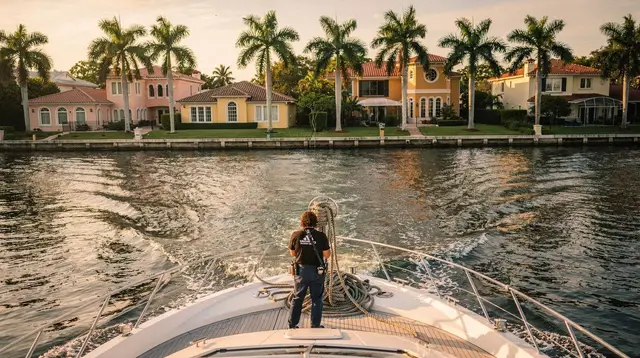
South Beach and Brickell come up constantly when people plan where to stay in Miami, and they get compared as if they were two options within the same city. They are not quite that simple. South Beach is a neighbourhood of Miami Beach, a separate city built on a barrier island across Biscayne Bay. Brickell is a neighbourhood of Miami proper, on the mainland side, just south of Downtown. Getting from one to the other means crossing a causeway — the MacArthur, the Venetian or the Julia Tuttle — not walking down the street. That distinction matters for this comparison, because it is the reason the two neighbourhoods feel and function so differently.
This page compares them as bases for a stay, not as day-trip destinations. If you are choosing between the beach at your doorstep and a quieter, better-connected mainland base, here is what actually differs.
What South Beach gives you
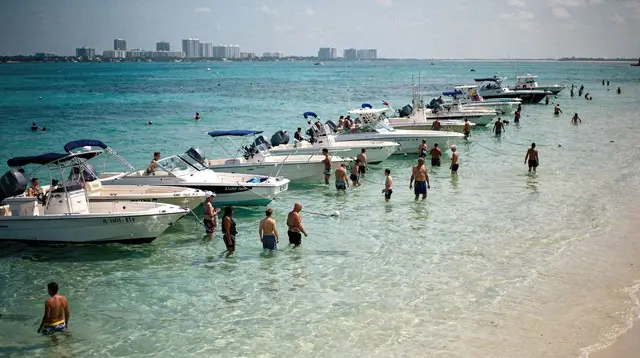
South Beach’s biggest advantage is obvious: the beach itself. It is public and free, and in most South Beach hotels it is a five- to ten-minute walk from your room, sometimes less. Alongside it sits the Art Deco Historic District, several hundred pastel-facade buildings from the 1920s to 1940s listed on the National Register of Historic Places, concentrated around Ocean Drive and the surrounding blocks. Lincoln Road, a pedestrian shopping and dining strip a few blocks inland, adds a second walkable hub that does not require the beach at all.
Nightlife is the other defining feature. Ocean Drive and the blocks around it carry Miami’s most concentrated strip of bars, clubs and late-night restaurants, and South Beach is where most visitors picture themselves when they imagine a Miami trip. That comes with noise: hotel rooms near Ocean Drive, Collins Avenue or Washington Avenue can stay loud well past midnight on weekends, more so from spring through early autumn and during events like Art Basel Miami Beach or spring break.
South Beach is compact and walkable within itself, but it is genuinely a separate city from Miami. Getting to Downtown, Little Havana, Wynwood or the airport means a drive over a causeway or a longer rideshare, generally 20 to 35 minutes depending on the crossing and traffic, longer at rush hour.
What Brickell gives you
Brickell’s case rests on the opposite trade-off. There is no ocean beach in Brickell — the nearest sand is either across a causeway in Miami Beach or south at Key Biscayne — but what Brickell offers instead is quiet evenings and genuinely useful free transit.
Brickell sits directly on both the Metromover, Miami’s free automated people mover, and the Metrorail. From a Brickell hotel you can reach Downtown, Bayfront Park, the Perez Art Museum Miami and the Omni area without paying for a single ride, and the Metrorail extends that reach toward the airport-adjacent stations and beyond. South Beach has none of this: no Metromover, no Metrorail station, and trolleys that cover only Miami Beach itself.
Brickell is a business and residential high-rise district first, a tourist base second. Restaurants and rooftop bars are genuinely good, and towers along the bay offer some of the better skyline views in the city, but there is no beachfront club strip and the street generally quiets down earlier than South Beach. For a traveller who wants Miami’s energy during the day and a calmer room at night, that is the whole appeal.
Parking is worth planning either way. Brickell’s high-rise hotels and condo towers mostly charge for valet or garage parking, and street parking is limited; guests without a car often prefer it, since the Metromover covers so much of the daily movement. South Beach parking is famously tight and metered along Ocean Drive and Collins Avenue, and many hotels charge a nightly self-park or valet fee on top of the room rate — worth checking before deciding whether to bring a rental car to either base at all, see renting a car in Miami for what those fees typically look like.
Side by side
| South Beach | Brickell | |
|---|---|---|
| Location | Miami Beach (barrier island) | Miami (mainland) |
| Beach access | Walking distance, public and free | None on-site; causeway or drive required |
| Signature sights | Art Deco Historic District, Ocean Drive, Lincoln Road | Bayfront Park, Downtown museums, skyline views |
| Nightlife | Dense, late, loud near Ocean Drive | Rooftop bars and restaurants, quieter overall |
| Free transit on-site | Miami Beach trolleys only | Metromover and Metrorail |
| Getting to Downtown | 20-35 minutes by car or rideshare | Already there, or one Metromover stop away |
| Getting to the airport | Rideshare or drive, roughly 20-30 minutes | Metrorail connection or a shorter drive |
| Best fit | Beach-first trip, nightlife, first visit to Miami | Quieter stay, transit-first, mixing business and leisure |
What this decision does not depend on
A few things people assume differ between South Beach and Brickell actually do not, or matter less than expected.
Price. Neither neighbourhood is reliably cheaper. South Beach carries a premium for oceanfront rooms and boutique Art Deco properties, heaviest from November to April when prices peak. Brickell’s premium shows up in high-floor bay-view towers. Budget and mid-range options exist in both. Whatever the nightly rate shown, remember it is quoted before tax: Miami-Dade’s 7% sales tax applies everywhere, and accommodation adds tourist taxes of roughly 6% or more on top, sometimes with a separate resort fee at the property. See Miami’s tipping, taxes and resort fees before you book, and check GetYourGuide or Viator listings for current tour pricing rather than relying on older figures.
Safety. Both neighbourhoods are among the more heavily visited and policed parts of Miami. Ordinary city-travel precautions apply in either.
Distance from the airport. Miami International Airport sits roughly equidistant from both by road, closer to Brickell in door-to-door time via the Metrorail connection, closer to South Beach in raw miles for some routes. Neither is a long haul; both are well within a 30-minute range under normal traffic.
Hurricane season. Atlantic hurricane season runs June 1 through November 30, with the most active stretch typically August through October. It affects South Beach and Brickell equally — a storm approaching the coast is a citywide concern, not a neighbourhood-specific one, and neither base is meaningfully more sheltered than the other. Booking during these months is a matter of checking your airline’s and hotel’s cancellation policy, not choosing a neighbourhood for storm protection.
Making the call
If your Miami trip is built around the beach, Art Deco architecture, Ocean Drive and staying out late, South Beach is the straightforward choice — you will use the location constantly and rarely need to leave the island. If you would rather have a quiet room at night, free transit to Downtown and the museums, and a base that does not depend on crossing a causeway for everything, Brickell fits better. Neither is objectively the better neighbourhood; they serve different trips.
A few practical add-ons help either way. A day pass at a beach club settles the “which beach, which loungers” question without booking a hotel purely for its pool — a pool and spa day pass at Baia Beach Club works well from a Brickell base when you still want beach time. A short golf cart tour is an easy way to see Ocean Drive and the Art Deco blocks without walking the whole strip in the heat — a South Beach golf cart tour down to South Point covers that ground in under two hours.
From either neighbourhood, a paddleboard or kayak session on the bay is a low-effort way to get on the water — paddleboard or kayak rental on Hobie Beach near the Rickenbacker Causeway sits roughly midway between the two. For a first-night orientation to the skyline that both neighbourhoods share views of, a short flight works better after dark than during the day — a night helicopter tour over the city and beach lights lays out how close together South Beach and Brickell actually sit, once you see them from above.
Day trips and excursions from each base
Where you stay also shapes how easy it is to leave the city for a day. Brickell sits closer to the routes heading west and south on the mainland: driving out toward the Everglades or on to Homestead and Biscayne National Park means heading away from the coast, and a Brickell hotel avoids the extra causeway crossing that a South Beach start adds to the trip. The same applies heading down the Overseas Highway toward Key West and the rest of the Florida Keys: Brickell and Downtown sit slightly closer to the on-ramp for US-1 south, though the difference is usually a matter of minutes once you are actually moving, not a deciding factor on its own.
South Beach has one clear advantage for excursions that leave by water rather than by road. Marinas and tour docks around Miami Beach service many of the Biscayne Bay cruises, jet ski rentals and boats running toward Key Biscayne or south along the coast, so a South Beach stay can mean walking to the water rather than driving to it first. Bahamas day trips depart from ports on both sides of the bay, so neither base has a strong edge there — check the specific operator’s terminal before booking, since Bimini and Freeport trips require a passport regardless of where you sleep the night before.
None of this should override the core decision. A Brickell base with an Everglades day already planned, or a South Beach base with a boat tour booked, both work without much friction. It only starts to matter when the whole trip is built around one specific excursion and shaving twenty minutes off a drive actually changes the shape of the day.
Splitting your stay
You do not have to choose exactly one. A common pattern for a longer visit is two or three nights in South Beach for the beach and nightlife, followed by two or three nights in Brickell for museums, Bayfront Park and easier transit before flying out. This works especially well on a four-day or longer itinerary, and it avoids paying a premium rate the whole trip for a beachfront room you only use in the mornings. The trade-off is the packing and moving day itself, plus one causeway crossing by taxi or rideshare, generally 15 to 25 minutes depending on which bridge and the traffic that day.
Couples travelling together sometimes split the difference by choosing one base and treating the other as a day visit — see Miami for couples for how that itinerary plays out. Families tend to lean toward Brickell for the calmer evenings, covered in Miami with kids, unless a beachfront room with direct sand access is the priority, in which case South Beach’s walkability wins out even with young children in tow.
Frequently asked questions about South Beach vs Brickell
Is Brickell part of Miami Beach?
No. Brickell is a neighbourhood of Miami itself, on the mainland side of Biscayne Bay. South Beach is in Miami Beach, a separate city on a barrier island reached by causeway. The two are often confused but sit on opposite sides of the bay.
Which is closer to the beach, South Beach or Brickell?
South Beach sits directly on the sand, so the beach is a short walk from most hotels. Brickell has no ocean beach of its own; getting to South Beach or Key Biscayne from Brickell means a drive or a rideshare over a causeway, typically 15 to 25 minutes depending on traffic.
Is Brickell quieter than South Beach at night?
Generally yes. Brickell is a business and residential district with rooftop bars and restaurants but no beachfront club strip, so street noise drops off later in the evening. South Beach, especially near Ocean Drive, stays loud well past midnight on weekends.
Can I get around without a car from Brickell?
Yes. Brickell sits on the Metromover, which is free, and on the Metrorail, giving direct access to Downtown, the Health District and the airport-adjacent Metrorail stops without paying for a ride each time. South Beach relies on trolleys, rideshares and walking; it is not on the Metrorail or Metromover network.
Are hotel prices very different between South Beach and Brickell?
Both neighbourhoods span budget to luxury, and neither is reliably cheaper than the other. South Beach carries a premium for oceanfront and Art Deco boutique properties in the December to April high season; Brickell’s premium is for high-floor bay or skyline views. Always check the final price after Miami-Dade’s 7% sales tax, tourist taxes of around 6% or more, and any resort fee.
Which neighbourhood is better for a first-time visitor to Miami?
South Beach suits a first trip built around the beach, Art Deco architecture and nightlife. Brickell suits visitors who want a calmer base with easy transit to Downtown museums, Bayfront Park and the cruise port, or who are mixing a few business days with leisure time.
Do I need to cross a causeway to compare South Beach and Brickell in person?
Only if you want to see both on the same trip. A taxi or rideshare between them crosses one of the causeways connecting Miami to Miami Beach, such as the MacArthur or Venetian, and takes roughly 15 to 25 minutes without heavy traffic.
Which base is better for day trips to the Everglades or the Florida Keys?
Brickell has a slight edge for road trips west and south, since Everglades and Overseas Highway routes start from the mainland and a Brickell hotel skips the extra causeway crossing that a South Beach start adds. The difference is usually only a few minutes once you are on the road, so it rarely outweighs the beach-versus-transit trade-off that should drive the decision.
Trip planning guides for Miami and the Keys
Verified deep-linked GetYourGuide tours. Book through these links and we earn a small commission at no cost to you.
GetYourGuide does not provide a product photo for this activity — the image shows the meeting point, photographed by us.