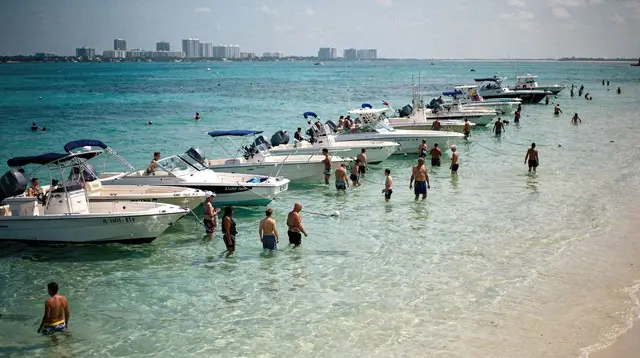
Driving the Overseas Highway to Key West
How long does it take to drive from Miami to Key West?
About 160 miles (255 km) one way on US-1 and the Overseas Highway, which takes 3.5 to 4 hours without stops, longer with traffic. The stretch from Key Largo to Key West alone is 113 miles and crosses 42 bridges.
What the drive to Key West actually involves
Every year, travellers in Miami look at a map, see Key West sitting at the bottom of Florida, and assume it is a quick trip down the coast. It is not. The drive covers about 160 miles (255 km) one way, almost entirely on a single highway, and the honest driving time is 3.5 to 4 hours each direction without stops. Add traffic, a bathroom break, or a slow-moving RV ahead, and it is easy to spend 5 hours behind the wheel just to get there.
This page deals with one thing only: the reality of that specific drive along the Overseas Highway, from where it starts to where it stops. Rental car logistics, tolls around Miami, and general parking advice for the city are covered separately in the guide to renting a car in Miami. Here, the focus is distance, time, bridges, and what happens once the road runs out.
The route in three parts
The trip from Miami to Key West breaks naturally into three sections, and understanding them changes how the drive feels.
Miami to Key Largo (about 55–60 miles). This first stretch runs south through Homestead on US-1, mostly multi-lane and fast. It is the least interesting part of the drive scenically, but it is also the part where delays are most likely, since it shares the road with regular commuter and agricultural traffic.
Key Largo to Marathon (about 50 miles). This is where the Overseas Highway starts to feel like what people picture: single carriageway in many sections, water visible on both sides, and a string of small island communities including Key Largo and Islamorada. Traffic here moves slower by design, and passing opportunities are limited.
Marathon to Key West (about 45 miles). The final stretch includes the Seven Mile Bridge just west of Marathon, the longest single span on the route, followed by a shorter chain of islands leading into Key West itself.
Across the full 113 miles from Key Largo to Key West, drivers cross 42 bridges. Some are short causeways between adjacent islands; a handful, like the Seven Mile Bridge, are long open-water crossings with no shoulder to speak of. None of this is dangerous driving in good weather, but it does mean the road rewards steady, attentive driving rather than the kind of cruise-control stretch a highway further inland might allow.
Why “3.5 to 4 hours” is the honest number, not the optimistic one
Online map tools often show a Miami-to-Key-West drive time closer to 3 hours flat. That number assumes free-flowing traffic the entire way, no stops, and driving exactly at the posted limit through sections where doing so is neither realistic nor advisable given pedestrians, cyclists, and turning traffic in the Keys’ small towns.
In practice:
| Condition | Realistic one-way time |
|---|---|
| Off-season weekday, early morning departure | 3.5 hours |
| Typical weekend, some Keys town traffic | 4 to 4.5 hours |
| Holiday weekend or hurricane-season storm delay | 5 hours or more |
Doubling any of these figures for the round trip shows why treating Key West as a quick out-and-back rarely works well. A same-day round trip built around 7 to 8 hours of driving alone leaves a narrow window for the town itself, especially once time for lunch, parking, and simply walking around is factored in.
The case for staying one night
A same-day trip to Key West is possible and some travellers make it work, particularly if the goal is simply to see Duval Street, walk to the Southernmost Point marker, and head back. For that kind of quick look, a full day trip can be reasonable; see the dedicated comparison of a day trip versus staying near Key Largo for how the numbers play out.
For anyone who wants to actually experience Key West rather than tick it off, one night changes the trip completely. It removes the clock-watching that comes with a fixed return time, allows watching the sunset at Mallory Square without immediately getting back in the car, and means driving the return leg the next morning rather than after a long day, tired, in the dark. The history of the town rewards slower exploring, and a lot of what makes Key West distinct, the evening pace on Duval Street, an early walk past the Southernmost Point before the crowds arrive, simply does not fit into a same-day schedule.
Anyone planning the trip as part of a longer stay in South Florida can build it into a proper route rather than a rushed detour; the Miami-to-Key-West road trip itinerary lays out a version that spreads the drive across stops in the Upper and Middle Keys instead of doing it in one push.
Self-driving versus letting someone else drive
There are two honest ways to make this trip: drive it yourself, or let a transportation service handle the driving.
Driving yourself means full control over timing and stops. It also means someone in the car spends 7 to 8 hours driving that day, most of it on a highway with limited shoulder and no real alternative route once south of Homestead. For a rental car, this is a straightforward if long drive; general advice on renting in Miami and dealing with Florida’s cashless tolls is covered separately and does not need repeating here.
round-trip transportation service between Miami and Key West removes the driving from the equation entirely, at the cost of a fixed schedule set by the operator rather than personal timing.
For a version with more flexibility along the way, a private chauffeur-driven day trip to Key West allows stops in Islamorada or Marathon to be built into the day rather than skipped to save time, since the driver, not the traveller, is doing the 8 hours of driving.
A full breakdown of when each option makes sense, including cost ranges and what a bus tour actually includes, is in the guide comparing driving yourself versus taking a bus tour to Key West.
Where the road actually stops
This matters enough to state plainly: the Overseas Highway ends at Key West. There is no road, bridge, or causeway beyond it. Anyone whose itinerary includes Dry Tortugas National Park needs to understand that it is not reachable by this drive, or by any drive. Dry Tortugas sits about 70 miles further west, entirely in open water, and the only ways in are the official park ferry, a seaplane, or a private or chartered boat departing from Key West. The full logistics, cost, and booking lead time for that trip are covered in the Dry Tortugas National Park guide; it is worth reading before assuming it can be added onto a Key West day.
What to see and skip along the way
If the drive is being done as a self-driven trip rather than a scheduled transfer, a few stops along US-1 are worth the extra time and a few are not.
Worth a stop: the reef at Key Largo, where the John Pennekamp Coral Reef State Park offers snorkeling and glass-bottom boat trips close to the highway; the sportfishing docks around Islamorada; and the view from the Seven Mile Bridge approach near Marathon, which is free and takes only a few minutes off the route. Details on the reef park itself are in the John Pennekamp guide.
Less essential given the time cost: extended detours off US-1 into residential parts of the smaller Keys, which add time without adding much for a first visit. The goal on this particular drive is momentum, not exhaustive sightseeing; that kind of slower exploring fits better into a multi-day Florida Keys trip than into a single push to Key West.
Practical points for the drive itself
Fuel and food. Towns roughly every 20 to 30 minutes of driving mean there is no need to treat the 160 miles as one unbroken stretch. Key Largo, Islamorada, and Marathon all have gas stations and places to eat.
Traffic patterns. Sunday afternoons heading back toward Miami and Friday afternoons heading toward the Keys are the two heaviest windows. Leaving early in the morning in either direction avoids most of it.
Weather. Hurricane season runs from June through November with a peak from August through October. A storm well offshore can still bring heavy rain and gusty conditions to the exposed bridge sections; checking a forecast before setting out matters more here than on most Florida drives. More on planning around the season is in the hurricane season guide.
The Southernmost Point. Once in Key West, the marker at the Southernmost Point draws a steady line for photos; arriving early or late in the day avoids the longest waits.
Alternatives if the drive itself is the obstacle
Not every visit to South Florida needs to include Key West. For travellers based in Miami who want a full day out without the long highway drive, a guided city tour around Miami covers the city’s own neighbourhoods in a fraction of the time, leaving the Keys for a future trip when there is time to do them properly, ideally with a night in Key West rather than a rushed round trip.
FAQ: driving the Overseas Highway to Key West
How far is Key West from Miami by car?
About 160 miles (255 km) from downtown Miami, of which the last 113 miles from Key Largo to Key West run along the Overseas Highway over 42 bridges. Plan on 3.5 to 4 hours of driving time each way in normal conditions.
Can you visit Key West as a day trip from Miami?
Yes, but it means roughly 7 to 8 hours of driving for maybe 4 to 5 hours in Key West itself. It works if seeing the town briefly is the goal; it is a poor fit for anyone who wants to actually relax there.
Is the drive to Key West scenic or just long?
Both. The bridges over open water, especially the Seven Mile Bridge near Marathon, are genuinely worth the drive. The trade-off is that traffic on the two-lane sections of US-1 can turn a 3.5-hour drive into 5 hours on a busy weekend.
How many bridges are there between Key Largo and Key West?
42 bridges over 113 miles, connecting the chain of islands that make up the Florida Keys. The best known is the Seven Mile Bridge, which crosses open water just west of Marathon.
Can you drive to the Dry Tortugas from Key West?
No. The Overseas Highway ends at Key West. Dry Tortugas National Park sits about 70 miles further west, in open ocean, and is reachable only by the official park ferry, a seaplane, or a private or chartered boat.
Is it better to drive yourself or take a bus tour to Key West?
A self-driven car gives control over stops in Key Largo, Islamorada, or Marathon but means someone has to drive the full 7 to 8 hours round trip. A bus or van tour removes the driving but locks in the schedule. See the detailed comparison for the trade-offs.
Should I stay overnight in Key West instead of returning the same day?
For most travellers, yes. One night removes the pressure of a fixed return time, allows a sunset at Mallory Square and an early start the next morning, and avoids driving tired after a full day. A same-day round trip works mainly for a quick look at the town.
Are there real rest stops along the Overseas Highway?
Yes, with towns roughly every 20 to 30 minutes’ drive: Key Largo, Islamorada, and Marathon all have restaurants, gas stations, and places to stretch. There is no need to drive the 160 miles in one uninterrupted stretch.
Getting around Miami: transport guides and tips
Verified deep-linked GetYourGuide tours. Book through these links and we earn a small commission at no cost to you.
GetYourGuide does not provide a product photo for this activity — the image shows the meeting point, photographed by us.