Miami is a mainland city, not the beach across the bay
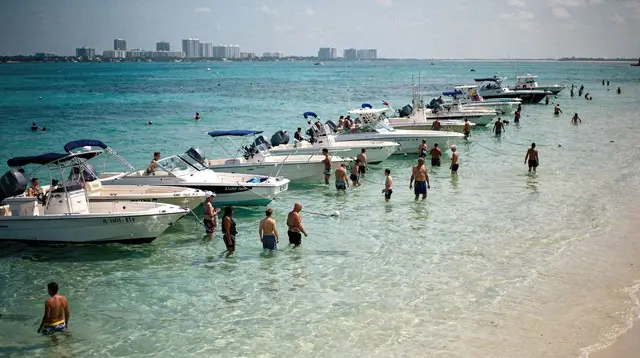
The single mix-up that trips up more visitors than anything else on this site: Miami Beach is not a neighbourhood of Miami. It’s a separate city, built on a barrier island on the far side of Biscayne Bay, reached from the mainland by causeways — the MacArthur, the Venetian, the Julia Tuttle. South Beach, Ocean Drive and the Art Deco Historic District all belong to Miami Beach. Miami itself, the city this page covers, sits on the mainland side of the bay, and it’s a genuinely different kind of place: business towers and museums in Downtown and Brickell, Cuban exile culture in Little Havana, street art in Wynwood and the Design District, and quieter, tree-lined streets in Coconut Grove and Coral Gables.
Each of those areas gets its own page on this site with the detail it deserves. This page is the entry point: how the mainland city fits together, how to arrive and get around, and an honest answer to the question people ask before anything else — how much time does this actually take.
The neighbourhoods, in outline
Miami’s mainland side isn’t one walkable core. It’s a scatter of distinct districts, each with its own character, connected by a mix of free transit, paid rail and driving. Trying to see all of it in a single day means seeing none of it properly.
- Downtown and Brickell — the business and skyline district: Bayfront Park, Bayside Marketplace, the Perez Art Museum Miami (PAMM), the Frost Museum of Science, and the cruise terminals at PortMiami. Brickell, just south, is Miami’s financial core, dense with towers and increasingly with restaurants and rooftop bars.
- Little Havana — centred on Calle Ocho (SW 8th Street), with Domino Park, Cuban coffee windows and the culture of the Cuban exile community. It’s a short rideshare or drive west of Downtown, not a walk from it.
- Wynwood and the Design District — Miami’s street art and design quarter: the Wynwood Walls murals (partly ticketed), independent galleries, and designer boutiques a few blocks north.
- Coconut Grove and Coral Gables — leafier and slower, with the Vizcaya Museum and Gardens, the Venetian Pool, and the Biltmore Hotel; Fairchild Tropical Botanic Garden sits a little further south.
Full detail on each of these lives on its own page: Downtown and Brickell, Little Havana, Wynwood and the Design District, and Coconut Grove and Coral Gables. This page won’t repeat their detail, only how they connect.
How much time Miami actually needs
Because the neighbourhoods are spread across the mainland rather than clustered, Miami rewards a multi-day stay more than a one-off stopover. A single day realistically covers one district well, or two if you’re efficient and don’t mind moving fast. Three to four days lets you take in Downtown and Brickell, Little Havana, Wynwood and the Design District, and Coconut Grove and Coral Gables without constantly rushing between rideshares.
If you’re arriving as part of a wider Florida trip — pairing Miami with the Everglades, the Florida Keys, or a few days in Miami Beach — budget the extra days separately rather than trying to compress everything into one city stay. See how many days in Miami for a fuller breakdown by pace and interest, and Miami for first-time visitors if this is your first trip to South Florida.
Arriving: Miami International versus Fort Lauderdale-Hollywood
Most visitors fly into Miami International (MIA), west of Downtown and directly connected by the Metrorail Orange Line — a 20 to 30 minute ride into the city centre with no traffic to worry about. Fort Lauderdale-Hollywood (FLL), about 30 miles (48 km) north, is often cheaper on fares but adds 45 minutes to over an hour of driving or transit depending on traffic, plus the cost of a rideshare or rental car for that stretch. If FLL saves you a meaningful amount on the flight, it can still be worth it — just build the extra travel time into your first day rather than assuming a quick hop.
| Airport | Distance to Downtown Miami | Typical transfer time |
|---|---|---|
| Miami International (MIA) | ~8 miles (13 km) | 20-30 minutes (Metrorail or rideshare) |
| Fort Lauderdale-Hollywood (FLL) | ~30 miles (48 km) | 45-75 minutes (rideshare or car, traffic-dependent) |
For a step-by-step on getting from either airport into the city, see from Miami airport to Miami Beach and from Fort Lauderdale airport to Miami.
Getting around once you’re here: the case against renting a car
Unlike the Everglades or the Florida Keys, where a car is close to essential, Miami’s mainland neighbourhoods don’t require one. The Metromover — a free, elevated people-mover — loops through Downtown, Brickell and Omni and is the easiest way to move between those three areas without paying for parking or a rideshare. The Metrorail extends further, including the direct line to MIA. Beyond those, rideshares fill the gaps between neighbourhoods that aren’t on the rail network, such as the hop to Little Havana or out to Coconut Grove.
A rental car adds cost (parking in Downtown and Brickell isn’t cheap) without adding much convenience for a mainland-only stay. It becomes worth it only once your plans extend to the Everglades, the Florida Keys, or a day trip north to Fort Lauderdale and Palm Beach — all covered on their own pages, not this one.
a half-day guided tour that covers Downtown Miami and an Everglades stop together, with commentary in French, is one way to see the city core and a taste of the Everglades without driving yourself.
For the full transit breakdown — routes, free trolleys, and where rideshares actually make sense — see getting around Miami: Metromover, Metrorail and trolleys.
Money, tax and tipping in Miami
Prices quoted around the city are shown before tax. Miami-Dade County adds a 7% sales tax (6% state plus 1% county surtax), and hotel stays carry additional tourist taxes on top of that — so a hotel’s nightly rate is not what you’ll actually pay at checkout. Tipping is expected, not optional: 18 to 20% at restaurants, and similar for bartenders, rideshare drivers and tour guides. Full detail, including how resort fees stack on top, is on Miami tipping, taxes and resort fees.
Where to base yourself
Whether to stay on the mainland (Downtown, Brickell, Coral Gables) or cross a causeway into Miami Beach depends on what you’re prioritising — skyline and museums versus beach and nightlife. Brickell puts you near Downtown’s sights and the Metromover; Coral Gables and Coconut Grove trade convenience for quieter streets. For a side-by-side comparison, see South Beach versus Brickell: where to stay and the broader where to stay in Miami.
On the water, without leaving the city behind
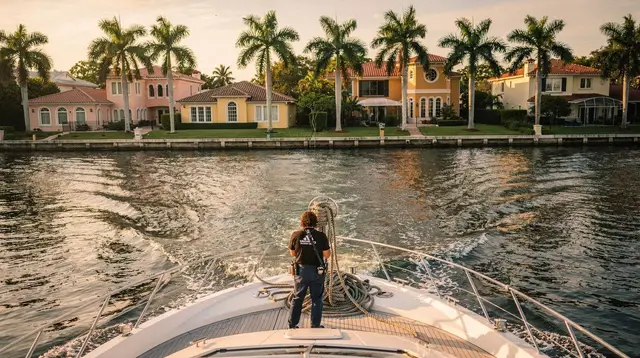
Biscayne Bay borders the mainland city directly, and several tours use that proximity rather than requiring a drive out to the Keys or the Everglades. A short private yacht charter on Biscayne Bay or a faster speedboat run along the bay and past the barrier islands both leave from marinas near Downtown or Miami Beach and fit into a single afternoon, no overnight trip required. Full options for time on the water are gathered on Miami boat tours and yacht charters and Biscayne Bay cruises from Bayside.
Food, culture and a note on Little Havana
Little Havana rewards more time than a quick photo stop at Domino Park. Cuban coffee windows along Calle Ocho, family-run restaurants, and cigar shops where rollers still work by hand are worth a slow afternoon rather than a drive-through. A guided visit to a working cigar factory in Little Havana is a straightforward way to see the craft up close and ask questions through a guide rather than guessing at a storefront. For food specifically, see Cuban food in Miami and Little Havana food tours.
Museums and indoor options for a rainy afternoon
Miami’s wet season runs roughly May through October, with short, intense afternoon storms rather than all-day rain — useful to know so a museum stop doesn’t feel like a wasted day. PAMM and the Frost Museum of Science in Downtown, and the Vizcaya Museum and Gardens in Coconut Grove, all work well as a shelter from an afternoon storm. See Miami museums and attractions and rainy day things to do in Miami for more options.
Honest cautions before you plan the rest of the trip
A few things worth saying plainly, since overselling them wastes a traveller’s time and money:
- Wynwood Walls and similar attractions are partly ticketed. Budget for entry rather than assuming the whole district is free to wander (much of the surrounding street art is, the curated core generally isn’t).
- Little Havana is not walkable from Downtown. It’s a short rideshare or drive, not an extension of the Downtown waterfront.
- A single day is not enough to “do Miami.” If your itinerary shows one day for the whole city, expect to see one district well rather than the whole mainland.
- Hurricane season runs June 1 through November 30 (NOAA), peaking August to October. It doesn’t mean cancel a trip in that window, but travel insurance and flexible bookings are sensible, and no single date can be called safe or risky in advance.
Practical basics before you go: entry, money and electricity
Most travellers from Visa Waiver Program countries need an ESTA before flying in — an online travel authorization, not a visa — applied for only through the official esta.cbp.dhs.gov site; anyone else needs a B-2 visa. Miami runs on the US dollar, and, as covered above, prices are shown before Miami-Dade’s 7% sales tax is added at the register. Electrical outlets are 120V, 60Hz, type A and B — the same flat two- and three-pin plugs used across North America, so most visitors from outside the US and Canada will need an adapter.
Driving is on the right, the local emergency number is 911, tap water is safe to drink straight from the tap, and the legal drinking age is 21, checked at bars, clubs and liquor stores alike. Miami sits in the Eastern time zone, UTC-5 in winter and UTC-4 during daylight saving from March to November — worth checking against your home time zone before booking an early tour or an airport transfer. See ESTA and entry rules for Miami for the full breakdown of who needs what.
Miami for different kinds of trip
Miami suits more than one kind of visitor, and the right neighbourhood mix changes depending on who’s travelling. Families tend to do best basing themselves near Coconut Grove or Brickell, with easy access to parks and the Frost Museum of Science, and pacing the day around nap times and shorter attention spans rather than a packed adult itinerary — see Miami with kids for a fuller plan. Couples after a quieter, more romantic pace often get more out of Coral Gables or a cross-bay stay in Miami Beach than out of the busier Downtown core; Miami for couples and romantic trips covers that pairing in detail.
Travellers watching their budget can still see the mainland’s highlights without overspending — the Metromover is free, a good share of Wynwood’s street art costs nothing to view, and several museums run discount days — detailed on Miami on a budget and free things to do in Miami. For evenings, Brickell and Wynwood carry most of the mainland’s bar and club scene, distinct from Miami Beach’s separate nightlife; see the Miami nightlife guide and, for something calmer, Miami food and drink tours.
Pairing Miami with the rest of South Florida
Few visitors stop at the mainland alone. A short hop across a causeway adds Miami Beach’s sand and Art Deco streets; a day trip west adds the Everglades; a day trip south adds the northern Florida Keys; and travellers with more time sometimes add a fast ferry to the Bahamas, which counts as an international trip and requires a passport. Rather than build a schedule from scratch, a ready-made itinerary can save the guesswork on pacing: see three days in Miami, four days in Miami, five days in Miami and the Everglades, and Miami and a Bahamas day trip for the international add-on.
Quick answers on visiting Miami
Is Miami Beach the same as Miami?
No. Miami Beach is its own city on a barrier island, connected to Miami by causeways across Biscayne Bay. South Beach, the Art Deco Historic District and Ocean Drive are all in Miami Beach, not in Miami.
How many days do you need in Miami?
Plan on 3-4 days if you want to see Downtown and Brickell, Little Havana, Wynwood and the Design District, and Coconut Grove and Coral Gables without rushing. A single day only allows a narrow slice of one or two areas.
Do you need a car in Miami?
Not for the mainland neighbourhoods themselves. The free Metromover covers Downtown, Brickell and Omni, and Metrorail and rideshares connect the wider city. A car becomes useful once you head to the Everglades or the Florida Keys.
Which airport should I fly into for Miami?
Miami International (MIA) sits closest to Downtown and connects directly to Metrorail. Fort Lauderdale-Hollywood (FLL), about 30 miles north, is sometimes cheaper but adds travel time.
What’s the best way to get from the airport into the city?
Metrorail’s Orange Line runs from Miami International (MIA) into Downtown in roughly 20-30 minutes and avoids traffic and parking costs; a rideshare covers the same distance in similar time depending on congestion.
Is Little Havana within walking distance of Downtown Miami?
Not comfortably. Little Havana sits west of Downtown along Calle Ocho (SW 8th Street); most visitors reach it by rideshare or a short drive rather than on foot.