Two neighbourhoods, one green corner of the mainland
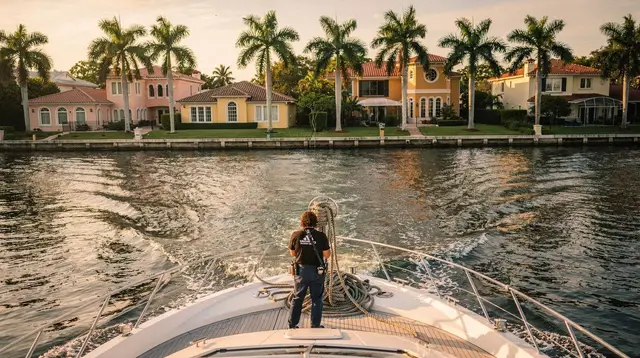
Coconut Grove and Coral Gables sit next to each other on the mainland side of Biscayne Bay, south and west of Downtown and Brickell. They share the same identity within Miami City: older, leafier, and built around gardens and low-rise architecture rather than towers or nightlife. That is what separates this corner from the rest of the city. There is no business-district skyline here like in Downtown-Brickell, no open-air street art like in Wynwood, and no Cuban exile culture and Calle Ocho storefronts like in Little Havana. Coconut Grove and Coral Gables are about tree canopy, waterfront parkland, and early-20th-century design.
That does not make them one site. Coconut Grove is Miami’s oldest continuously inhabited neighbourhood, built around a working bayfront and a bohemian, informal feel. Coral Gables is a planned city in its own right, dating to the 1920s, with Mediterranean Revival architecture, wide boulevards, and its own city government separate from Miami’s. Visitors often assume the two blend into a single stroll. They do not: Coconut Grove’s core and Coral Gables’ Miracle Mile are roughly a 10 to 15 minute drive apart, and the standout sites in each — Vizcaya, the Venetian Pool, the Biltmore — are not walkable from one another. Treat this as two connected half-days, not one long walk.
Why a car or rideshare matters more here than elsewhere in the city
Downtown and Brickell can mostly be covered on foot and by the free Metromover. Coconut Grove and Coral Gables cannot. Vizcaya sits on its own waterfront parcel, the Venetian Pool and the Biltmore are a mile or two apart inside Coral Gables, and Fairchild Tropical Botanic Garden is a further drive south, closer to South Miami than to either neighbourhood’s centre. Sidewalks exist, but distances between the major sites run from about 1 to 4 miles (1.6 to 6.4 km), enough to make walking impractical in Florida heat.
A rental car is the simplest option if you are already covering the Everglades or the Florida Keys on the same trip; see renting a car in Miami for tolls and parking notes before you commit. If a car for the whole trip does not make sense, a rideshare budget for this one day is the more realistic plan — figure on three to five short rides between sites, each in the $10–20 range depending on traffic.
Vizcaya Museum and Gardens
Vizcaya is the anchor of the day and the single most photographed site in this part of Miami. It is a 1916 Italian Renaissance-style villa built on Biscayne Bay for industrialist James Deering, with formal gardens, a stone barge breakwater, and rooms furnished with European antiques. The grounds alone justify a couple of hours; add the house interior and budget closer to three.
a guided tour of the villa and gardens covers the history in more depth than the printed self-guide, which matters given how dense the interiors are with period detail. If Vizcaya’s frequent appearances in film and television interest you more than the decorative arts, a tour built around its screen history, with entry included is the better fit. Either way, buy timed entry in advance in high season (November–April); walk-up lines form by mid-morning.
Vizcaya closes on Tuesdays, and the gardens are more exposed to sun than the house — go early or late in the day between November and April, when the light and the temperature both work in your favour. See the full Vizcaya Museum and Gardens guide for ticket tiers and photography rules.
Coral Gables: the Venetian Pool and the Biltmore
Coral Gables was master-planned in the 1920s by developer George Merrick as a “City Beautiful,” and it still shows: coral rock entrance gates, Mediterranean Revival houses, and banyan-shaded boulevards that feel deliberately different from the rest of Miami-Dade County.
The Venetian Pool is the neighbourhood’s most unusual attraction: a public swimming pool carved out of a former coral rock quarry in 1923, with grottoes, waterfalls, and Venetian-style architecture around the water. It is a working pool, not a museum, so bring a swimsuit if you plan to get in — hours and admission vary by season and it closes for select maintenance days, so check the current schedule before you go.
The Biltmore Hotel, a few minutes away, opened in 1926 and has hosted presidents and celebrities across its history; its tower is modelled loosely on Seville’s Giralda. Non-guests can walk the lobby and grounds respectfully, or book a day at the pool and cabana area. a rooftop pool day pass at a Coral Gables hotel is a practical way to build in a break from walking, especially with kids who have had enough of gardens and antiques for one afternoon.
Miracle Mile, Coral Gables’ main shopping street, is worth a slow walk between these two stops for its architecture and shaded arcades, even if you are not buying anything.
Fairchild Tropical Botanic Garden
Fairchild sits a short drive south of central Coral Gables, closer to Pinecrest and South Miami than to Vizcaya. It is one of the largest tropical botanic gardens in the continental United States, with a rainforest collection, a butterfly conservatory, and a tram tour that covers the grounds without requiring a long walk in the heat. Plan on two to three hours if you go, and treat it as optional rather than essential if your day is already full with Vizcaya and Coral Gables — this is the piece most visitors cut first when time runs short, and cutting it is a reasonable call on a first visit.
Coconut Grove itself: bayfront parks, sailing, and a slower pace
It is easy for a day plan built around Vizcaya and the Biltmore to skip past Coconut Grove’s own centre entirely, which is a mistake if you have any time left. The neighbourhood’s core sits around a working marina on Biscayne Bay, and it still carries the informal, bohemian feel that set it apart from more polished parts of the city long before Coral Gables or Brickell existed. Peacock Park and Kennedy Park run along the waterfront and are genuinely free things to do — a walk, a picnic, or just a bench with a bay view costs nothing, and both are shaded enough to be usable outside the coolest months. See free things to do in Miami for more no-cost stops nearby.
The marina itself is worth a slow look even if you are not sailing: Coconut Grove has long been a sailing hub, with clubs and charter operators working out of the bayfront, and it is one of the few spots in this part of Miami where you can watch boats come and go without paying for a cruise ticket. CocoWalk and the surrounding streets carry the neighbourhood’s dining and shopping, with a more relaxed, outdoor feel than Miracle Mile a short drive away in Coral Gables. If your day still has energy left after Vizcaya and Coral Gables, an hour here — coffee, a walk to the water, dinner before heading back — is a better use of it than rushing to fit in Fairchild.
Coconut Grove also works well for families with older kids or teens who have had enough of formal gardens and house tours for one day: the parks are open, the marina is interesting to look at, and there is no admission fee involved in just being there. For a full list of what else the two neighbourhoods offer beyond the headline sites, see things to do in Coconut Grove and Coral Gables.
Fitting this day into a longer Miami trip
For most first-time visitors, this Coconut Grove and Coral Gables day is one piece of a longer stay rather than the whole trip. If you are building out a full itinerary, see how many days in Miami for a general framework, or go straight to a built itinerary such as four days in Miami or three days in Miami, both of which slot a Vizcaya-and-Coral Gables day in alongside Downtown-Brickell, Wynwood, and the beach. Travelling with children on a longer trip is a slightly different plan — the pace here suits families visiting Miami better than a beach-only itinerary, mainly because there is more shade and less need to time everything around sun exposure.
Where you are staying also shapes how easy this day is to add on. Guests based in Downtown or Brickell have the shortest run out to Coral Gables and Coconut Grove; guests based in South Beach or Miami Beach are adding a causeway crossing on top of the drive, which is worth accounting for when you decide how early to start.
What a realistic day looks like
| Time | Stop | Notes |
|---|---|---|
| Morning | Vizcaya Museum and Gardens | Book timed entry ahead; 2–3 hours |
| Midday | Coral Gables (Venetian Pool or Biltmore) | Swimsuit if visiting the pool; lunch on Miracle Mile |
| Afternoon | Coconut Grove waterfront | Coffee or a walk near the bay; skip if time is short |
| Optional | Fairchild Tropical Botanic Garden | Add only with a car and energy left; 2–3 hours |
This is a driving day, not a walking day, and that is the honest trade-off against Downtown-Brickell or South Beach, where a single ticket or a free trolley covers most of the sightseeing.
Costs, in USD
Expect $60–150 per person depending on how many paid sites you add. Vizcaya’s ticket, a swim at the Venetian Pool, lunch on Miracle Mile, and rideshares between stops make up most of the total. Prices shown on tickets and menus are before the 7% Miami-Dade sales tax, and a tip of 18–20% is expected at sit-down restaurants — build both into your mental total rather than treating the listed price as the final one. For the exact rate on any given day, check the operator’s page directly; see a sunset cruise from Miami Beach that includes food and drink and passes Vizcaya’s waterfront if you would rather see the villa’s grounds from the water than from inside the gates.
Getting here and around
From Miami International (MIA), Coral Gables is roughly 15–20 minutes by car outside peak traffic; Coconut Grove is a similar distance a little further south. Neither neighbourhood is served directly by Metrorail stations at their historic cores, so plan on driving, rideshare, or a taxi rather than relying on transit for this particular day. If you are staying in Downtown or Brickell, a rideshare down and back is usually simpler than trying to combine transit with a long walk in the heat.
Coconut Grove and Coral Gables FAQ
Is Coconut Grove part of Coral Gables, or the other way around?
Neither. Both are distinct neighbourhoods within the City of Miami and Miami-Dade County, though Coral Gables is technically its own incorporated city with a separate government. They sit next to each other and are often visited together, but they are not one place.
Can I walk between Vizcaya, the Venetian Pool, and the Biltmore?
No. These sites are roughly 1 to 4 miles (1.6 to 6.4 km) apart along roads without continuous shaded sidewalks in Florida heat. A car or rideshare between stops is the realistic way to cover all three in one day.
Is Fairchild Tropical Botanic Garden in Coconut Grove or Coral Gables?
Neither, exactly — it sits a short drive south of both, closer to South Miami and Pinecrest. Treat it as an add-on for a day that already includes a car, not a core stop for a shorter visit.
Do I need to book Vizcaya in advance?
In the November–April high season, yes. Timed entry tickets sell out by mid-morning on busy days. Outside that window, walk-up entry is more realistic, but booking ahead still avoids any wait.
Is the Venetian Pool worth visiting if I don’t want to swim?
Less so. It is a working public pool, not primarily a museum, so the appeal is in getting into the water among its grottoes and coral rock architecture. If swimming is not part of your plan, the Biltmore and Vizcaya’s gardens offer more to see without getting wet.
How does this area compare to Downtown Brickell for a day trip?
Downtown-Brickell is walkable and served by the free Metromover; Coconut Grove and Coral Gables are spread out and need a car or rideshare budget. Choose Downtown-Brickell for an easy half-day on foot, and this area for a fuller day focused on gardens, architecture, and a quieter pace.
Is one day really enough for both neighbourhoods plus Fairchild?
It is tight. Vizcaya alone takes half a morning, Coral Gables’ sights take another few hours, and Fairchild needs two to three more. Most first-time visitors do Vizcaya and Coral Gables in one day and treat Fairchild as optional or a separate half-day if time allows.
Is Coconut Grove worth visiting on its own, without Coral Gables?
Yes, if your time is limited and you want a slower, cheaper half-day. The bayfront parks and marina cost nothing to visit, and you can skip the drive out to Coral Gables entirely. It works well as a low-key add-on to a Downtown-Brickell day rather than a full day trip by itself.
What is the best time of year to do this day?
November through April, for the same reason it is the best season for outdoor sightseeing anywhere in Miami: lower humidity and less afternoon rain. This trip involves more walking between outdoor sites than a Downtown-Brickell day, so summer heat and the Atlantic hurricane season (1 June to 30 November, peaking August to October) both weigh a little more heavily on the decision here. See Miami in summer and the Miami hurricane season guide if you are booking during those months regardless.