Miami in summer: what the rainy season actually feels like
What is Miami like in summer?
Hot and humid with sunny mornings and short, heavy thunderstorms most afternoons, roughly from May to October. Crowds thin out outside July's peak weeks and hotel rates drop, while the ocean stays warm for swimming and water sports all season.
The rhythm of a summer day in Miami
Miami’s wet season runs roughly from May to October, and the daily pattern is more predictable than the word “rainy” suggests. Mornings tend to be sunny and already warm by the time most visitors are up. Humidity builds through the late morning, clouds thicken over the Everglades and drift east, and by mid to late afternoon a short, heavy thunderstorm rolls through Miami and Miami Beach. The storm itself rarely lasts more than 30 to 45 minutes, and skies usually clear again before dinner. Travellers who plan around this window, rather than around the calendar date, get the most out of a summer trip.
This page is about that day-to-day climate and how to work with it, not about storm risk over the season as a whole. The Atlantic hurricane season is a separate, longer-range subject covered on its own page — see Miami hurricane season: what travellers should actually know for the official window and the precautions worth taking before booking. Nothing below should be read as a forecast for any specific week; check a real weather source closer to your travel dates.
Why some travellers choose summer on purpose
Summer is Miami’s off-season by local standards, and that has real upside beyond lower prices. Cruise ship crowds and winter snowbirds thin out outside the busiest July weeks, so popular spots like South Beach, Ocean Drive and Lincoln Road feel noticeably less packed on weekdays. Restaurant tables and boat slots are easier to get on short notice, and some operators run their own seasonal promotions on top of generally softer demand — always confirm the live price on the booking page rather than assuming a fixed discount.
The ocean is also at its warmest, which matters more in Miami than in most beach destinations, since boat trips, snorkelling and jet ski outings are a large part of what visitors come for. A Miami: Jetcar Tour or a morning on the water feels different when the sea temperature needs no adjustment at all.
a jet ski run along the Miami Beach shoreline, best booked for a clear morning slot before the afternoon storm buildsHow to structure a summer day
The single most useful piece of advice for a Miami summer trip is to put anything outdoors and photo-dependent — beach time, boat tours, walking neighbourhoods like Wynwood or Little Havana — into the morning, roughly 8am to 1pm, when the sky is clearest and the heat is more manageable than the airless late afternoon. From roughly 2pm to 5pm, plan around the storm rather than against it: museums, indoor markets, a long lunch in Downtown or Coral Gables, or a boat tour where the cabin gives shelter if a squall passes through. Evenings are usually clear again and stay warm well after dark, so dinner outdoors, South Beach nightlife and sunset views over the bay are rarely affected.
A boat trip is one of the few activities that works across the whole day, since a covered vessel rides out a short storm more comfortably than a walking tour does.
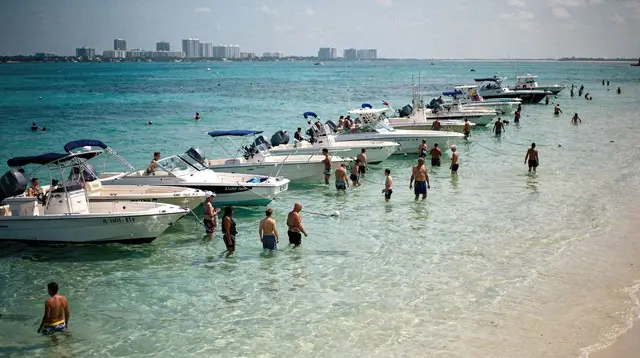
a speedboat outing on Biscayne Bay, timed for a morning departure so an afternoon squall is unlikely to cut it short| Time of day | Typical conditions | What tends to work |
|---|---|---|
| Morning (8am-1pm) | Sunny, building humidity | Beaches, walking tours, boat trips, outdoor sightseeing |
| Early-mid afternoon (1pm-5pm) | Highest chance of a thunderstorm | Museums, markets, indoor dining, covered boat cabins |
| Evening (after 6pm) | Usually clear, still warm | Waterfront dinners, sunset views, nightlife |
For a private group that wants flexibility to reroute around a storm without losing the day, chartering rather than joining a fixed departure gives more room to adjust.
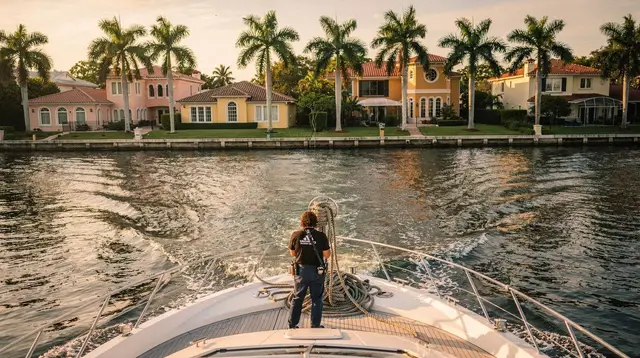
a private yacht charter on the bay, useful if a group wants to shift the afternoon plan around a passing storm rather than cancelNeighbourhood by neighbourhood
Downtown and Brickell suit the afternoon storm window well: museums like Pérez Art Museum Miami and the Frost Museum of Science, plus Bayside Marketplace, all sit undercover. Little Havana is best walked in the morning along Calle Ocho before the heat and any storm arrive, with cafés to retreat into if timing slips. Wynwood and the Design District work either way, since the street art and galleries mix outdoor walking with indoor stops. Coconut Grove and Coral Gables are shadier than most of the city thanks to tree cover, which helps on the hottest mornings.
Across the causeways, South Beach and the Art Deco Historic District are at their best early, before the beach crowd and the midday sun peak together; Key Biscayne offers a quieter, breezier beach alternative on the same schedule. A city overview that covers several of these areas in one outing is a practical way to get oriented on a first summer morning.
a half-day city tour covering Miami’s main districts, best scheduled for the morning before the afternoon storm window opensWhat to actually pack
Light, breathable, quick-dry clothing handles the humidity better than anything heavier. A compact umbrella or a packable rain shell earns its space for the predictable afternoon window — a poncho works fine and takes up almost no room. Strong sun protection matters more than the storms do, since the sun is intense even through morning haze. A dry bag protects phones and wallets on any boat trip or water sport outing, and a change of clothes in a day bag is a small comfort if a storm catches you outdoors. See What to pack for Miami for a fuller packing list.
What summer costs compared with the rest of the year
Miami’s high season runs roughly from November to April, when drier, sunnier weather draws the biggest crowds and the highest prices. Summer sits at the other end of that cycle: demand eases outside the busiest July stretch, and hotel rates typically follow. That said, sales tax (7% in Miami-Dade County) and hotel resort taxes apply year-round and are rarely included in the advertised rate — see Miami tipping, taxes and resort fees explained for how those add up. Tour and activity prices also move with demand and fuel costs, so treat any figure here as a rough guide and check the live price on the booking page before deciding.
Travellers working with a tighter budget can lean into the season’s advantages directly: see Miami on a budget: what actually saves you money and Free things to do in Miami for ways to fill the quieter, cheaper months without paying peak-season rates.
When the storm actually arrives
If a downpour catches you outdoors, it is rarely worth waiting it out in the open. The nearest café, museum lobby or covered market stall is usually enough, since most storms clear within the hour. Families travelling with children may prefer to build a whole afternoon around cover rather than gambling on timing — see Rainy day things to do in Miami and Miami with kids: what actually works for families for options that hold up regardless of the sky. A Miami: Yacht Rental or any covered boat trip is one of the few outdoor bookings that tends to survive a short squall without disruption, since the cabin gives shelter until the sky clears.
For food, the same logic applies: indoor and covered spots let a storm pass without cutting a meal short. See Cheap eats in Miami: Little Havana cafes and budget meals for casual, mostly indoor options that work in any weather.
Day trips that behave differently in summer
The pattern described above for Miami itself — clouds building over the Everglades and drifting east before the coastal storm arrives — means an Everglades day trip often meets the wet season earlier in the day than a beach morning does. Starting early is the simplest adjustment: an airboat or tram departure booked for the first slot of the day is more likely to finish before the buildup gets heavy, and it avoids the hottest, most humid stretch of the afternoon inland, where there is far less sea breeze than on the coast. See Everglades day trip from Miami: Shark Valley, tram or bike, and the truth about airboats for how to plan the outing itself.
The Florida Keys sit far enough south and east that their afternoon storm pattern does not always match Miami’s exactly, but the same morning-first logic applies to a long drive down the Overseas Highway: an early start leaves more of the day usable before the humidity and any storm activity peak, and it means less time on a two-lane highway if visibility drops. Driving the Overseas Highway to Key West covers the drive itself, while Key West day trip from Miami: is it worth the drive? lays out whether a single long day is the right shape for that trip at all, as opposed to staying over.
A note on the water itself
Warm water is one of summer’s clearest advantages in Miami, but it is worth checking a couple of season-specific details before a swim rather than assuming every beach day looks the same. Jellyfish and rip currents are a normal part of swimming in the Atlantic and are covered, with the precautions worth taking, in Jellyfish and rip currents on Miami Beach: what actually matters.
Sargassum seaweed also shows up on some Miami-area beaches in certain stretches of the year, and can affect how a beach looks and smells even when the water itself is perfectly swimmable a little further along the sand; Sargassum and seaweed on Miami beaches explains what to expect and how to check conditions before choosing a specific stretch of beach. Neither issue should be a reason to skip a summer swim outright; both are simply worth a quick check on the day itself rather than an assumption made months in advance while booking a trip.
Summer versus the rest of the year
Summer’s opposite number on the calendar is winter, Miami’s driest, busiest and most expensive stretch — covered separately in Miami in winter: the dry season, high season and best time for the Everglades. Anyone deciding between the two extremes, or weighing a shoulder-season month against either, will find a broader comparison in Best time to visit Miami: weather, hurricane season and prices, which lays out the trade-offs between weather, crowds and price across the full year.
It is also worth being precise about what this page does and does not cover. The daily pattern described here — sunny mornings, a short afternoon storm, clear evenings — is normal summer weather, not a warning sign. The Atlantic hurricane season officially runs from 1 June to 30 November, with its statistical peak from August to October, and it is a separate, longer-range consideration from the afternoon thunderstorms that define an ordinary summer day. A single stormy afternoon is not evidence of anything unusual; travel insurance, flexible bookings and monitoring official forecasts closer to a trip are the right tools for the hurricane-season question, and they are covered in full on Miami hurricane season: what travellers should actually know rather than here.
Making the most of a quieter Miami
The clearest case for a summer visit is the combination of a warmer sea, thinner crowds outside July’s peak weeks and generally softer prices, set against a daily weather pattern that is predictable enough to plan around rather than avoid. Front-load outdoor plans into the morning, keep an indoor or covered option ready for the afternoon, and treat the evening as reliably clear. Travellers who structure their days this way tend to find that Miami’s wet season is less an obstacle than a different, quieter version of the same city.
Frequently asked questions about visiting Miami in summer
Is Miami too hot to visit in summer?
It is hot and humid, but most travellers cope by front-loading outdoor plans into the morning and using the afternoon storm window for museums, markets or a boat cabin. Sea breezes on Miami Beach and Key Biscayne make the heat more bearable than inland.
Does it rain all day in Miami in summer?
Rarely. The typical pattern is a sunny morning, a buildup of clouds by early afternoon, then a heavy but short thunderstorm lasting well under an hour, followed by clearing skies. Planning around this rhythm matters more than dodging rain altogether.
Are hotel and tour prices lower in summer?
Generally yes outside the busiest July weeks, since demand drops after the winter and spring high season. Prices are never fixed, so check the current rate on the booking page rather than assuming a discount for a specific date.
Is the water warm enough to swim in summer?
Yes, the Atlantic and Biscayne Bay stay warm through summer, which is one of the season’s main appeals for boat trips, snorkelling and jet ski outings out of South Beach or Key Biscayne.
Should I worry about hurricanes if I book a summer trip?
Summer falls inside the Atlantic hurricane season, which runs officially from 1 June to 30 November with a peak from August to October. This page covers day-to-day weather only; see miami-hurricane-season-guide for the official dates and practical precautions like travel insurance.
Is summer in Miami the same as low season everywhere in South Florida?
Not exactly. Miami and Miami Beach see a genuine lull, but destination weddings, family reunions and some regional events still push up demand on specific weekends, so it pays to check dates rather than assume every summer day is quiet.
What should I pack differently for Miami in summer?
Light, quick-dry clothing, a compact rain layer or umbrella for the afternoon storm window, strong sun protection for the mornings, and a dry bag if boat trips or water sports are on the itinerary.
Seasonal guides for visiting Miami year-round
Verified deep-linked GetYourGuide tours. Book through these links and we earn a small commission at no cost to you.
GetYourGuide does not provide a product photo for this activity — the image shows the meeting point, photographed by us.