Miami Beach is a separate city, not a Miami neighbourhood
This is worth saying plainly, because it is the most common mix-up on this site: Miami Beach is its own city, with its own mayor and its own police department, built on a barrier island across Biscayne Bay from mainland Miami. South Beach is not “a part of Miami” any more than Fort Lauderdale is. It sits at the southern tip of that island, and it is reached from the mainland by causeways — the MacArthur, the Venetian and the Julia Tuttle among them — each carrying traffic over open water for a mile or more.
The confusion is understandable. Miami and Miami Beach share a metro area, a airport code region, and plenty of visitors say “Miami” to mean either one. But when you are booking a hotel, checking a bus route, or wondering why your rideshare quote suddenly jumped, the distinction matters. If your hotel is in Downtown Brickell and your dinner reservation is on Ocean Drive, you are crossing a bay, not walking across town.
South Beach itself is a further subdivision, roughly the section of Miami Beach from around 5th Street north to 23rd Street. North of that, the city continues through Mid-Beach and North Beach, which are quieter, more residential, and covered separately rather than folded into this page.
Getting there: the causeway crossing is short but real
From most points in Miami, South Beach is a 15 to 30 minute drive, covering roughly 5 to 8 miles (8 to 13 km), depending on which causeway you take and the time of day. Rideshare is the easiest option for most visitors; a car is genuinely useful for day trips to the Everglades or the Florida Keys, but it is a liability in South Beach itself, where street parking is scarce and garages charge by the hour.
If you are arriving from Miami International (MIA), budget closer to 30-40 minutes depending on traffic and check-in queues at your hotel. Free trolleys connect parts of Miami Beach internally, and city buses link Downtown Miami to the beach if you would rather skip driving altogether; see our notes on getting around by Metromover, Metrorail and trolleys for the wider transit picture.
Ocean Drive, Lummus Park and the beach
Ocean Drive is the postcard image of South Beach: a strip of low-rise hotels in pastel colours, facing the sand across a narrow stretch of grass and palm trees called Lummus Park. Cafes and restaurants spill onto the sidewalk, and in the evening the strip fills with a mix of diners, cruising cars and street performers.
The beach itself is public and free, one of the honest bargains of a trip here — Florida’s beaches are open to everyone below the mean high-tide line, and South Beach is no exception. You pay only if you rent a chair, an umbrella, a paddleboard, or choose to sit at a beach club or hotel pool instead of the open sand. The sand is wide and the water is warm nearly year-round, though summer afternoons bring short, sharp thunderstorms that clear quickly.
Do not expect a quiet stretch of coastline. This is a working beach with lifeguard stands, volleyball nets, joggers and a steady flow of tour groups. If you want calm, Key Biscayne to the south or North Beach are better bets; South Beach trades quiet for convenience and atmosphere.
The Art Deco Historic District
Walk one block inland from Ocean Drive and the real reason South Beach looks the way it does becomes clear: the Art Deco Historic District, a protected zone of several hundred buildings dating mostly from the 1920s through the 1940s. Rounded corners, porthole windows, stepped rooflines and neon trim define the style, and the district is listed on the National Register of Historic Places, which is why the facades have survived largely intact rather than being redeveloped.
The look is distinctive but easy to walk past without noticing the details. A guided walk through the district — several run daily and cover the history of the preservation fight that saved these buildings from demolition in the 1970s and 80s — turns a pleasant strip of hotels into a readable piece of urban history. See our dedicated South Beach Art Deco tours guide and the wider Miami Art Deco district guide for what a walk actually covers.
Ocean Drive is the most photographed row, but Collins Avenue and Espanola Way carry the same architecture with fewer crowds, worth a short detour if Ocean Drive feels too busy for a proper look.
Lincoln Road and the nightlife scene
A few blocks north, Lincoln Road is a pedestrian-only shopping and dining strip, open-air and lined with palm trees, cafes and mid-range to upscale retail. It reads as calmer and more local than Ocean Drive, useful for a slower dinner away from the tourist strip, or for daytime shopping between beach sessions.
South Beach’s nightlife is concentrated on and around Ocean Drive and in a scattering of clubs further inland, and it runs late — many venues do not fill up until well after midnight. Expect cover charges at clubs, promoters working the sidewalks (politely declining works fine), and a scene that leans upscale and see-and-be-seen rather than casual. If a quieter evening out matters more than a big night, Lincoln Road’s restaurant terraces are the better choice over the Ocean Drive strip.
Boat trips and water activities from Miami Beach
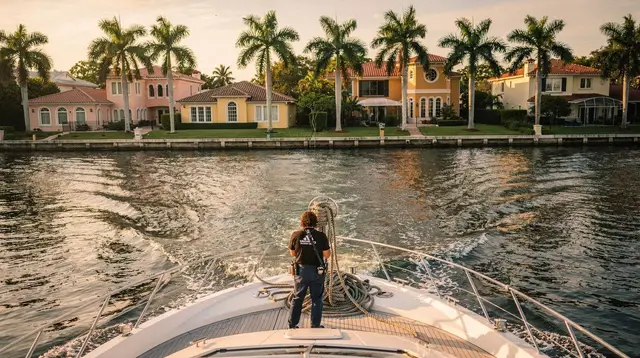
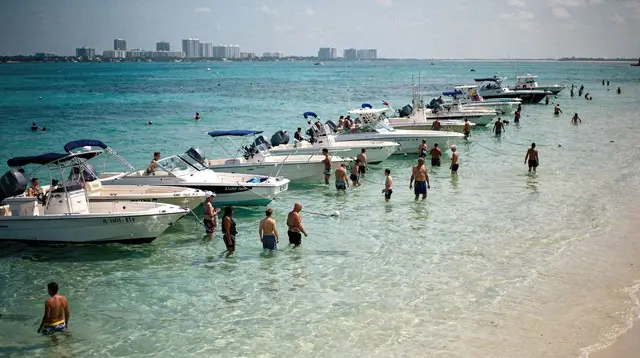
South Beach’s marinas put a different side of the city within easy reach: the skyline from the water, sandbars in Biscayne Bay, and the kind of afternoon that does not depend on finding a spot on the sand. A short private charter is a straightforward way to see the causeways and the bay from a different angle without committing to a full day trip.
a private yacht trip along the Miami Beach coastline with champagne on board is a common way to mark an anniversary or a short celebration, running a few hours rather than a full day. For a group that wants to set its own schedule, a captained boat rental out of Miami Beach for up to six people avoids the fixed itinerary of a group tour. If speed rather than scenery is the point, a jet ski outing paired with a boat ride covers more water in less time. Check the current schedule and price on the operator’s page before booking, since both vary by season and by boat size.
For snorkelling or a slower pace on the water, see the broader South Beach boat tours and cruises guide and South Beach jet ski and water sports, which cover more operators than fit on this page.
How much time South Beach actually needs
Treat South Beach as a full day, not a quick stop on a longer Miami itinerary. A realistic day looks like a morning on the sand, lunch on or near Ocean Drive, an afternoon walk through the Art Deco district or a browse along Lincoln Road, and — if energy holds — an evening back on the strip once the crowds shift from beachgoers to bar-hoppers. Trying to squeeze South Beach into an afternoon between other Miami stops usually means seeing the beach and nothing else.
If nightlife is part of the plan, budget it as its own evening rather than an extension of the beach day: dinner, then bars or a club, running well past midnight. Visitors staying in Downtown or Brickell sometimes plan a return causeway crossing at 2 or 3am, which is a longer and pricier rideshare than the daytime trip.
| Time on the ground | What it realistically covers |
|---|---|
| Half day (4-5 hours) | Beach time plus a short walk along Ocean Drive; no time for the Art Deco district properly |
| 1 full day | Beach, Ocean Drive, a walk or guided tour through the Art Deco district, and Lincoln Road |
| 1 day + 1 evening | The above, plus a proper night out on Ocean Drive or in the club scene |
| 2 days | The above at a slower pace, with room for a boat trip or a beach club day pass |
Beyond South Beach: Mid-Beach, North Beach and Key Biscayne
South Beach is the loudest and most visited stretch of the island, but it is not the whole story of Miami Beach. Mid-Beach and North Beach, further up the same barrier island, are quieter and more residential, with wider stretches of open beach and fewer crowds — worth knowing about if South Beach turns out busier than expected.
South of Downtown Miami, reached by its own causeway (the Rickenbacker) rather than through Miami Beach, Key Biscayne is a different kind of island altogether: calmer, greener, built around parks and a lighthouse rather than nightlife. It is covered in full on its own page rather than here, but it is worth knowing it exists as the low-key counterpart to South Beach’s energy, and it is not accessible on foot from Miami Beach — it requires its own crossing from the mainland.
Practical notes: taxes, tipping and getting around on foot
Prices in South Beach’s restaurants and shops are shown before tax. Miami-Dade County sales tax runs 7%, and some Miami Beach restaurants add a service charge automatically to the bill — worth checking before adding a second tip on top. A tip of 18-20% is expected at restaurants and bars regardless, and hotel stays carry additional resort and tourism taxes on top of the room rate, which is worth budgeting for separately; see Miami tipping, taxes and resort fees and Miami sales tax and resort fees explained for the full breakdown.
Once you are on the island, South Beach itself is walkable — Ocean Drive, Lummus Park, the Art Deco streets and Lincoln Road all sit within a compact grid. Save the car or rideshare for getting across the causeway, not for getting around once you arrive. For museums, galleries and indoor options if the weather turns, see South Beach museums and attractions; for food beyond the Ocean Drive strip, South Beach food and drink tours points to quieter, better-value options a few blocks inland. If you are building a longer trip around this stop, our weekend in Miami itinerary sets out where South Beach fits alongside the mainland.
Frequently asked questions about South Beach and Miami Beach
Is South Beach the same as Miami Beach?
No. Miami Beach is the city; South Beach is its southern end, roughly from 5th Street up to about 23rd Street, where Ocean Drive, Lummus Park and the Art Deco Historic District sit. The rest of the city continues north through Mid-Beach and North Beach.
How do you get from Miami to South Beach?
By car or rideshare across one of the causeways (MacArthur, Venetian or Julia Tuttle), a crossing of roughly 5-8 miles (8-13 km) that takes 15-30 minutes depending on traffic. Free trolleys and city buses also run between Downtown Miami and Miami Beach.
Is the beach in South Beach free?
Yes, the sand and water are public and free. You pay only if you rent a beach chair, umbrella or watercraft, or if you sit at a beachfront restaurant or hotel pool club instead of the open sand.
Is South Beach worth visiting for one day?
Yes, but treat it as a full day rather than a quick stop: the beach, Ocean Drive and a walk through the Art Deco Historic District easily fill a day, and the nightlife scene is really a separate evening on top of that.
Is South Beach safe at night?
The main tourist strip along Ocean Drive and Lincoln Road is well lit and busy into the night. Standard city precautions apply away from the crowds, and pushy street promoters near clubs are more of an annoyance than a danger.
Do you need a car to visit South Beach?
No, and it can work against you. Parking is limited and expensive, and once you are in South Beach most of what matters is walkable. A car is more useful for reaching Key Biscayne, the Everglades or the Florida Keys than for South Beach itself.
What is the Art Deco Historic District?
A protected historic district covering hundreds of buildings from the 1920s to 1940s along and around Ocean Drive, with pastel facades, rounded corners and neon trim. It is listed on the National Register of Historic Places and is the reason South Beach looks the way it does.