Downtown, Brickell, Little Havana and Wynwood: Miami without the beach
Miami city, in the sense used on this site, means the mainland side of Biscayne Bay: Downtown and Brickell’s towers, Little Havana’s Cuban exile streets, Wynwood and the Design District’s galleries and murals, and the quieter, shadier Coconut Grove and Coral Gables further south. It’s worth stating plainly, because it’s the single most common confusion for visitors: Miami Beach is not a neighbourhood of Miami. It’s a separate, independently incorporated city, sitting on its own barrier island across the bay, reached by causeways — the MacArthur, the Venetian, the Julia Tuttle. South Beach, Ocean Drive, Lincoln Road and the Art Deco Historic District all belong to Miami Beach, and they’re covered on the Miami Beach page, not this one.
What that leaves for Miami city itself is the urban, cultural and food side of the trip: office towers and a free people-mover in Downtown and Brickell, cigar shops and Cuban coffee windows in Little Havana, an open-air gallery of murals in Wynwood, and a Venetian-inspired mansion and shaded streets in Coconut Grove and Coral Gables. None of it is beachfront, and that’s the point — it’s the part of the trip that isn’t about the sand.
Downtown and Brickell
Downtown is Miami’s civic and cultural core: Bayfront Park along the water, the Bayside Marketplace for shopping and boat departures, and two museums worth planning around — the Perez Art Museum Miami (PAMM) for contemporary art, and the Frost Museum of Science next door. The Port of Miami’s cruise terminals sit just offshore from Downtown, which is why cruise passengers often see this stretch first.
Brickell, just south, is the financial district — a cluster of glass towers, rooftop bars and a growing food scene aimed as much at residents as visitors. It reads more like a business capital than a tourist stop, but that makes it a useful base: central, well connected, and a short ride from everything else on this page.
The genuinely useful detail for both neighbourhoods is the Metromover, and it’s worth repeating because it surprises people: it’s free, it loops through Downtown, Brickell and the Omni area, and it’s the easiest way to move between the two without a car or a rideshare fare. For anyone weighing up getting around Miami, Downtown and Brickell are where that free network does the most work.
For museum-focused visitors, the Miami museums and attractions guide covers PAMM, the Frost, and how to sequence them against a Bayfront Park walk.
Little Havana and Calle Ocho
A short ride west of Downtown, Little Havana is built around Calle Ocho (SW 8th Street) — Cuban coffee windows, cigar-rolling shops, live domino games at Domino Park, and small galleries and murals that don’t get the same attention as Wynwood’s. It’s the neighbourhood that carries Miami’s Cuban exile history most visibly, and it rewards slowing down rather than photographing a single corner and moving on.
Food is the obvious entry point. A guided Little Havana food tour is a reasonable way to get an introduction with context, rather than guessing which window serves the better cortadito. For a more hands-on look at where Miami’s cigar culture comes from, a factory visit works well:
a guided visit to a working cigar factory in Little Havana, watching rollers work and learning the process before buyingLittle Havana is walkable in an afternoon, but the neighbourhood’s real texture — the domino games, the older residents on porches, the cigar shops that aren’t set up for a five-minute in-and-out — takes longer than a single lap of Calle Ocho to notice.
Wynwood and the Design District
Wynwood is Miami’s street art neighbourhood, built around Wynwood Walls (partly ticketed, with free murals covering much of the surrounding blocks) and a dense concentration of galleries, boutiques and cafés that grew up around it. It photographs well, which is exactly why it’s worth treating as more than a photo stop: the Wynwood street art tours guide covers which murals rotate, which stay, and how to see the area without just following a phone map from wall to wall.
The Design District, adjoining Wynwood, is a different register entirely — flagship stores from international design and fashion houses, architecture worth a slow walk even without buying anything, and a smaller, quieter set of galleries than Wynwood’s. The two neighbourhoods sit close enough to combine in one outing, moving from murals and street food to a calmer, more polished stretch of storefronts.
Neither neighbourhood needs a car once you’re there; both are walkable in blocks, and a rideshare from Downtown or Brickell covers the gap in under fifteen minutes outside rush hour.
Coconut Grove and Coral Gables
Further south and inland, Coconut Grove and Coral Gables are Miami’s older, greener neighbourhoods — shaded streets, historic architecture, and a slower pace than Downtown or Wynwood. The single most worthwhile stop here is Vizcaya Museum and Gardens, an early-1900s waterfront estate built in a Venetian and Mediterranean style, with formal gardens that reward an unhurried walk rather than a quick pass-through. The Vizcaya and Coral Gables attractions guide covers Vizcaya alongside the Venetian Pool and the Biltmore Hotel, both worth combining into the same half-day.
Coral Gables itself, a planned city dating to the 1920s, is worth a slow drive or walk for its Mediterranean Revival architecture even without a fixed itinerary. Coconut Grove, older and more bohemian, has shaded sidewalks and a village feel that contrasts deliberately with Brickell’s towers a few miles north. Fairchild Tropical Botanic Garden sits a little further south again, for anyone with a full extra afternoon rather than a stopover.
Combining the four zones
These four areas don’t need to be visited in a fixed order, and trying to force all of them into a single day usually means shortchanging each one. A more realistic way to plan:
| Time available | Reasonable combination |
|---|---|
| Half a day | Downtown and Brickell via the free Metromover |
| One full day | Wynwood and the Design District on foot, or Little Havana at a slow pace |
| Two days | Downtown/Brickell one day, Wynwood/Design District plus Little Havana the next |
| Three days | Add a half-day in Coconut Grove and Coral Gables, centred on Vizcaya |
For a first visit, the things to do in Downtown and Brickell and things to do in Little Havana pages break each neighbourhood down further by activity type. Anyone still deciding how long to allocate to the city overall should check how many days in Miami and the weekend in Miami or three days in Miami itineraries, both built around this same mainland core plus a beach day added separately.
None of these four neighbourhoods requires booking a boat, a snorkel trip or a day trip — those belong to the water-facing and excursion regions of the site. What Miami city does offer, and what a lot of shorter itineraries skip in favour of the beach, is a look at the working city: its business district, its Cuban exile history, its gallery scene, and its older residential neighbourhoods, all reachable without leaving the mainland.
Getting between the neighbourhoods and the rest of Miami
Downtown and Brickell connect to Miami International (MIA) by Metrorail in roughly fifteen to twenty-five minutes depending on the exact stop, which makes this the natural first or last stop of a trip rather than a detour from a beach-based base. Reaching Miami Beach from any of these four neighbourhoods means crossing a causeway — by rideshare, trolley connection, or car — which is a further reason to budget it as its own outing rather than a quick add-on to a Downtown afternoon.
Within the area covered here, a car is rarely worth the parking cost. The Metromover is free in Downtown and Brickell; Metrorail reaches toward Coconut Grove and Coral Gables; Wynwood, the Design District and Little Havana are each compact enough to cover on foot once you’ve arrived by rideshare or trolley. A car becomes genuinely useful once the trip extends beyond the city core — toward the Everglades, Homestead, or the long drive down the Overseas Highway to the Keys — but for the four neighbourhoods on this page, it mostly adds a parking bill.
Two water-based ways to see the city from a different angle, both departing from Miami rather than Miami Beach:
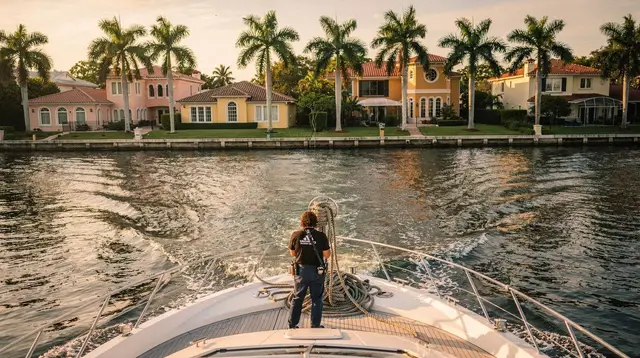
a private yacht rental out of Miami, taking in the Downtown and Brickell skyline from the bay sideFor visitors who prefer a guided introduction to the city plus a taste of the Everglades in the same outing, in French:
a half-day tour combining a Downtown Miami overview with an Everglades stop, guided in FrenchAnd for a faster, shorter run on the water without a full charter:
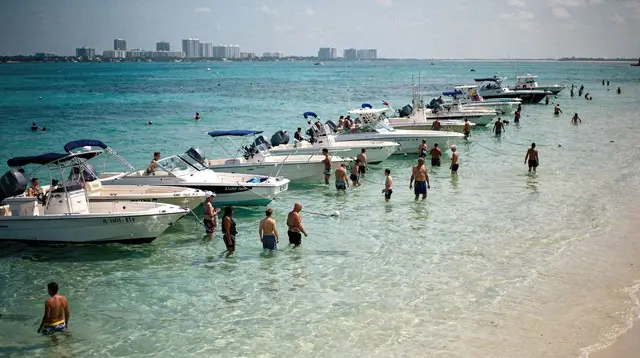
a speedboat ride along Biscayne Bay, past the Downtown and Brickell skylinePractical notes specific to this area
Prices quoted anywhere on this site are before Miami-Dade County’s 7% sales tax, and restaurant bills should include an expected 18–20% tip on top — Brickell and Downtown restaurants aimed at business travellers sometimes add a service charge automatically, so it’s worth checking the bill before tipping twice. None of the four neighbourhoods here charges an entry fee to simply walk the streets; the costs are museum tickets (PAMM, the Frost, Vizcaya), guided tours, and food.
Weather-wise, this area follows the same pattern as the rest of South Florida: a wetter, more humid stretch roughly from May to October with brief but heavy afternoon storms, and a drier, more comfortable season roughly from November to April that also happens to be the highest-priced time to visit. The Atlantic hurricane season runs officially from 1 June to 30 November, peaking August through October — worth knowing when booking a trip in that window, without assuming a storm is either likely or unlikely for any specific date.
Frequently asked questions about Miami’s mainland neighbourhoods
Is Miami Beach part of Miami city?
No. Miami Beach is a separate, independently incorporated city on a barrier island across Biscayne Bay, connected to Miami by causeways such as the MacArthur and Julia Tuttle. South Beach and the Art Deco Historic District belong to Miami Beach, not to the neighbourhoods described here.
How many days should I plan for Downtown, Brickell, Little Havana and Wynwood?
Two full days covers the highlights at a reasonable pace, three if you want to add Coconut Grove and Coral Gables and a proper museum visit rather than a walk-past.
Can I get around without a rental car?
Yes, within this area. The Metromover is free and covers Downtown and Brickell, Metrorail connects to the airport and to Coconut Grove and Coral Gables areas, and trolleys and rideshares fill the gaps. A car becomes more useful once day trips to the Everglades or the Keys are added.
Is Wynwood only about street art?
Street art is the reason most people go, but the neighbourhood also has galleries, design studios and a dense cluster of restaurants and coffee shops that keep it worth a visit even outside the murals.
Is Little Havana just for Cuban food?
Food is a strong reason to visit, but Little Havana is a lived-in neighbourhood with a real Cuban exile community, Domino Park, cigar shops and small galleries, not a themed attraction built for visitors.
What should I skip if I only have one day?
Pick two neighbourhoods rather than trying all four. Downtown and Brickell pair naturally along the Metromover; Wynwood and the Design District pair well on foot; Little Havana and Coral Gables usually need a short taxi or rideshare between them.
Do I need to book museum or attraction tickets in advance?
For the main museums, a same-day ticket is usually fine outside weekends and school holidays. Wynwood Walls and some galleries sell timed tickets in high season, so checking the day before avoids a wasted trip.