Little Havana food tours: Calle Ocho, cafecito and Domino Park
Are Little Havana food tours in Miami worth booking?
Most run 2 to 3 hours along Calle Ocho with 4 to 8 tastings and cost $50 to $90 per person. They are worth it for first-time visitors who want context on Cuban exile history alongside the food; a solo cafecito stop and a walk past Domino Park cost nothing if you only want the flavor without the narration.
Why Little Havana is a tasting neighbourhood, not a sightseeing checklist
Little Havana sits a short drive southwest of Downtown, centered on Calle Ocho (SW 8th Street). There is no landmark building here that demands an hour of your day the way a museum does. What the neighbourhood holds instead is a working commercial strip built by Cuban exiles from the 1960s onward — bakeries, cigar shops, ventanitas (walk-up coffee windows), and a handful of family-run restaurants that have been serving the same recipes for decades. A food tour makes sense here precisely because the neighbourhood’s story is told through what’s on the counter, not what’s behind a rope.
That’s the distinction worth making before you book anything. Miami city tours that cover multiple neighbourhoods in a single day typically give Little Havana 20 to 30 minutes — a photo stop at a mural, maybe a quick coffee, then back on the bus toward Wynwood or Coconut Grove. That’s enough to see the street exists. It is not enough to taste more than one thing or hear why the neighbourhood formed the way it did. A dedicated food tour spends its full 2 to 3 hours on these same six to eight blocks, and the difference shows up in what you leave with: a stamped memory of a dish, not just a photo of a sign.
It’s also worth separating this from Cuban-adjacent food elsewhere in South Florida. This guide is about Miami’s Little Havana specifically — urban, walkable, built around counter service and small plates. It has nothing to do with the tropical, boat-and-dock food culture covered in Key West food and drink tours, roughly 160 miles southwest by the Overseas Highway. Different history, different pace, different food entirely.
What Calle Ocho actually looks like on foot
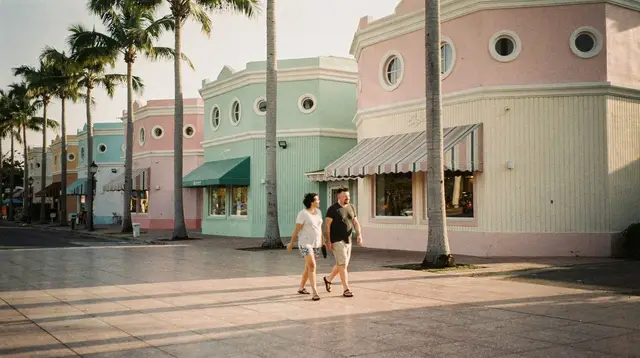
Calle Ocho between roughly SW 12th Avenue and SW 17th Avenue is the working core most tours cover. It’s a straight commercial strip: storefronts, awnings, sidewalk cafe windows, murals referencing Cuban culture and exile history, and a steady flow of foot traffic during the day. It is not a pedestrian-only plaza — cars run the length of it, and crossing at marked intersections is the norm.
A few landmarks anchor the walk:
- Domino Park (officially Maximo Gomez Park), at SW 8th Street and SW 15th Avenue, where retirees gather most afternoons for games of dominoes. It’s free, small, and takes 10 to 15 minutes to see properly. Treat it as a stop along the walk, not a destination on its own.
- The Walk of Fame stretch, with stars set into the sidewalk honoring Cuban and Latin cultural figures.
- Independent cigar shops where rollers work by hand near the front window — worth a look through the glass, though a cigar-rolling demonstration is a separate craft experience and shouldn’t be the reason you book a food tour.
What a guided tasting actually includes
Most operators structure the walk around four to eight stops, mixing savory and sweet, plus at least one coffee stop. A typical sequence looks like this:
| Stop type | What you’ll likely taste | Typical portion |
|---|---|---|
| Cafecito / coffee window | Cuban espresso, sometimes a colada to share | Small shot or shared pour |
| Savory bite | Croqueta, empanada, or a small sandwich portion | 1-2 pieces |
| Main-style tasting | Ropa vieja, roast pork, or plantain-based dish | Small plate, not a full entree |
| Bakery stop | Pastelito (guava, cheese, or guava-cheese) | 1 pastry |
| Closing stop | Flan or another Cuban dessert | Small portion |
Prices for guided walking tours generally run $50 to $90 per person for the standard 2-to-3-hour format, and a bit more for versions that add a sit-down lunch. Always check the current price and exact stop list on the operator’s own listing before booking — what’s included shifts between operators and seasons.
If you’d rather sample the neighbourhood with a guide who sets the pace and handles ordering, the Little Havana walking food tour covers the standard Calle Ocho stretch with a mix of savory and sweet stops. For a smaller group and a slower pace, the small-group Little Havana food tour caps numbers so you’re not queuing behind a dozen other tastings. If you want the walk to end with an actual sit-down meal rather than another small bite, the Little Havana tour with lunch builds that in. And for a tighter, more affordable format, the 2-hour tour with six tastings keeps the walk under two hours.
Doing it yourself instead
Nothing about Little Havana requires a guide. If you’d rather set your own pace:
- Start with a cafecito at a ventanita — expect to pay $2 to $4, cash or card depending on the spot.
- Walk the Calle Ocho stretch between SW 12th and SW 17th Avenues at a relaxed pace; the whole walk takes 30 to 45 minutes without stopping.
- Stop at Domino Park for 10 to 15 minutes in the early-to-mid afternoon, when games are most active.
- Pick one bakery for a pastelito and one restaurant for a sit-down plate rather than trying to sample everything — portions here are generous, and Little Havana isn’t built for grazing the way a food-hall format is.
Going solo costs less and lets you linger wherever you like. What you lose is the context a guide adds: which family opened which storefront, what the murals reference, and how the neighbourhood’s population and businesses shifted across different waves of Cuban migration.
History behind the counter
Little Havana took shape from the early 1960s, as Cuban exiles arriving after the 1959 revolution settled around Calle Ocho and rebuilt businesses they’d left behind on the island — bakeries, cigar factories, coffee windows, restaurants serving the same dishes their families had made in Havana. Subsequent waves of Cuban and other Latin American immigration through the following decades shaped the neighbourhood further, layering in Nicaraguan, Honduran, and other Central American businesses alongside the original Cuban core.
That layered history is why a food-focused tour works better here than an architecture-focused one: Little Havana’s built environment is modest storefronts, not landmark buildings, but the food and the people serving it carry the neighbourhood’s actual story. A good guide will point out which restaurant’s founders arrived in which decade, and why a particular dish — ropa vieja, a Cuban sandwich, a pastelito — became a signature rather than a footnote.
For a longer read on that migration history and how it shaped the neighbourhood beyond food, see Little Havana and Cuban Miami. And if you want a step-by-step on ordering coffee like a regular rather than a visitor, how to order a cuban coffee in Little Havana covers the vocabulary — cafecito, cortadito, colada — before you walk up to a ventanita.
Cigar shops: look, but keep expectations honest
Cigar rolling is genuinely visible in Little Havana — several shops keep a roller working by hand near the front window, and you can watch through the glass without buying anything. Some operators bundle a cigar-factory stop into food tours, and a standalone option exists too: the Little Havana cigar factory tour if you want that craft explained on its own rather than squeezed between tastings. Just don’t expect a cigar demonstration to substitute for an actual food stop — it’s a different skill, and a tour that leans too heavily on it is shortchanging the tasting half of the walk.
Combining with the rest of Miami
Little Havana pairs naturally with a broader day of eating and neighbourhood-hopping. If Calle Ocho whets your appetite for more of the city’s food scene, cheap eats in Miami covers budget options citywide, and things to do in Little Havana rounds out non-food activities in the same few blocks — murals, the Walk of Fame, and nearby shops.
If you’re weighing which neighbourhood to prioritize on a short trip, Miami neighbourhoods guide lays out how Little Havana compares to Wynwood, Brickell, and the beach towns for a first-time visitor’s itinerary. And for planning the rest of your stay around it, how many days in Miami and where to stay in Miami help fit a Little Havana afternoon into a longer visit.
How Little Havana’s food scene compares to Wynwood and South Beach
Miami has three distinct food-and-drink-tour neighbourhoods, and they don’t overlap much. Wynwood street art tours center on murals and gallery-adjacent bars and breweries rather than a single cuisine — the food stops there tend to be craft coffee, brewery tastings, and fusion plates rather than the Cuban-specific counter service that defines Calle Ocho. South Beach food and drink tours sit at the other end of the spectrum: beachfront and Art Deco-district dining, higher price points, and a cocktail-and-seafood focus that has little to do with a ventanita cafecito. If you’re deciding between neighbourhoods rather than trying to fit all three into one trip, things to do in Wynwood and the Design District lays out what else that area offers beyond food.
None of this means you should skip the others — it means Little Havana is the one to pick specifically for Cuban exile food culture, not for craft beer or beachfront dining. A visitor doing a food-focused week in Miami often books one tour in each neighbourhood rather than two in the same one, since the cuisines and settings barely repeat.
Best months for a Little Havana food tour
Little Havana’s food tours run year-round, since almost every stop is indoors or under awning cover, but the season still shapes the experience. Miami’s drier, sunnier stretch runs roughly November through April — mornings are comfortable for the six-to-eight-block walk, and this is also the city’s busiest and most expensive season for accommodation, so tours can book up further in advance. The wetter season, roughly May through October, brings short, heavy afternoon downpours rather than all-day rain; a morning tour start still generally clears the walk before the worst of it.
Atlantic hurricane season runs June 1 through November 30, with the statistical peak in August through October. A named storm rarely affects a single afternoon food tour directly, but it can affect flights and broader trip timing — worth checking before booking a trip anchored around late-summer travel. See the Miami hurricane season guide for what that actually means for a short visit, and best time to visit Miami for how the wider calendar affects prices and crowds beyond just this one neighbourhood.
A note on tipping and prices
Tour prices quoted for Little Havana food tours are per person and, like most posted prices in Miami, don’t include sales tax — Miami-Dade County adds a 7% sales tax at the point of sale, including at restaurants and shops along Calle Ocho. Tipping culture here follows the wider Miami norm: 18 to 20% is standard at a sit-down restaurant, on top of the separate 15 to 20% guide tip mentioned below for a guided walking tour. If you’re paying cash for a cafecito at a walk-up window, a small tip isn’t expected the way it is at a table-service stop, though it’s never unwelcome.
Practical notes
- Walking only. These are foot-based tours along flat sidewalk. Comfortable shoes matter more than fitness level — the total distance covered is short, but you’ll be standing at stops for tastings.
- Weather. Miami’s wet season (roughly May through October) brings short, heavy afternoon downpours. Morning tours dodge this more reliably than afternoon ones. See the Miami hurricane season guide if you’re traveling June through November.
- Tipping. If a tour includes a guide, a tip of 15 to 20% for the guide is standard on top of the tour price, separate from any tipping at individual food stops.
- Dietary restrictions. Cuban cuisine leans heavily on pork and dairy. Vegetarian options exist but are limited at some stops — flag dietary needs when booking a guided tour so the operator can adjust the stop list.
- Getting there. Little Havana has limited dedicated parking; many visitors arrive by rideshare or combine the visit with a stop in Downtown and Brickell beforehand. See getting around Miami for transit options, though note Little Havana itself is not directly served by Metromover.
Frequently asked: Little Havana food tours
How long does a Little Havana food tour last?
Most guided tours run 2 to 3 hours, covering roughly six to eight blocks of Calle Ocho on foot with stops for coffee, a savory snack, and a sweet finish.
What is a cafecito and where do I get one?
A cafecito is a shot of sweetened Cuban espresso, usually served at a walk-up ventanita (a street-facing coffee window) rather than inside a sit-down cafe. Expect to pay $2 to $4 on your own, without a tour.
Is Domino Park worth visiting on its own?
Domino Park (officially Maximo Gomez Park) is a small, free public plaza where retirees play dominoes most afternoons. It takes 10 to 15 minutes to see and is best combined with a walk down Calle Ocho rather than visited as a standalone stop.
Do Little Havana food tours require walking?
Yes. Nearly all of them are walking tours covering flat sidewalk along and just off Calle Ocho. There is no vehicle transport between stops, so comfortable shoes matter more than the distance itself.
Is Little Havana safe to walk around during the day?
The stretch of Calle Ocho covered by food tours is a commercial corridor that is busy and well-trafficked during the day. Normal city precautions apply, and guided tours add no particular safety advantage over walking it yourself in daylight.
Should I book a small-group tour or go on my own?
A guided small-group tour adds context on Cuban exile history and lets you sample more dishes in less time without ordering full portions everywhere. Going alone costs less and lets you linger, but you will need to pick spots and order individually.
How does this compare to a general Miami city tour?
A citywide tour such as a Miami city tour typically gives Little Havana 20 to 30 minutes as one stop among several neighbourhoods. A dedicated food tour spends the full 2 to 3 hours here and centers on tasting rather than sightseeing.
What should I skip on a Little Havana food tour?
Skip any operator promising more than 10 tastings in under two hours — that pace usually means small, rushed bites rather than a real introduction to a dish. Also skip cigar-rolling demonstrations sold as the food tour’s centerpiece; they are a separate craft, not a culinary one.
Food, cigar and cocktail tasting tours in Miami
Verified deep-linked GetYourGuide tours. Book through these links and we earn a small commission at no cost to you.
GetYourGuide does not provide a product photo for this activity — the image shows the meeting point, photographed by us.