Things to do in Downtown and Brickell
What can you actually do in Downtown and Brickell in a few hours?
Walk or ride the free Metromover between Bayfront Park, Bayside Marketplace, the Perez Art Museum Miami and the Frost Museum of Science, all within about a mile of the Port of Miami cruise terminals. It's a compact business and waterfront district on the mainland, not a beach, so plan for towers, museums and bay views rather than sand.
A mainland district built for a few free hours
Downtown and Brickell are Miami’s financial and civic core, sitting on the mainland on the Miami side of Biscayne Bay. That’s worth saying plainly, because it’s easy to blur with Miami Beach: South Beach and the Art Deco Historic District are on a separate barrier island across the bay, reached by causeways, and there’s no sand to walk to from a Downtown hotel or the cruise terminals. What Downtown and Brickell offer instead is a waterfront park, a covered marketplace, two museums, a working financial district and a free elevated train that ties it all together. That combination makes this district useful in a way beach neighbourhoods aren’t: for a cruise passenger with a morning to spare before boarding, or a business traveller with a few hours between meetings, it’s a compact, walkable stretch of the city rather than a full day’s commitment.
This overview covers what’s actually here — Bayfront Park, Bayside Marketplace, the Perez Art Museum Miami, the Frost Museum of Science, the Port of Miami’s cruise terminals and Brickell’s towers and river — and how the free Metromover links them. It skips the two things a museum page should tell you instead: today’s admission price and today’s opening hours. Check those directly with each museum before you go.
Bayfront Park and Bayside Marketplace
Bayfront Park runs along the bay just east of Downtown’s office towers, a strip of green space, walking paths and public art between the skyline and the water. It’s the kind of park that works well as a first stop: shaded benches, views across to the cruise terminals and Miami Beach in the distance, and enough width to feel like a break from the traffic on Biscayne Boulevard. It also hosts events through the year, from concerts to festivals, so an evening visit can look different from a quiet weekday morning.
Bayside Marketplace sits at the park’s northern edge, a two-level waterfront mall with shops, casual restaurants and a marina where sightseeing boats and water-taxis dock. It’s aimed squarely at visitors rather than locals doing their weekly shopping, and it shows: souvenir stalls, chain restaurants with bay views, and a steady flow of cruise passengers and Downtown workers on lunch breaks. It’s not a food destination in its own right, but it’s a reasonable place to sit by the water with a drink between other stops, and it’s the departure point for several of the boat tours that run along the Miami River and past the Brickell skyline.
Between the two, expect an hour or so if you’re moving at a normal pace — longer if a boat is departing and you want to watch the marina, shorter if you’re just cutting through on the way to the museum park.
Perez Art Museum Miami and Frost Museum of Science
A short walk or Metromover ride north of Bayside, the museum park on Biscayne Bay holds two museums side by side: the Perez Art Museum Miami (PAMM), a contemporary and modern art museum in a building designed with hanging gardens and bay-facing terraces, and the Frost Museum of Science, which combines interactive science exhibits with a planetarium and a multi-level aquarium built around a central tank.
Both museums rotate their exhibitions regularly, so what’s on display changes through the year, and both set their own admission prices and hours — this page won’t guess at either, since a stale number here would be worse than no number at all. What’s consistent is the location: both sit in the same waterfront park, a few minutes’ walk from each other and from a Metromover stop, which makes it realistic to see one properly in two to three hours, or move between both if science and art both interest you and time allows. Neither museum is designed as a quick five-minute stop — plan on treating whichever you choose as the anchor of your visit rather than an add-on.
If art and architecture particularly interest you, it’s worth knowing this district isn’t Miami’s only option: Vizcaya Museum and Gardens in Coconut Grove is a different kind of visit entirely, an early-20th-century estate rather than a contemporary museum, and sits a longer drive or rideshare from Downtown.
The Port of Miami and its cruise terminals
The Port of Miami’s cruise terminals sit on Dodge Island, connected to Downtown by a short bridge, and they’re one of the busiest cruise ports in the world. For a lot of visitors to this district, the port is the reason they’re here at all: a few hours to fill before boarding, or a few hours after disembarking before a flight out of Miami International.
Downtown and Brickell suit that stopover pattern well precisely because the sights are close together and don’t require a car. From the terminals, it’s a short rideshare or taxi ride to Bayfront Park and Bayside Marketplace, and the Metromover picks up from Downtown stations a few minutes’ walk beyond that. If you’re working around a boarding time, build in a buffer: port-area traffic can back up around embarkation and disembarkation windows, and a “quick” ten-minute ride can stretch when several ships are in port on the same day. For airport transfers on the other end of a cruise, Miami’s transfer options covers what connects the port, Downtown and Miami International.
Getting around: the free Metromover
The single most useful practical fact about this district is that the Metromover is free. It’s a driverless, elevated train system with three interlinked loops — Downtown, Brickell and Omni — and 21 stations spread across the district, running frequently through the day. There’s no fare gate, no ticket, nothing to buy: you walk up to a platform and board.
That matters here specifically because it removes the two usual frictions of sightseeing in a car-dependent city — parking and traffic — for exactly the stretch of Miami where they’re worst. Downtown parking is expensive and often scarce near the museum park and Bayside on busy days, and the short hops between Bayfront Park, the museum park and Brickell are awkward distances: too far to always want to walk in Miami’s heat and humidity, too short to justify a taxi. The Metromover fills that gap. Combined with Miami’s separate Metrorail line (which does require a fare) for longer trips further out, it’s realistic to see this entire district without renting a car or relying on rideshares between every stop.
Brickell: towers, river and a different pace
South of Downtown proper, Brickell is Miami’s financial district and increasingly its most vertical residential neighbourhood — a dense cluster of bank towers, condo high-rises and, at street level, the Miami River cutting through toward the bay. It reads differently from the museum-park stretch of Downtown: fewer visitors, more office workers and residents, and a skyline that’s genuinely one of the more striking in the city, especially from the water or from one of the riverside bars in the early evening.
Brickell City Centre is the district’s main retail anchor, an open-air shopping and dining complex that also holds an escape-room venue if you want something indoors and air-conditioned for an hour. Brickell doesn’t have Downtown’s concentration of named sights, but a walk along the river, or a short boat tour that takes in the skyline from the water, gives a different view of Miami than the park-and-museum stretch further north — glass towers rather than public art, a working financial district rather than a waterfront leisure strip.
How this district differs from Miami’s other central neighbourhoods
It’s worth being direct about what makes Downtown and Brickell distinct from the other central Miami neighbourhoods covered elsewhere on this site, since all three sit reasonably close together on the mainland and can blur if you’re planning quickly. Little Havana, a short drive or rideshare west, is built around Cuban exile culture, Calle Ocho and Domino Park — food and history, not towers or museums. Wynwood and the Design District, north of Downtown, are about street art and galleries, with Wynwood Walls as the anchor.
Downtown and Brickell, by contrast, are Miami’s business and civic identity: a cruise port, a financial skyline, two museums built around science and contemporary art, and a waterfront park rather than a market or a mural wall. If your time is split across a longer stay, it’s a genuinely different half-day from either of the other two, not a repeat of them with different street names.
For a broader first look at the city before narrowing to any one district, things to do in Miami sets out how the neighbourhoods fit together, and the Miami neighbourhoods guide — along with a dedicated overview of Miami’s museums — is useful if PAMM and Frost aren’t the only exhibitions on your list.
Seeing the skyline from the water
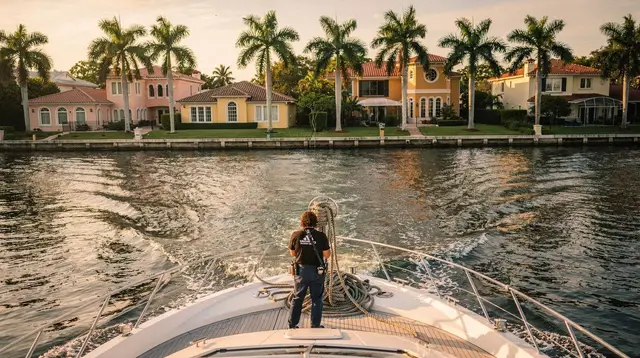
Several boat tours depart from the Bayside marina or nearby docks and run along the Miami River and past the Brickell and Downtown skylines, which is a genuinely different way to take in this district than walking its streets. A short river cruise at night puts the lit towers of Brickell and Downtown in view without the traffic noise, and it’s a reasonable way to close out an evening if the museums and the marketplace have filled your daylight hours.
a night cruise along the Miami River taking in the lit-up Downtown and Brickell skyline is one option if you want the water view without a full day trip. For a more structured look at how the district developed — from its early 20th-century origins to the towers standing today — a guided walking tour tracing Downtown and Brickell’s history covers ground you’d otherwise have to piece together yourself from historical markers.
If you’d rather set your own pace with a guide who can answer questions as you go, a private guided walking tour through Downtown’s main sights works well for a small group or a business traveller with a tight window between meetings. And if the afternoon turns out hotter or wetter than planned, an indoor escape-room session at Brickell City Centre is a practical fallback that doesn’t depend on the weather.
Honest planning notes
A few things worth knowing before you build a schedule around this district. First, museum admission and hours change and aren’t repeated here — check PAMM’s and Frost’s own listings for the day you’re visiting rather than assuming a number from a guide. Second, this is not a beach day: if sand and swimming are the goal, that’s South Beach or Key Biscayne, both a causeway away rather than a Metromover ride. Third, Downtown’s daytime crowds thin out noticeably in the evening once offices empty, which can make Bayfront Park quieter but also means fewer casual dining options stay open late outside Bayside and Brickell’s own restaurant strip. Fourth, if you’re timing a visit around a cruise, build a real buffer for port traffic — an unhurried few hours can turn tight fast if a rideshare gets stuck near the terminals during a peak boarding window.
For a longer stay that folds this district into a fuller itinerary, a weekend in Miami typically pairs a Downtown/Brickell morning or afternoon with a full day in Miami Beach and a look at Coconut Grove and Coral Gables further south — three genuinely different sides of the same metro area, none of them interchangeable with the others.
Downtown and Brickell: common questions
Is Downtown Miami the same place as Miami Beach?
No. Downtown and Brickell sit on the mainland, on the Miami side of Biscayne Bay. Miami Beach is a separate city on a barrier island, reached by causeways such as the MacArthur or Venetian. There’s no beach to walk to from Downtown itself.
Is the Metromover really free?
Yes. The Metromover is a driverless elevated train with no fare, running on loops through Downtown, Brickell and Omni with 21 stations. It’s the easiest way to string together Bayfront Park, Bayside Marketplace and the museum park without a car or a rideshare.
How much time should I set aside for Downtown and Brickell?
Two to four hours covers a walk through Bayfront Park, a look at Bayside Marketplace and either PAMM or Frost Science, with Metromover rides between stops. A full day lets you add both museums and a slower look at Brickell’s towers and riverfront.
Can I do this as a cruise stopover before boarding at the Port of Miami?
Yes, that’s exactly the profile this district suits. The cruise terminals sit a short Metromover or rideshare ride from Bayfront Park and Bayside Marketplace, so a few pre-boarding hours are enough for a walk and a coffee without cutting it close on time.
Are Perez Art Museum Miami and Frost Museum of Science worth visiting?
Both are legitimate museums with rotating exhibitions and, at Frost, a planetarium and aquarium, sitting side by side in the same museum park on Biscayne Bay. Check each museum’s own site for the day’s hours and admission before you go, since neither is covered here.
What’s the difference between Downtown/Brickell and Little Havana or Wynwood?
Downtown and Brickell are Miami’s financial and civic core: towers, a cruise port, a waterfront park and two museums. Little Havana is built around Cuban exile culture and Calle Ocho, and Wynwood is a street-art and gallery district. All three sit on the mainland but read very differently on the ground.
Do I need a car to see Downtown and Brickell?
No, and a car is often a liability here: parking is expensive and traffic on the causeways and I-95 approaches can be heavy at rush hour. The free Metromover, Metrorail and walking cover the district’s main sights more easily than driving between them.
Is Brickell just office towers, or is there anything to see?
Brickell is Miami’s financial district, so towers dominate the skyline, but the Miami River waterfront, Brickell City Centre’s shops and a scattering of riverside bars give it some texture beyond the office blocks, especially in the early evening.
Trip planning guides for Miami and the Keys
Verified deep-linked GetYourGuide tours. Book through these links and we earn a small commission at no cost to you.
GetYourGuide does not provide a product photo for this activity — the image shows the meeting point, photographed by us.