Things to do in Miami: a first-timer's orientation guide
What are the main things to do in Miami itself, not Miami Beach?
Miami proper covers Downtown and Brickell, Little Havana, Wynwood and the Design District, and Coconut Grove with Coral Gables, all on the mainland side of Biscayne Bay. Miami Beach, with South Beach and the Art Deco Historic District, sits across the causeways on a separate barrier island and is a distinct city with its own guide.
How the city fits together before you pick a neighbourhood
Miami is not one place, and this page is about the mainland half of it. Everything below sits on the continental side of Biscayne Bay: Downtown and Brickell, Little Havana, Wynwood and the Design District, and Coconut Grove with Coral Gables. Across the water, reached only by the causeways (MacArthur, Venetian, Julia Tuttle), is Miami Beach — South Beach, the Art Deco Historic District, North Beach and Key Biscayne. Miami Beach is its own incorporated city, not a Miami neighbourhood, and it has its own dedicated guide at Miami Beach and Key Biscayne. Confusing the two is the single most common mistake first-time visitors make when planning where to stay and how to get around.
Think of mainland Miami as a rough north-south spine along the bay. Wynwood and the Design District sit north of Downtown. Downtown and Brickell form the business core on the bayfront, with the port and cruise terminals just offshore. Little Havana lies west of Brickell, along Calle Ocho. Coconut Grove and Coral Gables sit further south again, greener and quieter, closer to the University of Miami. None of these neighbourhoods are within easy walking distance of each other — this is a driving-and-transit city, not a single compact downtown.
Downtown and Brickell: the skyline and the business core
Downtown and Brickell are Miami’s financial and civic centre: high-rise towers, Bayfront Park, Bayside Marketplace, the Perez Art Museum Miami (PAMM) and the Frost Museum of Science, plus the cruise terminals at PortMiami just across the water. This is also where the free Metromover does the most work, looping through Downtown, Brickell and the Omni area on 21 stations with no fare. It’s a useful mental anchor even if you’re not staying here: many day trips and boat departures start from Bayside or nearby marinas. The neighbourhood has its own dedicated page with the full list of sights and activities at Things to do in Downtown and Brickell; this overview won’t repeat that detail.
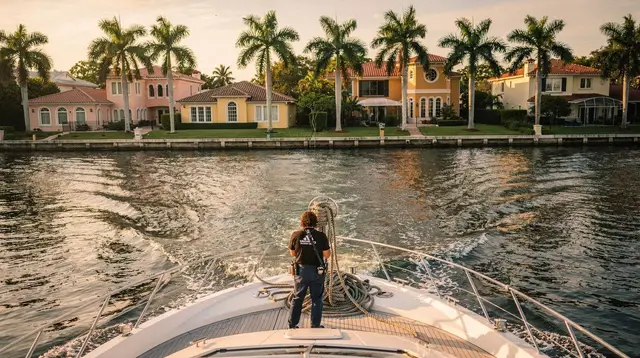
A short cruise around the bay is a good way to get your bearings on day one, seeing Downtown’s skyline, the port and the barrier islands together rather than from a single vantage point.
a half-day city tour that loops through Downtown and the bayfront by coach works well as a first orientation if you’d rather not self-drive on day one.
Little Havana: Cuban exile history on Calle Ocho
West of Brickell, Little Havana centres on Calle Ocho (SW 8th Street) — Domino Park, Cuban coffee windows, cigar shops and a neighbourhood shaped by decades of Cuban exile history. It rewards walking a few blocks slowly rather than rushing through, and it’s genuinely distinct in feel from the towers a mile away in Brickell. The full neighbourhood guide, including where to eat and what’s worth stopping for, lives at Things to do in Little Havana; this page keeps to the orientation only.
For a specific, bookable slice of the neighbourhood, a guided visit to a working cigar factory on Calle Ocho is a concrete way to see the craft up close rather than just browsing shop windows.
Wynwood and the Design District: street art and design, side by side
North of Downtown, Wynwood and the Design District sit next to each other but read very differently. Wynwood is the street-art neighbourhood built around large-scale murals, with Wynwood Walls (partly a paid, curated core) as the anchor and dozens of independent pieces on surrounding blocks. The Design District, a short walk or drive north, is glossier: design showrooms, flagship boutiques and gallery spaces. Both are compact enough to see together in an afternoon. Full detail, including which blocks hold the best murals and how the two areas connect, is on the dedicated page at Things to do in Wynwood and the Design District.
For visitors who want context rather than just wandering, a guided walk through Wynwood’s murals explains how individual pieces came about and how the neighbourhood shifted from warehouses to an open-air gallery district; see Wynwood street art tours: walls, galleries and what’s actually free for options if that appeals more than self-guided browsing. The Design District side rewards a slower pace of its own — flagship stores, gallery spaces and public art installations that reward lingering rather than a fixed checklist — and pairs naturally with a coffee stop between the two areas before continuing south.
Coconut Grove and Coral Gables: gardens, architecture and a slower pace
Further south, Coconut Grove and Coral Gables don’t have their own overview page in this guide, so it’s worth a fuller word here. Coconut Grove is Miami’s oldest neighbourhood, shaded by mature tree canopy and built around a small marina and waterfront park — a genuinely quieter pace than Downtown or Wynwood. Coral Gables, immediately west, is a planned 1920s “city beautiful,” known for Mediterranean Revival architecture, wide boulevards and three sights that stand out from anything else on the mainland side:
- Vizcaya Museum and Gardens — an early-20th-century waterfront estate with formal Italianate gardens; one of the few genuinely striking architectural sights in Miami proper, and worth two to three hours.
- Venetian Pool — a historic public pool carved from a former coral rock quarry, unlike any ordinary municipal pool; check opening hours and seasonal closures before turning up.
- Biltmore Hotel — a grand 1920s hotel with a landmark tower, open to the public for a look at the lobby and grounds even if you’re not staying there.
Fairchild Tropical Botanic Garden sits a little further south again and pairs well with a Coral Gables morning if you have the extra time. For a longer, more specific list of hours, tickets and practical tips for all of these, see Vizcaya and Coral Gables: the historic attractions of Coconut Grove; this page is deliberately just the orientation.
Getting between these neighbourhoods
The free Metromover covers Downtown, Brickell and the Omni loop well, and pairs with Metrorail for longer hops, but it doesn’t reach Wynwood, Little Havana, Coconut Grove or Coral Gables. For those, budget a rideshare, a bus, or — if you’re comfortable driving on the right — a rental car, especially for a Coral Gables and Coconut Grove half-day where distances between sights are longer than they look on a map. A full breakdown of Metromover, Metrorail and the trolley network is at Getting around Miami: Metromover, Metrorail and trolleys, and car-specific notes — tolls, parking, what to expect driving on the right — are at Renting a car in Miami: tolls and parking, honestly explained.
Airport transfers deserve a mention here too, since Miami International (MIA) sits west of Downtown and most first-timers land needing a way into whichever neighbourhood they’ve booked.
a private transfer booked in advance from MIA, Opa-locka or Fort Lauderdale-Hollywood avoids the guesswork of rideshare pricing at arrivals, particularly with luggage or a late landing.
When to plan a mainland day
Mainland Miami is warm year-round, but the two halves of the calendar feel different on the ground. Roughly November through April is the drier, sunnier stretch and also the busiest and priciest time to visit, since it’s when most outsiders escape colder weather elsewhere; roughly May through October brings more humidity, more afternoon thunderstorms, and lower prices, which suits visitors who don’t mind ducking into a museum or an air-conditioned Wynwood gallery when a storm rolls through. Best time to visit Miami: weather, hurricane season and prices goes through the trade-offs season by season, and Miami in summer: what the rainy season actually feels like and Miami in winter: the dry season, high season and best time for the Everglades cover what to actually expect in each half of the year if you’ve already picked your dates.
Worth flagging separately: the Atlantic hurricane season runs June 1 through November 30, with the highest chance of a storm affecting South Florida from August through October. Most trips in that window are unaffected, but it’s worth checking the forecast a few days out rather than assuming the outdoor plans on this page — the bay cruise, the yacht rental, walking Calle Ocho or Wynwood — will go ahead regardless. Miami hurricane season: what travellers should actually know covers what that actually means for a trip already booked.
A rough itinerary for a first mainland day
| Time block | Neighbourhood | What to expect |
|---|---|---|
| Morning | Downtown / Brickell | Bayfront Park, PAMM or Frost Science, free Metromover loop |
| Midday | Little Havana | Calle Ocho, lunch, Domino Park |
| Afternoon | Wynwood / Design District | Murals, galleries, coffee stop |
| Evening (optional) | Coconut Grove or Coral Gables | Sunset at the marina, or dinner near the Biltmore |
This is a compressed, first-orientation day, not a relaxed one — most visitors are happier giving each neighbourhood its own half-day across a longer stay. For a slower pacing option across three to five days, see Three days in Miami: South Beach, Wynwood and Little Havana or Four days in Miami: downtown, Little Havana and the Everglades.
If you’d rather have someone else handle the driving and sequencing on day one, a four-hour guided city tour covering Downtown, Little Havana and Wynwood compresses the mainland orientation into a single half-day without you needing to work out transit connections yourself. And if the bay itself is the draw rather than the streets, Miami boat tours and yacht charters covers the options in more depth than a single link here can, though a private yacht rental out of a Downtown or Brickell marina is worth flagging directly since it’s often the fastest way to see the skyline, the port and the barrier islands in one outing.
Eating and a couple of practical notes
Food is one of the easiest ways to feel the difference between these neighbourhoods rather than just reading about it: Cuban coffee windows and cafeteria-style lunches in Little Havana, brunch spots and coffee roasters scattered through Wynwood, and a wider mix of everything in Downtown and Brickell. Cuban food in Miami: a Little Havana guide is a good primer before a Little Havana visit, and guided options exist too if you’d rather eat your way through with context: Little Havana food tours: Calle Ocho, cafecito and Domino Park and Food and drink tours in Miami: Little Havana, Wynwood and the Design District cover tastings across these neighbourhoods, while Cheap eats in Miami: Little Havana cafes and budget meals is the one to check if budget matters more than a sit-down meal.
On safety: mainland Miami’s neighbourhoods covered here are generally straightforward for visitors who take the same basic precautions they would in any large city — staying aware in less-lit areas at night, not leaving valuables visible in a parked car. Is Miami safe for tourists? goes into more detail neighbourhood by neighbourhood if that’s a specific concern before booking. And if museums are a priority alongside the neighbourhoods themselves, Miami museums and attractions: what’s worth the ticket rounds up PAMM, Frost Science and the smaller collections scattered across Downtown, Wynwood and Coral Gables into one list.
What this page deliberately leaves out
This is an orientation page, not a neighbourhood-by-neighbourhood attraction list. It intentionally does not repeat the detailed sight lists already covered on the Downtown/Brickell, Little Havana and Wynwood/Design District pages linked above — go there for the specifics. It also doesn’t cover Miami Beach, Key Biscayne, the Everglades, the Florida Keys or day trips north to Fort Lauderdale and Palm Beach; those live on their own destination and guide pages, starting at Miami city: Downtown, Brickell, Little Havana and Wynwood for the mainland hub and Miami Beach and Key Biscayne for the island city across the bay. For practical basics that apply everywhere in the region — entry rules, tipping, taxes — see ESTA and entry rules for a Miami trip and Miami tipping, taxes and resort fees explained.
If you’re still deciding where to base yourself before booking anything, Where to stay in Miami: choosing the right area and Miami’s mainland neighbourhoods: Downtown, Little Havana, Wynwood, Coral Gables go into more detail than this orientation page can, and First time in Miami: what to know before you go covers the broader first-trip planning questions — how many days, what to pack, what tends to catch people out.
Things to do in mainland Miami: frequently asked questions
Is Miami Beach part of Miami?
No. Miami Beach is its own incorporated city on a barrier island across Biscayne Bay, connected to the mainland by causeways such as the MacArthur, Venetian and Julia Tuttle. South Beach and the Art Deco Historic District are in Miami Beach, not in Miami.
How do Downtown, Brickell, Little Havana, Wynwood and Coconut Grove relate to each other?
They are separate mainland neighbourhoods arranged roughly north to south and inland to bayfront. Downtown and Brickell sit on the bay, Wynwood and the Design District are just north of Downtown, Little Havana is west of Brickell, and Coconut Grove and Coral Gables are further south, closer to the University of Miami area.
Can I get around Miami without a car?
Within Downtown, Brickell and the Omni area, yes: the Metromover is free and covers those loops well, backed up by Metrorail and trolleys. Reaching Wynwood, Little Havana, Coconut Grove or Coral Gables usually means a rideshare, bus or short drive, since those neighbourhoods sit outside the Metromover’s footprint.
How many days do I need to see mainland Miami before crossing to the beach?
A rushed overview of Downtown/Brickell, Little Havana and Wynwood can be done in a single long day, but each neighbourhood rewards a half-day on its own. Most first-time visitors split three to four days between the mainland and Miami Beach rather than trying to fit everything into one.
What’s the best area to base myself for a first Miami trip?
It depends on the trip: Brickell and Downtown suit business travellers and skyline views with easy Metromover access, while Miami Beach suits anyone who wants beach access on foot. Coral Gables and Coconut Grove suit a quieter, greener stay with a car.
Are Coconut Grove and Coral Gables worth a special trip?
Yes for anyone interested in architecture and gardens: Vizcaya Museum and Gardens, the Venetian Pool and the Biltmore Hotel are genuinely distinctive sights, not filler. They sit further from Downtown than the other neighbourhoods, so budget more travel time to reach them.
Is Little Havana just a tourist strip?
Calle Ocho has a visible tourist layer of souvenir shops and cigar rollers aimed at cruise-day visitors, but it also remains a working neighbourhood shaped by Cuban exile history, with genuine cafés, a domino park and a resident community. Both things are true at once.
Trip planning guides for Miami and the Keys
Verified deep-linked GetYourGuide tours. Book through these links and we earn a small commission at no cost to you.
GetYourGuide does not provide a product photo for this activity — the image shows the meeting point, photographed by us.