Is Miami safe for tourists?
Is Miami safe for tourists?
Miami is a major US tourist destination with the same everyday precautions as any big city. The practical friction points for visitors are not crime statistics but paperwork and money: only use esta.cbp.dhs.gov for entry authorization, budget 18 to 20% for tipping, respect the 21-and-over alcohol rule, and check sea conditions before a Bahamas day trip during hurricane season (June to November).
What “safety” actually means for a Miami trip
Miami and Miami Beach are two separate cities, joined by causeways across Biscayne Bay, and both sit on the standard list of major US tourist destinations. The honest answer to “is it safe” is not a crime ranking — this guide does not carry one, and any page that hands you a neighbourhood danger score for a single visit is guessing. What is worth your attention instead is the handful of practical friction points that trip up first-time visitors every season: the drinking age, tipping expectations, a wave of fake ESTA websites, rough seas on the crossing to the Bahamas, and the Atlantic hurricane season. None of these require alarm. All of them are worth twenty minutes of preparation before you land at Miami International (MIA).
For entry paperwork specifically — visa waiver rules, passport requirements, who needs a B-2 visa — see ESTA and entry rules for Miami. For weather and the best months to travel, see best time to visit Miami. This page stays on day-to-day caution: what to check before you tip, drink, swim or book a boat.
Alcohol: the age rule and the beach rule
The legal drinking age in the United States, Florida included, is 21. Bars, restaurants, liquor stores and even some grocery checkouts will ask for identification, and Florida enforces this consistently in tourist areas like South Beach and Ocean Drive. A passport or a driving licence from home is normally accepted.
Less obvious to visitors: alcohol is banned on most public beaches in Miami-Dade County, including the stretches of sand along South Beach. A drink from a beach bar’s open-air seating area is one thing; carrying a can or bottle onto the open sand is another, and it is the kind of rule a lifeguard or officer will actually enforce rather than ignore. If a beach day with a drink in hand matters to your plans, check with your hotel or a beachfront bar about their designated seating rather than assuming the sand itself is fair game.
Tipping: not a courtesy, a cost line
In the US, and in Miami specifically, tipping is built into how service workers are paid, not an optional bonus. Budget 18 to 20% at restaurants, and apply the same range to bartenders, taxi and rideshare drivers, hair and beauty services, and — relevant here — tour guides and boat crews on activities like a speedboat ride or a sunset cruise out of Downtown and Brickell.
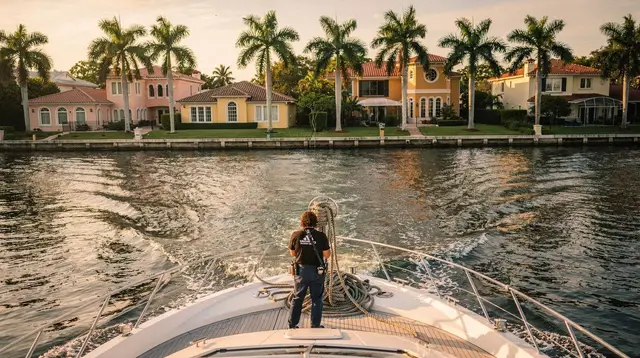
a guided speedboat ride around Biscayne BayOne friction point specific to Miami Beach: some restaurants there add a service charge to the bill automatically, particularly for larger groups. Look at the printed total before adding a tip on top — paying twice is a common and avoidable mistake, and it is covered in more detail in Miami tipping, taxes and resort fees. The same page explains the 7% Miami-Dade sales tax and the separate resort taxes that apply to hotel stays, both of which are quoted before tax on most listings.
The ESTA scam sites: the one thing worth being genuinely careful about
If there is a single practical risk that catches visitors to Miami more than any other, it is not on the ground — it is online, before the trip even starts. Travellers from Visa Waiver Program countries need an ESTA (a travel authorization, not a visa) to enter the United States, and the only official site is esta.cbp.dhs.gov. A long list of third-party websites mimic the look of the official form, charge a marked-up fee, and in some cases collect passport details for no legitimate purpose. This is a documented, ongoing pattern, not a rare edge case.
The practical fix is simple: type the address directly, or navigate from a bookmark, rather than clicking a search ad or a link from an email. The full process — cost, validity period, who needs a B-2 visa instead — is covered in ESTA and entry rules for Miami; this page’s role is only to flag the scam-site risk as the most concrete “safety” issue most travellers to Miami will actually encounter.
Rough seas and a Bahamas day trip
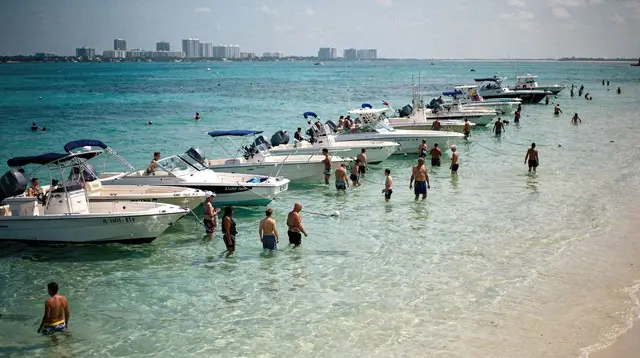
A day trip from Miami to the Bahamas — typically to Bimini or Grand Bahama (Freeport) by fast ferry or day cruise — crosses open water, and the crossing is genuinely affected by conditions. Operators cancel or delay departures when the sea is too rough, and this happens with some regularity outside the calmer winter months. It is not a reason to skip the trip, but it is a reason not to schedule one on the same day as a flight home, and to check the operator’s weather policy before booking.
Remember too that a Bahamas day trip is an international crossing: a passport is required, and the hours spent in the Bahamas count toward the 90-day limit of the Visa Waiver Program — the trip does not reset the clock on a US stay. More detail on that specific point sits in ESTA and entry rules for Miami.
Swimming safely: flags, currents and jellyfish
Miami Beach and South Beach are patrolled by lifeguards on the main public stretches, and the same practical caution that applies everywhere else in this guide applies in the water: check the flag before you go in. Coloured flags posted at lifeguard stands signal rip current risk and, at certain times of year, jellyfish in the water — a rule worth treating as an instruction rather than a suggestion, since rip currents are a genuine hazard even on a calm-looking day. Jellyfish and rip currents on Miami beaches covers what the flag colours mean and which months see more jellyfish. Swimming at an unguarded stretch of sand, or after dark once lifeguards have gone off duty, removes that safety net entirely and is worth avoiding regardless of how calm the water looks.
The same logic applies a few miles offshore: operators running Miami boat tours and yacht charters or snorkeling trips near Key Biscayne check conditions before departure, which is one more reason booking through an established platform beats arranging a trip informally on the beach.
Hurricane season: honest, not alarmist
The Atlantic hurricane season runs from June 1 to November 30, according to NOAA, with the highest likelihood of storm activity from August through October. This is a seasonal pattern, not a forecast for any specific date — a trip booked in September is not automatically at risk, and one booked in July is not automatically safe. What is a reasonable precaution for any trip inside that window is travel insurance that covers weather disruption, and booking accommodation and flights with some flexibility to change dates. For the full seasonal breakdown, including the wet and dry season split that shapes daily weather rather than storm risk, see Miami hurricane season guide and best time to visit Miami.
Water activities: gear, waivers and choosing an operator
Miami’s coastline and bay make jet ski, ATV, flyboard and speedboat outings some of the most popular bookable activities in the city, from Key Biscayne to the causeways around South Beach. The practical safety question here is not about the water itself but about the operator: a reputable company supplies a safety briefing, protective gear and a signed waiver before you go out, whether that is on an ATV trail or a bay speedboat run.
a guided ATV adventure that includes safety gear and a briefingBooking through an established platform such as GetYourGuide or Viator — rather than an unlicensed operator flagging down visitors on the street — is a straightforward way to filter for licensed, insured operators. It costs nothing extra and it removes a real category of risk: unlicensed boats and vehicles with no insurance behind them.
Getting around without renting a car
Miami’s public transit options reduce a lot of the everyday friction of driving in an unfamiliar city, particularly around parking and the toll system. The Metromover is free and loops through Downtown, Brickell and Omni; the Metrorail connects MIA to Downtown; and free trolleys run in both Miami and Miami Beach. For visitors not planning to drive out to the Everglades or the Keys, skipping a rental car altogether removes one layer of logistics, including Florida’s cashless tolls, which can add unexpected charges to a rental bill after the fact.
a private airport transfer that skips the taxi line and rideshare surge pricingArriving at Miami International (MIA) or Fort Lauderdale-Hollywood (FLL) late at night, a pre-booked transfer removes the need to negotiate a fare or judge which taxi line is legitimate — a minor but real point of friction for a first-time visitor arriving tired.
Practical basics: money, power and calling for help
Miami runs on the US dollar, and almost every price quoted to visitors — tours, hotel rates, restaurant menus — is shown before tax. Miami-Dade County adds a 7% sales tax at the till, on top of any hotel resort fee, which is why the final bill is reliably higher than the sticker price; Miami sales tax and resort fees explained and Miami tipping, taxes and resort fees both go through the arithmetic in more detail.
A few other basics rarely covered elsewhere: the US drives on the right, which matters for visitors used to the opposite side renting a car for the Keys or the Everglades; outlets run on 120V/60Hz with US-style type A and B plugs, so visitors from 220-240V countries need a plug adapter and, for some appliances, a voltage converter; and tap water is safe to drink across Miami and Miami Beach, so there is no need to buy bottled water purely for safety reasons — can you drink tap water in Miami? covers the taste-versus-safety distinction some visitors ask about. For any genuine emergency, the number to call is 911, the same as anywhere else in the United States.
A short list of first-timer mistakes
| Mistake | Why it causes friction | Better move |
|---|---|---|
| Booking ESTA through a search ad | Third-party markup, unnecessary data shared | Use esta.cbp.dhs.gov directly |
| Opening a beach drink on the sand | Alcohol is banned on most public beaches | Drink at beachfront bar seating instead |
| Not checking the bill for an added service charge | Some Miami Beach restaurants add it automatically | Check the printed total before tipping |
| Booking a Bahamas day trip the day before a flight home | Crossings can be delayed by sea conditions | Leave a buffer day, check the weather policy |
| Booking an unlicensed street-side ATV or boat operator | No guaranteed safety gear, insurance or waiver | Book through GetYourGuide or Viator |
| Assuming a rental car is required everywhere | Parking and tolls add cost and hassle at Miami Beach | Use Metromover, Metrorail and trolleys in the city core |
None of this amounts to a warning to avoid Miami. It is the same category of preparation that applies to any major coastal US city with a large, established tourism economy: know the local rule on alcohol and tipping, use the official government site for paperwork, and treat water crossings and hurricane season with ordinary caution rather than either panic or indifference.
a guided city tour of Miami’s neighbourhoodsFor visitors weighing up neighbourhoods to stay in with an eye toward a quieter first trip, Miami neighbourhoods guide and where to stay in Miami go into more detail than this page’s scope. For first-time logistics beyond safety specifically, see Miami for first-time visitors and Miami travel mistakes to avoid.
Frequently asked questions about Miami safety for visitors
What is the legal drinking age in Miami?
21 years old, with identification checked at bars, restaurants and liquor stores. Alcohol is also banned on most public beaches, including South Beach, so a can bought at a corner store cannot legally be opened on the sand.
Is tipping really expected in Miami?
Yes, and it is not optional in practice. Restaurant service runs 18 to 20%, and the same range applies to bartenders, taxi and rideshare drivers, tour guides and boat crews. At some Miami Beach restaurants a service charge is already added to the bill, so it is worth checking before tipping twice.
Is the ESTA website safe to use?
The only official site is esta.cbp.dhs.gov. Third-party sites that look official but charge extra fees are a real and common trap for visitors, not a rare edge case, so it is worth typing the address directly rather than clicking a search ad.
Can a Bahamas day trip from Miami get cancelled?
Yes. The crossing to Bimini or Grand Bahama can be rough, and operators cancel or delay departures for sea conditions, most often outside the calmer winter months. Building in a buffer day before a flight home is a reasonable precaution.
Do I need to worry about hurricanes when planning a trip to Miami?
The Atlantic hurricane season runs June 1 to November 30, with the highest activity from August to October. This does not mean a storm will hit on any given date, but travel insurance and flexible bookings are a sensible precaution for trips booked in that window.
Is it safe to swim at Miami Beach?
Lifeguard-patrolled sections of South Beach and North Beach are generally straightforward for swimming, but conditions vary by day and by flag. Checking posted flags for rip currents and jellyfish before swimming is a basic precaution rather than an optional one.
Are there safety rules for the more active tours, like ATV or jet ski trips?
Yes. Reputable operators supply safety gear and a briefing before ATV, jet ski, flyboard or speedboat activities, and require a signed waiver. Booking through an established platform such as GetYourGuide or Viator, rather than an unlicensed operator approached on the street, is the more reliable route.
Trip planning guides for Miami and the Keys
Verified deep-linked GetYourGuide tours. Book through these links and we earn a small commission at no cost to you.
GetYourGuide does not provide a product photo for this activity — the image shows the meeting point, photographed by us.