Flying into Fort Lauderdale (FLL): how to get to Miami
How do you get from Fort Lauderdale-Hollywood (FLL) to Miami?
Fort Lauderdale-Hollywood (FLL) sits about 30 miles north of Miami. A rental car or rideshare takes roughly 40 minutes to over an hour depending on traffic, while Brightline covers the same run by train without the parking or toll hassle. There is no direct Metrorail link from FLL — that only serves Miami International (MIA).
Why some travellers land at FLL instead of MIA
Fort Lauderdale-Hollywood International Airport (FLL) is the other main gateway for a Miami trip, and it is not a typo or a booking mistake if your flight lands there. FLL sits about 30 miles (roughly 48 km) north of Miami, in Broward County, and fares into it are often — though not always — lower than into Miami International (MIA). Airlines shuffle capacity between the two airports constantly, so the cheaper option on a given search date can flip either way. What matters once you have booked is knowing, honestly, what that extra 30 miles costs you in time and money on the ground, and which of the ground options actually suits your trip.
This page covers one job only: getting from FLL to Miami. It does not cover what to do once you are in Fort Lauderdale itself, or in Palm Beach further north — those have their own guides. It also does not cover the Metrorail, because Metrorail does not reach FLL at all; that train line connects to Miami International, a different airport and a different trip.
The three realistic ways to get from FLL to Miami
For most visitors, the choice comes down to three options: renting a car, taking a rideshare or taxi, or riding Brightline. A fourth — a private transfer or shared shuttle booked in advance — sits between a rideshare and a rental car in cost and convenience. There is no train that runs airport-to-airport-adjacent stops for free, and there is no way to avoid either driving yourself, paying a driver, or catching Brightline from its Fort Lauderdale station, which is a short ride from the terminals rather than inside them.
| Option | Typical time, FLL to Miami | Tolls or fees | Best for |
|---|---|---|---|
| Rental car | 40–75+ min depending on traffic | Cashless tolls, rental toll fee | Multi-day trips, side trips to the Keys or Everglades |
| Rideshare / taxi | 40–75+ min depending on traffic | Fare usually includes tolls | Short stays, no interest in driving |
| Brightline | Fixed schedule, check current times | Ticket price, no tolls | Travellers without checked bags or a rental need |
| Pre-booked private transfer / shuttle | 40–75+ min depending on traffic | Fixed quoted price | Groups, late arrivals, no interest in apps |
Treat every time range here as an order of magnitude, not a promise. South Florida traffic on I-95 and I-595 can turn a 45-minute trip into 90 minutes with no warning, especially on Friday afternoons, before a holiday weekend, or around a Miami event. Build in a buffer rather than booking a tight connection, a dinner reservation, or a boat departure right after landing.
Renting a car at FLL
FLL has on-airport rental counters similar to MIA, with courtesy shuttles to off-airport lots for some brands during busier periods. Driving out, you have a straightforward run south on I-95 or the Florida Turnpike toward Miami, both of which include cashless toll sections. There are no cash toll booths left on the main routes: tolls are collected through a SunPass transponder or by photographing your plate and billing the registered owner. With a rental car, that registered owner is the rental company, which pays the toll on your behalf and then charges you for it — usually with an added administrative fee on top of the toll amount itself. Ask the rental desk directly what that fee structure is before you drive off, since it varies by company and isn’t always volunteered.
Renting at FLL makes the most sense if your Miami plans extend beyond the city itself: a side trip to the Everglades, a run down the Florida Keys, or a day in Palm Beach. If your whole trip is contained within Miami and Miami Beach, where parking is expensive and often unnecessary, a car picked up at FLL and returned a few days later mostly just adds cost and hassle for no real benefit. For the mechanics of driving in Miami itself once you arrive — parking, tolls, and where a car helps or doesn’t — see renting a car in Miami: tolls and parking.
If your trip starts or ends with a cruise out of PortMiami rather than Fort Lauderdale’s Port Everglades, note that this guide covers the FLL-to-Miami road and rail options specifically; the separate matter of getting between Miami’s airport and its own cruise terminals is covered in Miami airport and cruise port transfers, which assumes an MIA arrival rather than an FLL one.
Remember that in Florida, as everywhere in the United States, you drive on the right. If you are used to driving on the left, give yourself a few extra minutes before pulling into airport traffic to reorient.
Rideshare and taxi from FLL
Rideshare pickup at FLL follows a dedicated app-based pickup zone, separate from the taxi stand, and both are well marked from baggage claim. A rideshare or taxi to Miami covers the same 30 miles as a rental car and takes roughly the same time, but the fare already includes any tolls, and you are not the one dealing with lane changes on I-95 after a long flight. This is generally the simplest option if your stay is short, you are travelling solo or as a couple, and you have no plans to leave the Miami-Miami Beach core.
The trade-off is cost per trip if you are going back and forth more than once, and less flexibility if your flight lands at an odd hour when surge pricing on rideshare apps can push fares noticeably higher. A pre-booked private transfer, arranged before you land, locks in a fixed price and a driver waiting with your name on a sign — useful for late arrivals, larger groups, or anyone who prefers not to deal with an app in an unfamiliar airport.
For a closer look at transfer options specifically tied to Fort Lauderdale’s airport and its cruise port neighbour, see Fort Lauderdale airport and Port Everglades transfers. If your trip also touches Port Everglades before or after a cruise, an airport transfer service running between Miami International Airport and Port Everglades can be worth checking, and the reverse route works too, with an airport transfer from Port Everglades back to Miami International Airport.
Brightline: the train option
Brightline is the passenger rail line connecting Miami, Fort Lauderdale, and West Palm Beach, with a further extension to Orlando. Its Fort Lauderdale station is not located inside the FLL terminal complex, so arriving Brightline passengers need a short taxi, rideshare, or shuttle hop from baggage claim to the station before boarding — plan for that extra leg rather than assuming you can walk straight from the gate to the platform.
Once aboard, Brightline runs on a fixed timetable rather than departing whenever you arrive, so check current departure times and fares directly on Brightline’s own site before you fly, since both change and this page will not guess a number that goes stale. The appeal of the train is skipping tolls, parking, and driving entirely, which suits travellers arriving without a rental car and without heavy luggage that makes station transfers awkward. It suits a Miami-only trip better than one that also needs a car for the Keys or the Everglades, since you’d still need to arrange a rental in Miami itself after arriving. For the fuller picture of Brightline’s route and stations between Miami, Fort Lauderdale, and Palm Beach, see Brightline from Miami to Fort Lauderdale and Palm Beach.
What FLL does not connect to
It’s worth being direct about one common point of confusion: Metrorail, Miami’s elevated rail line, has an Orange Line stop serving Miami International Airport (MIA) — not FLL. If you search for “airport train to Miami” after landing at Fort Lauderdale-Hollywood, you will not find a Metrorail option, because there isn’t one at this airport. That connection belongs to a different trip, covered separately in our guide on getting from Miami Airport to Miami Beach, which assumes an MIA arrival. For the general rundown of Miami’s public transport once you’re already in the city — Metromover, Metrorail, and the free trolleys — see getting around Miami: Metromover, Metrorail, and trolleys.
There is also no scenic shortcut or ferry linking FLL to Miami; every option above uses the same general road or rail corridor along the coast, just with different vehicles and different costs attached.
Arriving at FLL: entry basics before you head south
Before you deal with any of the ground-transport choices above, you’ll clear the ordinary US entry process at FLL just as you would at MIA. Travellers from Visa Waiver Program countries need an approved ESTA — an online travel authorisation, not a visa — obtained in advance only through the official esta.cbp.dhs.gov site; anyone from a country outside that programme needs a B-2 visa instead. See ESTA and entry rules for Miami for the specifics, since the same rules apply whichever South Florida airport you land at.
Once through immigration and baggage claim, you’re in the same US dollar, the same 21-and-over drinking age, and the same tipping culture — 18 to 20% at restaurants is the norm — as the rest of Miami, so there’s nothing airport-specific to adjust for on that front. FLL sits in the Eastern Time zone, same as Miami, so there’s no clock change to account for between the airport and the city, which is worth knowing if you’re timing a connection or a same-day activity booking.
If landing tired and disoriented after a long flight has you second-guessing basic safety questions, is Miami safe for tourists is a straightforward, honest read. And before you finalize what’s in your suitcase for the ground transfer and the days that follow, what to pack for Miami covers the climate realities — including the kind of sudden downpour that can turn a curbside pickup at FLL into a slower, wetter wait than expected during the wetter months.
If your trip includes more than just Miami
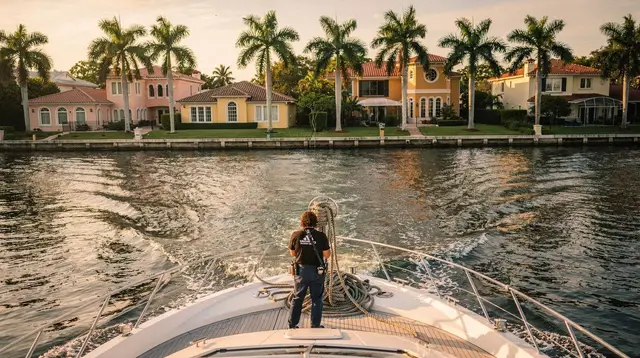
Some visitors treat an FLL landing as an opportunity to see Fort Lauderdale itself before heading south, rather than rushing straight through. If that’s you, a guided option covering Fort Lauderdale on the way can make sense: a guided driving tour of Fort Lauderdale paired with a boat cruise packages sightseeing and a canal cruise into a single booking, useful if you’d otherwise be driving straight past without stopping. For a faster, higher-altitude look at the coastline between the two cities, a helicopter flight from Fort Lauderdale over to Miami Beach turns the transfer itself into the activity, though it’s a splurge rather than a practical substitute for the options above, and it won’t move your luggage. Neither of these replaces the actual airport-to-Miami logistics; they’re add-ons for travellers with time to spare, not the default plan.
For travellers who’d rather explore Fort Lauderdale’s canals independently rather than as part of an airport-adjacent tour package, Fort Lauderdale boat tours and cruises lays out the standalone options in more detail, separate from the driving-tour-with-cruise combination above.
If your itinerary already has you going the other direction — from Miami up toward Fort Lauderdale for a day — see things to do in Fort Lauderdale and things to do in Palm Beach for what’s worth the trip north, separate from the airport question this page answers.
Timing your first day in Miami around the transfer
Whichever option you pick, don’t schedule anything tight for the first few hours after landing at FLL. Between deplaning, baggage claim, and the 30-mile trip south — plus South Florida’s habit of unpredictable traffic on I-95, especially during hurricane season storm build-up in the warmer months or around winter holiday travel peaks — a same-day boat tour, dinner reservation, or hotel check-in with a tight window is a common way to start a Miami trip stressed rather than relaxed.
If you’re still deciding where to base yourself once you arrive, where to stay in Miami and best time to visit Miami are worth reading before you lock in a hotel near the wrong causeway. And once you’re settled, keep in mind that hotel and rental-car pricing you saw when booking likely didn’t include Florida’s sales tax or Miami-Dade’s added lodging taxes — covered honestly in Miami sales tax and resort fees explained — so budget a bit above whatever number you booked at.
One mistake worth avoiding specifically at FLL: don’t assume you can simply walk to a rental car counter or a Brightline platform the way you might at a smaller regional airport. Budget the extra ten to fifteen minutes each of those connections quietly adds, on top of whatever ground-transport time you’ve already planned for above. For other easy-to-avoid slip-ups that catch first-time — and repeat — visitors off guard, see Miami travel mistakes to avoid.
FLL to Miami, the honest summary
None of the four options above is objectively “best” — each trades off differently against cost, luggage, group size, and whether you need a car later in the trip. A rental car earns its cost if the Everglades, the Keys, or Palm Beach are on your itinerary. A rideshare or pre-booked transfer suits a short, Miami-only stay with no interest in driving. Brightline suits light-luggage travellers happy to add one short connecting ride to the airport-to-station gap. What all four share is the same underlying fact worth repeating: FLL is roughly 30 miles from Miami, and that distance takes real time — usually 40 minutes to over an hour — regardless of which vehicle you choose to cover it in.
Getting around Miami: transport guides and tips
Verified deep-linked GetYourGuide tours. Book through these links and we earn a small commission at no cost to you.
GetYourGuide does not provide a product photo for this activity — the image shows the meeting point, photographed by us.