A separate city, not a Miami suburb
Fort Lauderdale sits about 30 miles (48 km) north of Miami, in Broward County, and it works as a destination on its own terms rather than as an extension of Miami’s skyline. It has its own downtown, its own beach, its own airport — Fort Lauderdale-Hollywood International (FLL) — and its own cruise terminal, Port Everglades. Treating it as “Miami with more canals” undersells what actually separates the two: how you get there, how you move once you arrive, and what a day here is actually for.
This guide stays inside Fort Lauderdale itself — its downtown, its canals, its beach and its port. Hollywood and its Broadwalk, and Palm Beach further north, are close by in the same region but are their own places with their own character; they get their own pages rather than a mention here that blurs the boundary.
Getting there: Brightline, FLL, or the road
The simplest way from Miami is Brightline, the higher-speed train that connects MiamiCentral, Fort Lauderdale and West Palm Beach (and continues on to Orlando). The Miami-to-Fort Lauderdale leg runs roughly 30-45 minutes depending on the schedule, with stations in each downtown, which removes any need to think about I-95 traffic or where to park. For a single day trip up and back, it is the option that costs the least mental overhead.
Flying in changes the calculation. Fort Lauderdale-Hollywood International (FLL) sits a short distance south of downtown and is frequently the cheaper fare for the same route compared with Miami International (MIA), especially on low-cost carriers. If your itinerary is built around Fort Lauderdale and points north rather than Miami Beach, flying into FLL and transferring from there can save both money and a longer drive south.
Driving remains the practical choice if Fort Lauderdale is one stop on a wider loop through Broward and Palm Beach counties — north toward Pompano Beach, Boca Raton or Delray Beach, all outside this page’s scope but part of the same region. Expect about 40 minutes to an hour on I-95 or the Turnpike from central Miami without traffic, notably longer during the evening rush. Renting a car also means budgeting for Florida’s cashless tolls, usually billed later by the rental company with an added fee. For the Miami-Fort Lauderdale leg specifically, Brightline removes the need to weigh any of that.
Downtown itself centres on Las Olas Boulevard, the walkable strip of restaurants, galleries and boutique shops that connects the New River area to the beach. It’s a reasonable place to anchor a few hours between a canal cruise and a beach stop, and it’s the closest thing Fort Lauderdale has to a single “main street” — a fuller rundown of what’s actually there is at things to do in Fort Lauderdale, and for anyone timing a meal around a boat trip or the beach, Fort Lauderdale’s food and drink options cover the same downtown stretch.
Canals and water taxis: how the city actually moves
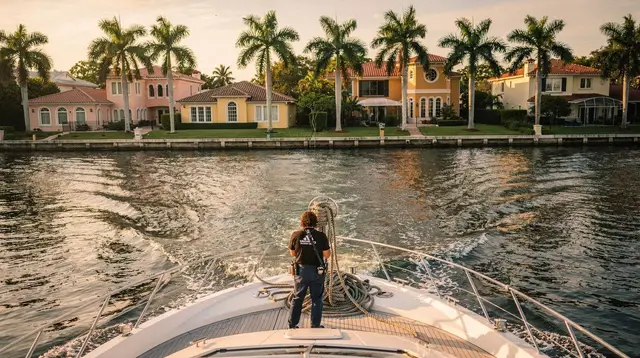
What sets Fort Lauderdale apart from a list of attractions is its canal network — genuinely extensive, running through residential neighbourhoods and connecting out to the Intracoastal Waterway and the ocean. This isn’t a marketing line; it’s the reason a water taxi is a normal way to get from a downtown restaurant to a beachfront bar rather than a novelty ride. The water taxi service runs fixed stops along the New River and the Intracoastal, with the frequency of a bus rather than a private charter, and it’s worth checking current stops and hours before relying on it for a schedule-bound plan.
The same canals are also the reason boat rental and boat tour operators are concentrated here rather than in central Miami. A short cruise through the canals past waterfront homes gives a sense of the city that walking downtown doesn’t, and it doesn’t require owning or docking anything. Options range from a short guided run to a private charter:
a private yacht cruise along the canals and coastline suits a small group that wants the boat to itself, while renting a small powerboat works for anyone who’d rather pilot their own route through the canal system at their own pace, no captain’s license required for these rental categories.
A canal cruise isn’t the only way onto the water here. Anyone who’d rather move at their own pace and stay closer to shore can rent a kayak or paddleboard and work the calmer stretches of the Intracoastal, and the same canal network that suits a slow cruise also suits a faster morning on a jet ski for anyone who wants speed over scenery. For a wider comparison of guided options before picking one, Fort Lauderdale’s boat tours and cruises lines up the main choices side by side.
The beach in Fort Lauderdale
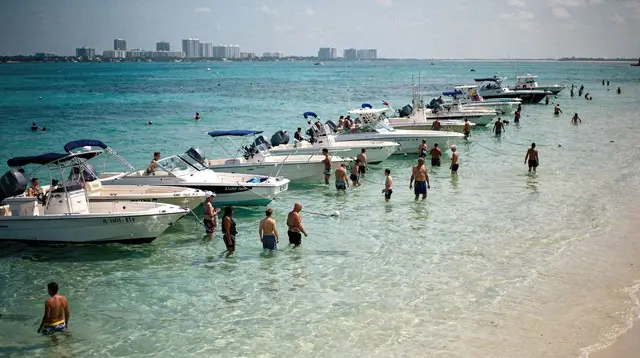
Fort Lauderdale’s beach runs along A1A as a long, comparatively straight stretch of sand, backed mostly by low- and mid-rise buildings rather than the dense hotel wall of South Beach. It is public and free to access, with metered street parking and a handful of paid lots near the busier sections. The atmosphere reads calmer than South Beach — fewer promoters working the sidewalk, a slower pace along the beachfront promenade — which is a difference in character, not a ranking. Anyone deciding between the two areas for a stay is really choosing between two different kinds of day, and it’s worth reading that comparison directly rather than assuming one city is simply a quieter version of the other; see Miami Beach versus Fort Lauderdale for the specifics.
Ocean conditions here are the same south Florida baseline as elsewhere on this coast: check for rip current flags before swimming, and expect the warm, humid stretch of the wet season (roughly May to October) to bring short, sharp afternoon storms that can clear a beach for half an hour and then pass.
Port Everglades: the cruise terminal at the edge of downtown
Port Everglades sits just south of downtown Fort Lauderdale and ranks among the busier cruise ports on the US east coast, alongside its cargo shipping operations. For most visitors it’s a practical fact rather than an attraction in itself: if a cruise starts or ends there, it changes how the rest of the day should be planned. A morning disembarkation leaves a real window to see the canals or the beach before a flight out of FLL, which sits only a short transfer from the port — worth building into the schedule rather than rushing straight past. Transfers between the airport, the port and downtown are common enough that pre-booking one removes a layer of uncertainty on an embarkation or disembarkation day.
Hurricane season and picking the right week
Like the rest of south Florida, Fort Lauderdale sits inside the Atlantic hurricane season, which runs June 1 to November 30 and peaks from August to October. Most weeks in that stretch pass with nothing more than the usual afternoon thunderstorm, but it’s the reason November-to-April travel is the more reliable bet for anyone planning a canal cruise, a boat rental or a beach day around a fixed schedule — outside of peak season, prices are also generally lower. Miami’s hurricane season guide covers what to actually watch for and how operators here handle a storm warning, which applies the same way in Fort Lauderdale as it does further south.
Where the day trips overlap (and where this guide stops)
Fort Lauderdale sits inside a wider region that this site groups as Fort Lauderdale and Palm Beach, which also covers Hollywood just to the south and Palm Beach further north, with West Palm Beach on the mainland opposite it. Those places have their own downtown areas, their own beaches and their own reasons to visit, and folding them into a Fort Lauderdale page would blur three distinct destinations into one. If a longer loop through the region is the plan, five days combining Miami and Fort Lauderdale lays out a version of that without repeating each city’s page.
For a shorter organised option that covers Fort Lauderdale alongside Boca Raton in a single outing from Miami, a day trip pairing Fort Lauderdale and Boca Raton removes the need to plan transport between the two.
On the water and in it: snorkeling and diving nearby
North of downtown, the small community of Lauderdale-by-the-Sea sits close to a shallow, accessible reef and at least one known shipwreck site, both reachable without the longer boat run some Keys sites require. a snorkeling trip out to the shipwreck and coral reef off Lauderdale-by-the-Sea is a reasonable half-day add-on for anyone already up the coast, and typically involves a shorter boat ride out than the reef trips departing from Key Largo.
Seeing the city and the coastline from above is another way to take in how the canals, the beach and the port fit together, which is hard to grasp from ground level; a helicopter flight covering both Miami and Fort Lauderdale gives that overview in a single short flight, priced for two.
Getting around once you’re there
Downtown Fort Lauderdale, Las Olas Boulevard and the beachfront are close enough together to walk between on a clear day, and the water taxi covers the gaps a walk would make tedious, particularly crossing between the canal-lined residential areas and the beach. A car adds little inside this compact core and mostly adds a parking bill; it becomes worth having only if the plan extends north toward Pompano Beach or Boca Raton on the same day, outside what this page covers. Getting around Miami’s own transit doesn’t extend this far north — Broward County runs its own separate bus network, and Brightline is the one system that bridges the two counties.
Anyone weighing a full day trip against a longer stay can compare the two directly with Fort Lauderdale as a day trip from Miami, which lays out what fits into a single day versus what needs an overnight.
What a day in Fort Lauderdale costs
| Item | Typical range |
|---|---|
| Brightline, Miami to Fort Lauderdale (one way) | $10-40, varies by time and class |
| Water taxi day pass | $30-35 per person |
| Lunch near the beach or Las Olas | $18-35 per person |
| Small boat rental (a few hours) | $150-400+ depending on boat size |
| Guided canal or coastal boat tour | $50-150 per person |
Treat these as a starting point rather than a quote — prices and taxes add up in Florida the same way they do in Miami: Broward County sales tax applies on top of every listed price, and 18-20% tipping is the norm on food, drinks and any guided tour or charter. Check the current fare and schedule on the operator’s own listing before travelling.
Fort Lauderdale questions travelers actually ask
Is Fort Lauderdale part of Miami?
No. Fort Lauderdale is its own city in Broward County, about 30 miles (48 km) north of Miami. It has its own downtown, its own airport code (FLL) and its own city government — it is a separate destination, not a Miami neighbourhood.
How do you get from Miami to Fort Lauderdale?
The Brightline train runs between Miami and Fort Lauderdale in roughly 30-45 minutes, several times a day, without any need to think about tolls or parking. Driving on I-95 or the Florida Turnpike takes about 40 minutes to an hour without traffic, more at rush hour.
Is Fort Lauderdale-Hollywood airport (FLL) better than Miami International (MIA)?
Neither is objectively better — FLL is often cheaper for the same route and sits closer to Fort Lauderdale itself, while MIA sits closer to central Miami and Miami Beach. Compare fares and the onward transfer to your accommodation before booking either one.
Do you need a car in Fort Lauderdale?
Not for the city centre and the beach, which are walkable and served by water taxis. A car becomes useful if you plan to continue north toward Pompano Beach, Boca Raton or Delray Beach on the same trip.
What is Port Everglades used for?
Port Everglades is a major cruise terminal at the south edge of Fort Lauderdale’s downtown, along with cargo shipping. If your cruise departs or ends there, you can pair the transfer with a few hours in the city rather than heading straight to or from the airport.
Is the Fort Lauderdale beach different from Miami Beach?
Yes. Fort Lauderdale’s beach is a straight, quieter oceanfront strip along A1A, backed by low-rise buildings rather than Art deco towers, and it lacks South Beach’s density of bars and people-watching — a different pace, not a lesser one.
Does hurricane season affect a Fort Lauderdale day trip?
It can. The Atlantic hurricane season runs June 1 to November 30, with the highest risk from August to October. Most days in that window are unaffected, but it is worth checking the forecast before a canal or boat outing, since operators can cancel or reschedule around a storm.
Is Las Olas Boulevard worth the time on a short visit?
If the day trip is more than a beach stop, yes — Las Olas Boulevard is the walkable strip of restaurants, galleries and shops that fills the gap between downtown and the beach, and it pairs naturally with a canal cruise or a water-taxi ride.