Jet ski and water sports in Fort Lauderdale
Is Fort Lauderdale a good base for jet ski and water sports?
Yes. Fort Lauderdale's canal network and calmer nearshore waters suit jet skis, tubing and towed sports better than the open reef conditions further south. Expect $80-$200 per person before the 7% sales tax and an 18-20% tip when a guide or instructor rides along.
Why Fort Lauderdale is built for speed, not just scenery
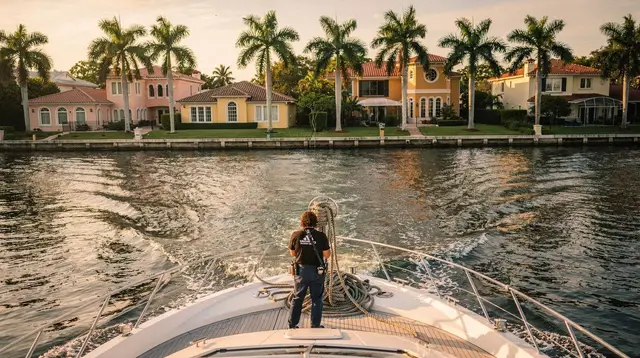
Fort Lauderdale sits about 30 miles (48 km) north of Miami and is known locally as the “Venice of America” for its extensive canal network. That geography matters for water sports: canals and the Intracoastal Waterway give jet skis, tubes and towed inflatables a stretch of comparatively sheltered water, away from open-ocean swell. This is the region’s fast, motorised end of the spectrum. If your idea of a good day on the water is drifting over a reef with a mask and snorkel, that experience sits further south in Palm Beach, which is calmer, shallower for snorkeling and generally slower-paced — see our Palm Beach snorkeling and diving guide for that side of the region.
Fort Lauderdale is also home to Port Everglades, one of the busiest cruise ports in the world. That proximity means a jet ski or tubing session can realistically bookend a cruise, whether you arrive a day early or have a few hours before a late-afternoon sailing. It also means marinas and rental counters here are used to a mixed crowd: cruise passengers squeezing in an hour of speed, locals from Hollywood and Palm Beach day-tripping in, and visitors routing through on the way to or from Miami.
What “water sports” covers here
The category spans a few distinct activities, and providers rarely bundle all of them into one booking:
- Jet ski rental or guided tour — either a supervised guided ride along the canals and Intracoastal, or (less commonly for visitors) an independent rental once you’ve passed the operator’s on-water check.
- Tubing — riders on an inflatable towed behind a boat, generally the mildest option and often the best fit for families or groups with mixed comfort levels.
- Flyboard and Flitescooter — motorised boards that push riders above or through the water using a jet propulsion system; these need a proper lesson first, not just a rental handoff.
- Parasailing and towed inflatables — less central to this guide but frequently offered by the same operators as add-ons.
None of these are the same booking as a slow-paced boat tour along the canals, which is worth mentioning if you’re comparing options — a canal cruise gets you the scenery without the spray.
a group tubing session on Fort Lauderdale’s waterways is a reasonable starting point if your group includes anyone who has never been on a jet ski or towed inflatable before — the boat operator controls the speed, which takes some of the guesswork out of a first outing.
Jet ski rules and what operators actually require
Florida law requires anyone born on or after January 1, 1988 to complete an approved boating safety course before operating a personal watercraft alone. In practice, most tourist-facing rental operators don’t ask to see that certificate for a supervised, guided tour — they run a short on-water briefing and keep an eye on the group from an escort boat instead. If you’re hoping to rent independently rather than join a guided ride, confirm the operator’s exact requirements when booking; policies vary and some require a card, an ID, or a refundable deposit against damage.
A few practical points that trip visitors up:
- Life jackets are mandatory and provided by the operator.
- Minimum age and weight limits apply, and they differ between jet skis (typically nothing under about 90 lb, and often a minimum age around 16-18 to drive) and tubing (often more flexible, but check).
- Most guided jet ski tours run in pairs or small groups behind a lead guide; the pace is set by the group, not by whoever wants to go fastest.
- Wear secured footwear and expect to get thoroughly wet — bring a dry bag for phones and keys.
Learning to ride above the water: Flyboard and Flitescooter
a Flitescooter lesson on Fort Lauderdale’s water is a genuinely different experience from jet skiing — it’s closer to a hoverboard powered by a jet propulsion unit, ridden standing up, low over the water. These sessions are taught, not rented: expect 15-30 minutes of instruction on land and shallow water before you’re doing anything that looks impressive, and expect to fall in more than once. Sessions are usually sold in short blocks (around 30 minutes of actual ride time), which is plenty for most first-timers given the physical effort involved.
A calmer detour: snorkeling at Lauderdale-by-the-Sea
Not every day on Fort Lauderdale’s water needs to be at full throttle. A short drive north of the main jet ski and tubing docks, the small town of Lauderdale-by-the-Sea sits over a shallow, well-preserved reef close enough to shore that boats can reach it in minutes rather than the longer runs required further south toward the Keys. a snorkeling trip out to a shipwreck and coral reef is worth building into the same trip if your group is split between people who want speed and people who would rather float quietly over a reef with a mask on. It is a shorter, calmer counterpart to the reef snorkeling and diving covered in our Palm Beach snorkeling and diving guide, without needing to change base for the day.
What to bring for a day on the water
A few packing details make the difference between a smooth session and a soggy, sunburned afternoon:
- Reef-safe sunscreen, applied early. Put it on well before you reach the water — most operators won’t pause a safety briefing for sunscreen to dry once the group is assembled.
- A dry bag or waterproof phone pouch. You will get wet on all of these activities, jet ski, tubing and Flyboard alike, and marinas rarely have anywhere secure to stash a phone or wallet during a session.
- Secured footwear. Flip-flops come off in the water almost immediately; water shoes or sandals with a back strap stay on through tubing, jet skiing and wading in and out of a boat.
- A change of clothes and a towel. Most rental counters have a basic restroom at best, not a proper changing room, so plan to travel damp or bring something to change into in the car.
- Extra sun cover beyond sunscreen. A rash guard or a light long-sleeve shirt cuts down on reapplication time and sunburn risk on a session that can run well over an hour, especially at midday.
None of this is specific to Fort Lauderdale, but it matters more here than on an ordinary beach day, because a jet ski or tubing session doesn’t stop mid-tour so you can dig through a bag or reapply sunscreen.
What it costs, and what’s not in the sticker price
| Activity | Typical price range (per person) | Duration | Notes |
|---|---|---|---|
| Guided jet ski tour | $80-$150 | 1-1.5 hours | Often sold per jet ski (1-2 riders), not strictly per person |
| Group tubing session | $40-$80 | 30-60 minutes | Price usually per rider, boat shared across a group |
| Flyboard/Flitescooter lesson | $100-$180 | 30-45 minutes on the water | Includes instruction time |
| Independent jet ski rental (where offered) | $90-$180/hour | By the hour | Deposit and ID typically required |
These are ranges, not quotes — always check the operator’s page or listing for the exact price and time slot on your travel dates. Two things are consistently missing from the sticker price:
- Florida sales tax. The state rate is 6%, and Miami-Dade County adds a 1% surtax for 7% total; Broward County, where Fort Lauderdale sits, sets its own local surtax on top of the 6% state rate, so the final percentage can differ slightly from Miami’s. Either way, tax is added at checkout, not folded into the advertised price.
- Tipping. When a skipper, guide or instructor rides along or runs the safety briefing from an escort boat, an 18-20% tip is the norm, the same as for any guided experience in South Florida. It is expected, not optional, even if it isn’t itemised on the booking confirmation.
There’s no such thing as a genuinely all-inclusive quote here — budget the sticker price plus roughly a quarter more once tax and tip are folded in.
Fitting a water sports session around a cruise
Port Everglades handles a large share of South Florida’s cruise traffic, and several jet ski and tubing operators sit within a short drive or rideshare of the port. If you’re flying into Fort Lauderdale-Hollywood (FLL) the morning of embarkation, a jet ski session the night before or the morning after disembarkation is a realistic way to add an active hour or two to a cruise trip without detouring into Miami. FLL is often the cheaper airport of the two serving this region — Miami International (MIA) makes more sense only if you’re also spending real time in Miami itself. See from Fort Lauderdale airport to Miami if your itinerary spans both cities.
One caution: cruise lines set firm boarding cutoffs, and South Florida traffic on the Intracoastal-adjacent roads near the port can be unpredictable on cruise-turnaround days (Saturdays especially). Book a water sports slot with enough buffer that a running-late tour boat doesn’t turn into a missed sailing.
a hands-on dumpling-making class is a useful alternative for the same afternoon if weather cancels a water session — Fort Lauderdale’s food scene doesn’t depend on calm seas.
Weather, wind and when a session gets cancelled
Fort Lauderdale sits in the same subtropical climate band as the rest of South Florida: hot and humid roughly May through October, with brief but intense afternoon thunderstorms, and drier, sunnier conditions roughly November through April. Water sports operators cancel or delay for lightning and for sustained high wind more readily than for ordinary rain — a passing shower rarely stops a tour, but a thunderstorm cell will, for safety reasons that aren’t up for negotiation.
The Atlantic hurricane season runs June 1 through November 30, with activity typically peaking August through October. That doesn’t mean water sports are off the table in those months — most days are unaffected — but it’s worth booking a refundable or flexible slot and checking the forecast a day or two out rather than assuming good weather. If you’re travelling in that window, our hurricane season guide covers what to actually watch for.
How this compares to nearby options
If you’re deciding between regions rather than just activities, here’s the honest comparison:
| Fort Lauderdale | Palm Beach | |
|---|---|---|
| Pace | Fast — jet skis, tubing, towed sports | Slow — snorkeling, diving |
| Water | Canals, Intracoastal, nearshore | Reef-adjacent, clearer for visibility |
| Best for | Groups wanting an adrenaline hour | Visitors wanting calm, contemplative time in the water |
| Nearest airport | Fort Lauderdale-Hollywood (FLL) | Palm Beach International, or FLL further south |
Neither is objectively better — they suit different moods, and some visitors do both on a longer South Florida trip. Our Miami Beach vs Fort Lauderdale comparison covers the broader lodging-and-vibe question if you haven’t picked a base yet.
Booking practicalities
- Reserve ahead in peak season (roughly November-April) and on weekends year-round; walk-up availability shrinks fast on sunny Saturdays.
- Check the cancellation policy before paying — weather-related cancellations are common enough that a rigid no-refund policy is worth avoiding if you can.
- Confirm what’s included: life jacket, fuel, instruction time and any photo package are sometimes bundled, sometimes charged separately.
- Arrive early: most operators run a mandatory safety briefing that starts at the booked time, not after it, and latecomers can lose their slot.
Frequently asked questions about Fort Lauderdale jet ski and water sports
How far is Fort Lauderdale from Miami?
About 30 miles (48 km) north of Miami, roughly 30-45 minutes by car or Brightline train depending on traffic and schedule.
Do I need a license to ride a jet ski in Florida?
Florida requires anyone born on or after January 1, 1988 to complete a boating safety course, but most rental operators substitute their own on-water instruction for tourists. Confirm the operator’s exact policy when booking.
Is Fort Lauderdale-Hollywood or Miami International better for a water sports trip?
Fort Lauderdale-Hollywood (FLL) is often cheaper and sits closer to the canals and marinas covered here. Miami International (MIA) makes more sense if you are also spending time in Miami itself.
What is the difference between Fort Lauderdale and Palm Beach for water activities?
Fort Lauderdale leans toward speed: jet skis, tubing and towed sports on canals and nearshore water. Palm Beach, in the same touristic region, leans toward snorkeling and diving, a slower and more contemplative pace.
Are prices for jet ski tours all-inclusive?
No. Listed prices exclude Florida’s sales tax (7% in Miami-Dade; Broward County, where Fort Lauderdale sits, applies its own local rate) and do not include the 18-20% tip expected when a skipper or instructor accompanies you.
Can cruise passengers do a jet ski tour before or after a cruise?
Yes. Port Everglades, Fort Lauderdale’s cruise terminal, is close to several rental operators, which makes a short water sports session a realistic add-on around embarkation or disembarkation. Confirm timing against your cruise line’s boarding cutoff.
Is tubing safe for kids and beginners?
Tubing is generally milder than solo jet skiing since a boat operator controls the speed, but check the operator’s minimum age and weight requirements before booking.
Can I bring my own jet ski instead of renting?
Most tourist bookings are guided tours using the operator’s own jet skis. Launching a personally owned or trailered jet ski at a public ramp is possible but is a separate arrangement from the guided tours covered here, and out of scope for most visitors.
Is Lauderdale-by-the-Sea part of Fort Lauderdale?
It’s a separate, smaller town just north of Fort Lauderdale, best thought of as part of the same touristic stretch even though it has its own name and local government.
Jet ski and water sports tours on Miami Beach
Verified deep-linked GetYourGuide tours. Book through these links and we earn a small commission at no cost to you.
GetYourGuide does not provide a product photo for this activity — the image shows the meeting point, photographed by us.