Things to do in Fort Lauderdale
What is there to do in Fort Lauderdale?
Fort Lauderdale centres on a wide public beach, a canal network toured by boat taxi, and Port Everglades, one of the world's busiest cruise ports. It's also the gateway to day trips north of Miami, with its own airport (FLL) and a Brightline train station linking it to Miami and West Palm Beach.
The gateway north of Miami
Fort Lauderdale sits about 30 miles north of Miami, and it’s the natural starting point for anyone planning a day trip into the Fort Lauderdale-Palm Beach area. It has three things Miami doesn’t offer in the same combination: a canal network you can tour by water taxi, Port Everglades as a working cruise terminal, and its own airport, Fort Lauderdale-Hollywood International (FLL), which often prices lower than Miami International (MIA). Add Brightline, the train that links Fort Lauderdale to both Miami and West Palm Beach, and this stretch of coast is easy to reach whether you drive or take the rail.
This page is deliberately the broad one. With 96 bookable activities tied to Fort Lauderdale, it’s the most fully stocked guide in this part of the region, and its job is to set the general frame for the area before the neighbouring pages go deeper. Hollywood, Florida — the beach town with the seafront Broadwalk, not the California district of the same name — gets its own page for its smaller scale and its own mix-up to sort out. Palm Beach, with its villas, Worth Avenue and the Flagler Museum, has its own page too. Here, the focus stays on Fort Lauderdale itself: what fills a day, what the canals and the cruise port actually offer, and how the transport options stack up.
Getting to Fort Lauderdale from Miami
Two realistic ways to reach Fort Lauderdale from Miami: driving, or taking Brightline. Driving means I-95 or US-1 north, both straightforward and well-signed; parking downtown and near the beach runs on paid lots and meters, cheaper the earlier you arrive. Brightline is the train option, with stations in Miami, Fort Lauderdale and West Palm Beach — useful if you’d rather skip driving and parking altogether, especially for a single-day visit. Full details on stations, tickets and how the service compares to driving live on the dedicated Brightline guide; this page won’t repeat a travel time here, since pinning down a specific duration for that route isn’t something the site’s core facts cover.
If you’re flying rather than driving from Miami, Fort Lauderdale-Hollywood International (FLL) is worth comparing against Miami International (MIA) directly. FLL sits closer to this stretch of coast, often has lower fares, and connects straight to Port Everglades for anyone starting or ending a cruise here. Renting a car for the wider region — useful for reaching the Everglades or the Keys later in a trip — comes with its own toll and parking quirks covered on the car rental guide.
Whichever airport you land at, the practical basics for the whole region are the same: driving is on the right, the currency is the US dollar, and displayed prices don’t include the local sales tax, added at checkout. Visitors arriving from a Visa Waiver Program country need an ESTA, applied for only through the official esta.cbp.dhs.gov site, not a visa; the entry rules guide covers this in more detail for anyone flying in directly rather than driving up from Miami.
The beach and the canals
Fort Lauderdale Beach runs along a wide stretch of sand facing the Atlantic, with a beachfront promenade lined by palm trees, hotels and casual restaurants. It’s a genuinely different feel from South Beach: quieter crowds on an average weekday, wider sidewalks, and a more suburban pace behind the beachfront strip.
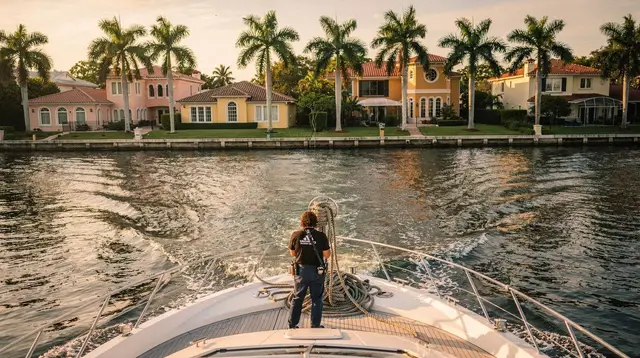
Behind that strip, Fort Lauderdale earns its old nickname, the “Venice of America,” from a genuine canal network threading through residential neighbourhoods and out to the Intracoastal Waterway. Water taxis and sightseeing boats run set routes along these canals and the New River, giving a view of waterfront homes, marinas and yachts that you don’t get from a car. A guided canal or boat tour is one of the more efficient ways to see a lot of the city in a short window, and it’s a common first booking for a day visit.
a day trip from Miami covering Fort Lauderdale and Boca Raton is a practical option if you want the canals and a second town covered in one outing without driving yourself.
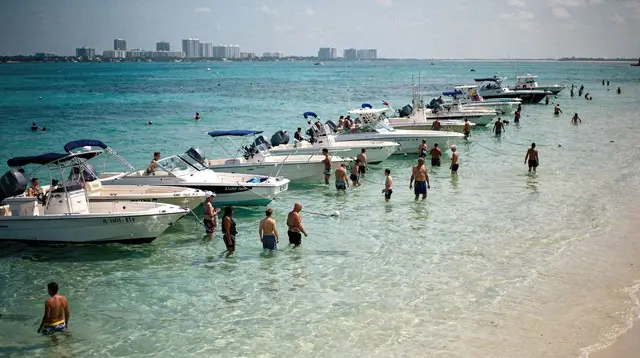
For visitors who prefer to be on the water rather than looking at it, snorkelling trips run out to shipwrecks and reef sites just offshore. a snorkelling tour to a shipwreck and coral reef near Lauderdale-by-the-Sea covers one of the more popular options, suited to visitors who want time in the water rather than just on it.
Port Everglades and cruises
Port Everglades, right in Fort Lauderdale, ranks among the busiest cruise ports anywhere, alongside PortMiami to the south. If a cruise is part of your trip, arriving via FLL rather than MIA can simplify the transfer considerably, since the airport and the port sit close together. Airport and cruise-port transfer logistics for the wider Miami area, including options that start or end at FLL, are covered on the Miami airport and cruise port transfers guide; Fort Lauderdale’s own airport and Port Everglades transfers guide goes into more local detail.
Even without a cruise booked, Port Everglades is worth a look on a canal or harbour tour: seeing a cruise ship at dock up close, alongside working cargo terminals, gives a sense of scale that’s hard to get from land.
Food, classes and a broader taste of the city
Fort Lauderdale’s food scene runs from casual beachfront spots to a genuine restaurant culture inland along Las Olas Boulevard. A guided walk covering several stops in one outing is a reasonable way to sample more than one kitchen without committing to a single long dinner: a Fort Lauderdale food tour covers a handful of local restaurants and bars in a single afternoon or evening.
Cooking classes are a smaller but genuine part of the local activity mix too, aimed more at a hands-on afternoon than at sightseeing — dumpling-making, gnocchi-making and French cooking classes with local chefs all run here, alongside beach picnic setups for a slower half-day by the water. These sit outside the two- to four-link limit for this page, but they’re worth knowing about if a food-focused activity fits your day better than a boat tour.
For a different kind of afternoon, a day pass to the Margaritaville Hollywood Resort gives access to a resort pool and beachfront setup just south of Fort Lauderdale — a useful option if you want a resort-style day without booking a room, and a natural bridge toward the separate Hollywood page for anyone continuing south along the coast.
If your day trip includes a stop at a freshwater attraction rather than the coast, tubing trips run on rivers near Fort Lauderdale and make for a lower-key, family-friendly few hours compared to a boat or snorkelling tour.
Beyond the handful of activities called out above, the food and drink scene here goes well past a single tour: the Fort Lauderdale food and drink tours guide rounds up the wider set of options, from casual bar crawls to sit-down tastings, for anyone who wants more choice than the one tour highlighted on this page.
On the water and in the air
Fort Lauderdale’s canals and coastline support more than the guided boat tours already mentioned. Jet ski rentals and guided rides run out from marinas along the Intracoastal Waterway, covered in full on the jet ski and water sports guide, and kayaks and paddleboards are a quieter, slower-paced way to see the same canals at your own speed, detailed on the kayak and paddleboard guide. For a view from above rather than the water, helicopter flights over the beach, the canals and Port Everglades give a different perspective on how the city fits together, with routes and pricing on the helicopter flights guide.
Fort Lauderdale versus its neighbours
It helps to be clear early on about what belongs where, since these three towns sit close together along the same coast and get confused often.
| Town | What it’s known for | Covered in depth on |
|---|---|---|
| Fort Lauderdale | Canals, water taxis, Port Everglades cruise port, FLL airport | this page |
| Hollywood, Florida | Beachfront Broadwalk, smaller and quieter, not the California district | Hollywood, Florida guide |
| Palm Beach | Villas, Worth Avenue, Flagler Museum | Palm Beach guide |
Fort Lauderdale is the largest and best-connected of the three for a visitor coming from Miami, which is exactly why it carries the broader roundup of activities here. Anyone wanting the specifics on Hollywood’s Broadwalk or Palm Beach’s boutiques should follow through to those dedicated pages rather than expect the detail here.
The three towns also sit at different points along the coast for anyone planning a longer loop rather than a single stop. Fort Lauderdale works well as the first stop north of Miami since it’s the closest and has the widest range of tours and transport options; Hollywood makes sense as a quieter add-on immediately after or before it; Palm Beach, further north again, suits a trip that has a full day or more to spend rather than a quick add-on. The Miami Beach versus Fort Lauderdale guide goes further into how Fort Lauderdale’s beach and pace compare with South Beach specifically, for anyone still deciding which coastal base fits their trip better.
When to visit and what to expect
Fort Lauderdale shares South Florida’s broader climate pattern: warm year-round, with a wetter, more storm-prone stretch roughly from May to October and a drier, sunnier season from November to April that also brings the highest prices and the busiest boat and snorkelling tours. The Atlantic hurricane season runs officially from 1 June to 30 November, with the highest chance of a storm affecting travel plans between August and October; it rarely means cancelling a whole trip, but it’s worth checking the forecast before locking in a boat tour during those months. The Miami hurricane season guide explains what this actually means for travellers in practice, and the best time to visit Miami guide covers the trade-offs between the two seasons in more depth, both applicable to Fort Lauderdale as part of the same regional climate.
A first-time day in Fort Lauderdale
A reasonable single-day plan: arrive by car or Brightline in the morning, start with a canal or water taxi tour to get oriented, have lunch along Las Olas Boulevard or on a guided food tour, spend the afternoon at the beach or on a snorkelling trip if the weather cooperates, and finish with a walk or an early dinner before heading back to Miami or on to the airport if you’re flying out via FLL. That itinerary works whether you’re staying overnight or treating this as a single day away from Miami; for a longer stay with more of the region built in, see the Fort Lauderdale day trip from Miami guide.
Families with younger kids might prioritise the tubing trip or a shorter boat ride over a full afternoon in the water; couples or groups looking for a livelier pace might lean toward the food tour and the resort day pass instead. Either way, booking ahead for anything water-based is worth doing during the busier winter season, when demand for boat and snorkelling tours picks up across the whole coast.
What this page doesn’t cover
This is the general roundup for Fort Lauderdale itself. For the specifics on the Broadwalk and the smaller scale of the town next door, see the Hollywood, Florida guide and its own things to do in Hollywood, Florida page. For the villas, Worth Avenue and the Flagler Museum further north, see the Palm Beach guide and the things to do in Palm Beach page, plus the dedicated Palm Beach day trip from Miami guide if you’re combining the two towns in one outing. For a wider look at boat options across Fort Lauderdale specifically, the Fort Lauderdale boat tours and cruises guide goes further than the overview above, and the Fort Lauderdale helicopter flights guide and Fort Lauderdale kayak and paddleboard guide cover activities only touched on briefly here.
Frequently asked questions about things to do in Fort Lauderdale
Is Fort Lauderdale worth visiting separately from Miami?
Yes. Fort Lauderdale has its own beach, canal system and cruise port, roughly 30 miles north of Miami. It works as a half-day or full-day trip, or as a base in its own right if you’re flying into FLL.
How do I get from Miami to Fort Lauderdale?
By car via I-95 or US-1, or by Brightline train, which connects Miami, Fort Lauderdale and West Palm Beach. Both are realistic options; how long either takes isn’t something we pin down on this page.
Is Fort Lauderdale-Hollywood Airport (FLL) a good alternative to Miami International (MIA)?
Often, yes. FLL frequently has cheaper fares than MIA and sits about 30 miles north of Miami. It also handles Port Everglades cruise traffic directly.
What’s the difference between Fort Lauderdale, Hollywood and Palm Beach?
They’re three separate places along the same coastal stretch north of Miami. Fort Lauderdale has the canals and the cruise port; Hollywood, a smaller beach town with its own Broadwalk, is covered on its own page; Palm Beach, with its villas and Worth Avenue, has its own page too.
Can I do a Fort Lauderdale boat tour without owning a boat?
Yes. Canal cruises, water taxis and sightseeing boats run regularly along the New River and the Intracoastal Waterway, no boat ownership required.
Is Fort Lauderdale a cruise departure point?
Yes. Port Everglades, right in Fort Lauderdale, is one of the busiest cruise ports in the world, alongside PortMiami further south.
Does Fort Lauderdale have its own beach separate from Miami Beach?
Yes. Fort Lauderdale Beach is a distinct stretch of coastline about 30 miles north of Miami Beach, with its own boardwalk-style promenade and canal-front streets behind it.
Trip planning guides for Miami and the Keys
Verified deep-linked GetYourGuide tours. Book through these links and we earn a small commission at no cost to you.
GetYourGuide does not provide a product photo for this activity — the image shows the meeting point, photographed by us.