Miami Beach vs Fort Lauderdale: which coastal base is right for you
Should I stay in Miami Beach or Fort Lauderdale?
Miami Beach is a separate barrier-island city with South Beach, the Art Deco Historic District and dense nightlife, best for travellers who want to be in the middle of it. Fort Lauderdale, about 30 miles north and linked by Brightline, has quieter canals, boat-taxis and Port Everglades, and usually costs less for a comparable room.
Two beach cities, not one choice inside one city
The comparison people actually need to make is not “which Miami neighbourhood” but which of two separate cities to base themselves in. Miami Beach is its own municipality on a barrier island across Biscayne Bay from Miami proper, reached by causeways rather than city streets — South Beach, the Art Deco Historic District and Lincoln Road all sit inside it. Fort Lauderdale is a different city again, in Broward County, about 30 miles (48 km) north of Miami, with its own downtown, its own beach, its own cruise port at Port Everglades, and a reputation built on canals and boat-taxis rather than nightclubs.
Neither is a suburb of the other, and neither is a suburb of Miami. If you are trying to decide where to sleep for a Miami-area trip, this page is the two-city version of that decision; the neighbourhood-level version, choosing between South Beach and Brickell inside Miami’s own footprint, lives on a separate page (see South Beach vs Brickell: where to stay in Miami). Hollywood and Palm Beach are separate again and get their own comparisons elsewhere on this site, so this page keeps the frame narrow: Miami Beach against Fort Lauderdale, nothing wider.
What Miami Beach actually offers
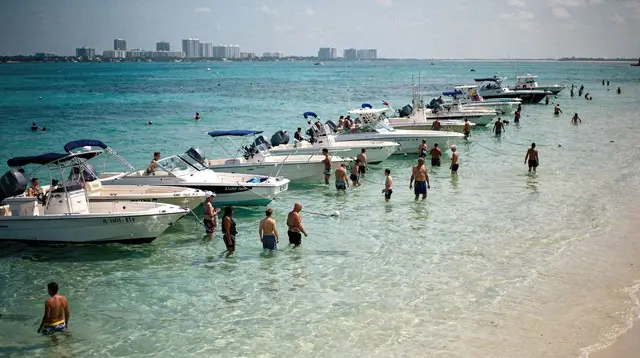
Miami Beach’s core selling point is density. Ocean Drive runs along Lummus Park with wall-to-wall Art Deco hotels from the 1920s-1940s, most with ground-floor bars and restaurants that spill onto the sidewalk. The Art Deco Historic District is listed on the National Register of Historic Places, and walking it at dusk, when the pastel facades light up, is one of the few things in this guide that is genuinely worth doing without qualification. Lincoln Road a few blocks north is the pedestrian shopping spine, closed to cars, lined with cafes and mid-range chains. The beach itself is public and free the length of the island, though a beach chair and umbrella rental in front of the big hotels is not.
What Miami Beach does not offer is calm. South Beach in particular runs loud into the early hours, street parking is close to impossible, and self-parking at a hotel routinely costs $40-60 a night before tax. North Beach and Mid-Beach, a couple of miles further up the island, trade some of that intensity for wider, quieter sand and lower rates, but they also trade away the walk-everywhere convenience that is the whole point of staying in South Beach.
| Miami Beach at a glance | Detail |
|---|---|
| Best for | Nightlife, walkable Art Deco streets, first-time visitors wanting to be in the middle of it |
| Getting around | Walkable in South Beach; free trolleys cover longer stretches of the island |
| Typical hotel cost | Higher than Fort Lauderdale for a comparable standard, especially beachfront |
| Parking | Scarce and expensive; a car is a liability, not an asset |
| Noise level | High in South Beach after dark; lower in North Beach and Mid-Beach |
What Fort Lauderdale actually offers
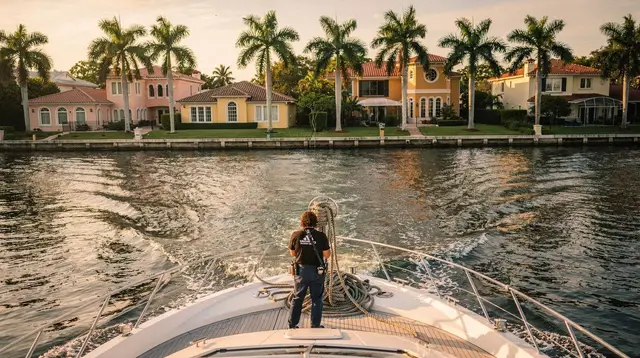
Fort Lauderdale’s identity is built on water, but a different kind of water than Miami Beach’s oceanfront strip. The city has an extensive canal network — often described locally as the “Venice of America,” a label that oversells it but points at something real — and much of the social life around the Riverwalk and the New River happens on or near boats. Water taxis run scheduled routes between the beach, Las Olas Boulevard and the Riverwalk, and a short canal cruise is a genuinely relaxed way to see the city that has no real Miami Beach equivalent. Port Everglades, one of the busiest cruise ports in the world, sits at the south end of the city, which also makes Fort Lauderdale the natural overnight stop before or after a cruise.
Fort Lauderdale’s beach itself is broad and pleasant but shorter on the dense hotel-and-bar strip that defines South Beach; Las Olas Boulevard, the closest equivalent to Lincoln Road, is smaller and skews toward boutiques and restaurants rather than late-night bars. The upside shows up in the bill: hotel rates for a comparable standard of room are usually lower than Miami Beach, parking is easier and cheaper, and the pace after 10pm is noticeably quieter almost everywhere except a handful of strips.
| Fort Lauderdale at a glance | Detail |
|---|---|
| Best for | Canal cruises, boat-taxis, a quieter beach evening, pre- or post-cruise stays |
| Getting around | Water taxis and the beach strip are walkable in sections; a car helps for the rest |
| Typical hotel cost | Generally lower than Miami Beach for a similar standard |
| Parking | Easier and usually cheaper than South Beach |
| Noise level | Lower overall; some concentration of nightlife on the beach strip |
The connection between them: Brightline, not a shared street
The two cities are close on a map but not close enough to treat as one trip without planning. Brightline runs frequent trains between downtown Miami and downtown Fort Lauderdale in under 30 minutes, which is the fastest and least stressful way to move between them — but neither station sits on the beach, so a taxi or rideshare is still needed at each end to actually reach South Beach or Fort Lauderdale’s beach.
Driving between the two beach areas directly, causeway to causeway, typically takes 45 minutes to over an hour depending on the time of day and I-95 traffic, closer to an hour and a half at rush hour. None of this is a reason to avoid combining the two cities on a longer trip — a day trip north from Miami is common and covered on its own page (see Fort Lauderdale day trip from Miami: canals, boat taxis and the beach) — but it is a reason not to book hotels in both and expect to hop back and forth casually within a short stay.
Flying in adds one more practical wrinkle worth knowing before booking: Fort Lauderdale-Hollywood International Airport (FLL) is often cheaper to fly into than Miami International (MIA), and it happens to sit closer to Fort Lauderdale than to Miami Beach, so a Fort Lauderdale base can save money on both the flight and the airport transfer.
a private transfer that covers both Miami International and Fort Lauderdale-Hollywood removes the guesswork of matching the airport to the hotel.
Who should pick Miami Beach
Pick Miami Beach if the trip is built around nightlife, people-watching and being able to walk from the hotel room to the beach, a restaurant and a bar without a car or a long rideshare. It also makes more sense for a first Miami-area trip, since South Beach concentrates the postcard version of the region — the Art Deco skyline, Ocean Drive, the beach itself — into a few walkable blocks. Couples and groups who want the option of a late night out, and travellers whose itinerary already centres on Miami’s other neighbourhoods (Wynwood, Little Havana, Brickell), benefit from staying close rather than adding a daily commute from the north.
A rooftop pool day is one of the easiest ways to feel the South Beach pace without committing to a club night: a beach club pool and spa day pass on Miami Beach gives access to loungers, pools and a spa for a day rate, and a slower way to see the southern tip of the island — past the Art Deco strip, down to South Pointe — is a guided golf cart tour of South Beach’s South Point area, which covers ground a walking tour would take much longer to reach.
Who should pick Fort Lauderdale
Pick Fort Lauderdale for a quieter, lower-cost stay with easier parking, for a trip built around boats, canals or a cruise departure from Port Everglades, or for a family trip that wants beach time without South Beach’s late-night crowd. It also suits anyone splitting a longer Florida trip who wants to break up the drive north toward Palm Beach or the Space Coast without doubling back through Miami traffic. Travellers who plan to rent a car anyway — for the Everglades, the Keys, or a wider Florida loop — lose less to Fort Lauderdale’s parking costs than they would in South Beach.
For a first look at what makes the city distinct from a standard beach town, a helicopter tour flying between Fort Lauderdale and Miami Beach puts both coastlines and the canal network in view in one flight, which is a useful way to decide, from the air, which shoreline actually matches what you pictured. The same route flown at golden hour, a sunset helicopter flight over Fort Lauderdale and Miami Beach, adds late light over the water without changing the itinerary otherwise.
Money and timing, side by side
Neither city publishes a single “real” price, and both add the same statewide 7% sales tax on top of listed hotel and tour rates, plus separate local accommodation taxes that vary by city — Miami Beach runs its own resort tax on top of the county rate. What differs in practice is the baseline: a mid-range hotel room in Fort Lauderdale is commonly $50-150 a night cheaper than an equivalent room in South Beach during the same week, and parking that costs $40-60 a night in South Beach is frequently free or under $20 in Fort Lauderdale. High season for both runs roughly November through April, when prices peak in both cities together; the Atlantic hurricane season, June 1 through November 30 with a peak from August to October, affects both coastlines equally, since they sit only 30 miles apart on the same stretch of coast — one is not meaningfully safer from a storm than the other.
| Miami Beach | Fort Lauderdale | |
|---|---|---|
| Distance from Miami | On Biscayne Bay, across the causeways | About 30 miles (48 km) north |
| Signature experience | Art Deco streets, Ocean Drive, dense nightlife | Canal cruises, boat-taxis, Port Everglades |
| Typical hotel cost | Higher | Lower for a comparable standard |
| Parking | Scarce, expensive | Easier, usually cheaper |
| Best linked by | Free trolleys, walking | Brightline (to downtown, not the beach), water taxis |
| Good match for | Nightlife-first trips, first-time visitors, car-free stays | Quieter trips, boat and cruise travellers, budget-conscious stays |
Frequently asked: choosing between Miami Beach and Fort Lauderdale
Is Fort Lauderdale part of Miami?
No. Fort Lauderdale is its own city in Broward County, roughly 30 miles north of Miami. It has a separate downtown, its own airport (FLL) and its own beach, connected to Miami by I-95, US-1 and the Brightline train, not by a shared municipal border.
How do I get between Miami Beach and Fort Lauderdale without a car?
Brightline connects downtown Fort Lauderdale to downtown Miami in under 30 minutes, but it does not run to the beach itself, so add a taxi or rideshare on each end. A rideshare door to door between South Beach and Fort Lauderdale’s beach runs about 45 minutes to over an hour depending on causeway and I-95 traffic.
Which is cheaper, Miami Beach or Fort Lauderdale?
Fort Lauderdale is usually the cheaper base for a comparable hotel standard, especially away from the beachfront strip, and parking is generally easier and less expensive than in South Beach. Both cities add the same 7% Florida sales tax plus separate accommodation taxes, so compare total nightly cost, not the sticker rate.
Is Fort Lauderdale worth visiting if I’m already staying in Miami Beach?
As a half-day or full-day trip, yes, mainly for a canal cruise or a walk on Las Olas Boulevard; as a base for a short trip with limited time, it makes more sense to pick one city and stay put rather than commute daily between the two.
Does Fort Lauderdale have a nightlife scene like South Beach?
It has bars, waterfront restaurants and a growing Las Olas strip, but nothing at the scale or density of Ocean Drive and the Art Deco Historic District. Travellers coming specifically for late nights and club culture should base themselves in Miami Beach.
Can I fly into Fort Lauderdale and stay in Miami Beach, or the other way round?
Yes, and it is often the cheaper option: Fort Lauderdale-Hollywood International Airport (FLL) frequently has lower fares than Miami International (MIA), and both airports are a reasonable taxi or rideshare ride from either beach city.
Is Fort Lauderdale a good base for the Everglades or the Florida Keys?
For the Everglades it works about as well as Miami Beach, since most entrances sit west of Miami rather than near either coast. For the Florida Keys, Miami is the shorter drive: adding Fort Lauderdale’s extra 30 miles turns an already long day into a longer one.
Comparisons to help you choose the right Miami tour
Verified deep-linked GetYourGuide tours. Book through these links and we earn a small commission at no cost to you.
GetYourGuide does not provide a product photo for this activity — the image shows the meeting point, photographed by us.