Accessible Miami: what we can honestly tell you
Is Miami accessible for visitors with mobility needs?
There's no single official accessibility rating for Miami or Miami Beach as a whole, and this guide doesn't invent one. What's confirmed: the Metromover is free and elevated, avoiding street-level walking between Downtown, Brickell and Omni, and ride-hailing apps cover most trips where walking or driving yourself would be hard. For any specific site, check directly with that museum, park or dock before you go.
What this guide can and can’t tell you
There is no single, official accessibility rating that covers Miami and Miami Beach as a whole, and no public database that scores every museum, park, boat dock or attraction in south Florida on ramps, elevators or wheelchair access. Individual venues set and publish their own accessibility information, and it varies site by site. So this guide does something narrower and more useful: it lays out what’s actually confirmed about getting around the region without relying on a lot of walking, and it’s honest about where the trail runs out.
That means no claims here about which specific attraction has a ramp, which boat has a lift, or which museum holds a disability access certification. None of that is documented well enough, in one place, for an independent guide to state it as fact. Anyone with a specific access need should contact the museum, park entrance, boat operator or hotel directly before the trip — that’s the only reliable source for site-level details, and it’s worth doing a few weeks ahead for anything involving a reservation, like an Everglades day trip from Miami or a Dry Tortugas National Park ferry.
What follows instead is what’s solid: the transport options that reduce how much walking or driving a visitor has to do, and where those options run into limits.
Miami and Miami Beach are laid out differently
Before getting into transport, it helps to be clear on geography, because it changes what “accessible” even means here. Miami sits on the mainland side of Biscayne Bay — Downtown and Brickell, Little Havana, Wynwood and the Design District, and Coconut Grove and Coral Gables all sit on that side. Miami Beach is a separate city on a barrier island, reached by causeways — it is never a neighbourhood of Miami. South Beach and the Art Deco Historic District are in Miami Beach, not in Miami.
That distinction matters for mobility planning because the two places work differently on foot. Downtown and Brickell have a free elevated train connecting them. South Beach is mostly a walking grid with metered street parking that fills up and costs real money. A visitor planning a day with limited walking capacity needs a different transport plan on each side of the bay.
The same “which side of the bay” question applies to the other Miami neighbourhoods. Little Havana and Wynwood and the Design District are both on the mainland, walkable in short stretches but without an elevated train like the Metromover — a car or ride-hailing trip between them and Downtown is the more comfortable option for anyone who tires on longer sidewalks. Coconut Grove and Coral Gables sit further south and are more spread out again, with sights like Vizcaya Museum and Gardens set back from the street on their own grounds — worth calling ahead about parking proximity to the entrance. Key Biscayne, reached by its own causeway rather than the ones linking Miami Beach, is effectively a third island for transport purposes: a car or taxi is the practical way there and back, since it isn’t on the Metromover or Metrorail network at all.
The Metromover: free, elevated, and worth building a day around
The single clearest accessibility-adjacent fact this guide can confirm is that the Metromover is free to ride. It’s an elevated automated train that loops through Downtown, Brickell and Omni on 21 stations, entirely above street level. That matters for two reasons: it skips street crossings, curbs and uneven sidewalks, and it skips Miami’s heat and afternoon storms, since most stations and cars are covered.
For a visitor who wants to see the Perez Art Museum Miami, Bayfront Park, or the Brickell financial district without a long walk in the sun, the Metromover is the first thing to plan around, not a fallback. Pair it with the Metrorail, which connects further out to Miami International (MIA) and other stations, for a longer trip that still avoids driving or a long walk. Full route detail and station names are in our Metromover, Metrorail and trolleys guide.
What this guide cannot confirm is which individual stations have working elevators on a given day, or the exact platform-to-street gap at each stop. Transit systems publish that kind of operational detail themselves, and it’s worth checking ahead if it’s a determining factor for the trip.
Where a ride-hailing car does more than a rental car
In Miami Beach specifically, a personal rental car often creates a problem rather than solving one. Parking is expensive, frequently metered by the hour, and rarely right next to the beach, restaurant or gallery a visitor is heading to — meaning the “last stretch” of walking after parking can be longer than the walk would have been from a drop-off point. A ride-hailing trip removes that stretch entirely: door to door, no walk from a parking spot, no time spent circling for a space.
The same logic applies to the heat. South Florida is warm for most of the year, and covering ground on foot between, say, Ocean Drive and Lincoln Road in midsummer is a different proposition than doing it in December. A short paid ride across South Beach, or between South Beach and North Beach, can be the difference between an enjoyable stop and an exhausting one.
That said, a car — rented or ride-hailed — is genuinely useful, sometimes necessary, for the excursions outside the city: the Everglades, the Florida Keys, or Fort Lauderdale and Palm Beach. Those distances don’t have a public-transport substitute the way Downtown and Brickell do. Our car rental, tolls and parking guide covers the practical side, including Florida’s cashless tolls.
For arrivals, a private transfer removes another variable: no waiting in a taxi line at Miami International (MIA) or Fort Lauderdale-Hollywood (FLL) with luggage, no walking to a rental counter and back to a car. a private transfer between Miami’s airports and the port is worth pricing against a standard taxi or ride-hailing fare, especially with a group or heavy luggage.
Guided tours that reduce walking, without claiming more than they are
Some paid tours are structured in a way that naturally cuts down on walking, even though none of the operators listed here have published accessibility certifications this guide can cite. A boat-based city tour, for instance, covers ground that would otherwise mean a long walk or a series of separate stops. a combined city tour with a boat segment lets a visitor see Downtown’s skyline and Biscayne Bay from a seat, without walking between viewpoints.
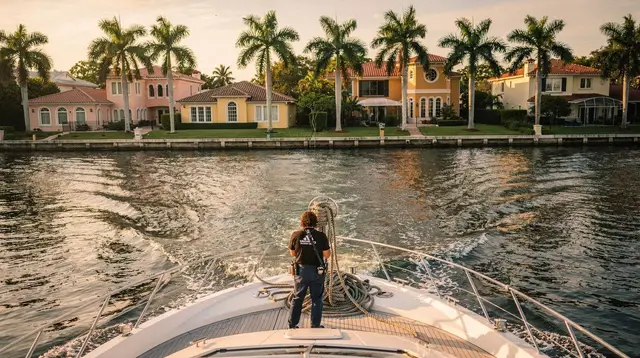
A private boat charter works the same way, and adds flexibility on timing and stops. a private guided boat tour of Biscayne Bay can be arranged around a group’s pace rather than a fixed schedule, which matters when standing or walking for long stretches isn’t comfortable.
For the Florida Keys, the drive to Key West is roughly 160 miles (257 km) each way, 3.5 to 4 hours of driving without stops — long for anyone self-driving, mobility concerns or not. a Key West day trip with a driver-guide removes the driving itself, which is one less thing to manage on a long day. None of this is a substitute for asking the specific operator about boat access, seating, or boarding — it’s simply a note on which tour formats involve less walking than a self-guided itinerary would.
Whatever the tour, book directly through the GetYourGuide or Viator listing and message the operator ahead of time with any specific access questions. That’s a more reliable answer than anything a general guide can offer.
The Everglades, the Keys and Key Biscayne: longer distances, fewer alternatives
Outside the city, the mobility calculation changes because there’s no free elevated train and often no realistic walking route between stops at all. The Everglades — Shark Valley, Everglades City and the Homestead entrance — are spread across a route with long gaps between visitor centers, and the classic way to see the sawgrass without walking a boardwalk trail is an airboat, seated the entire time; our Everglades airboat tours guide covers how much walking that option actually involves before booking.
The Florida Keys run the same way, just longer: Key Largo, Islamorada, Marathon and Key West are strung along a single highway with no public-transport alternative connecting them, so the choice is really between self-driving, a private transfer, or a seated tour that covers the same road. For a full day where standing or walking for long stretches isn’t comfortable, a boat tour out of Key Largo replaces a walking itinerary with a seated one — see our destination-specific guide on Key Largo boat tours and cruises.
A Bahamas day trip adds a different kind of planning: it’s an international crossing by fast ferry or day cruise, with a passport required and its own boarding process at the dock, separate from anything documented on the Miami mainland side of this guide. Our Bahamas day trip from Miami guide covers what that boarding and check-in process involves; contacting the operator ahead of time is the same advice as for any boat tour here.
Timing a trip around heat and hurricane season
Mobility planning in south Florida isn’t only about distance — it’s also about when a given amount of walking is comfortable at all. The region is warm year-round, but the wet, stormy stretch runs roughly from May to October, with the Atlantic hurricane season officially running June 1 to November 30 and its own risk of disrupted transport, cancelled tours, or closed attractions around a storm. The drier, sunnier months from roughly November to April are also the most comfortable for walking outdoors, and it’s the season when advance booking matters most for tours and transfers, since it’s the region’s busiest and highest-priced stretch. Our hurricane season guide goes into that trade-off in more detail, and it’s worth dressing for both heat and sudden downpours in whatever the season.
A short comparison: getting between areas
| From → to | Best option | Why |
|---|---|---|
| Downtown ↔ Brickell ↔ Omni | Metromover | Free, elevated, no walking between stations required for the ride itself |
| Miami (mainland) ↔ Miami Beach | Ride-hailing car or bus | Causeways aren’t walkable distances; a car or bus covers them directly |
| Within South Beach | Ride-hailing car for longer hops | Avoids paid parking and heat exposure; short blocks are still walkable for many |
| Miami ↔ Everglades or Keys | Rental car, private transfer, or guided tour | No practical public-transport link; distances are long |
| Airport ↔ hotel | Private transfer or ride-hailing | Avoids taxi lines, luggage handling, and a walk to a rental counter |
Prices for tours and transfers change with season and demand — check the current rate on the GetYourGuide or Viator listing before booking.
What to check before you go
Because this guide can’t state site-level accessibility as fact, the more useful step is a short list of who to actually ask:
- The museum, park visitor center, or boat operator directly, for ramps, elevators, accessible restrooms, or boarding assistance.
- The hotel, for accessible rooms, roll-in showers, or ground-floor options — resort fees and taxes are separate line items worth checking too, covered in our tipping, taxes and resort fees guide.
- The transit operator, for current elevator status at specific Metromover or Metrorail stations.
- The tour operator, before booking, if a boat, vehicle or activity has a specific access requirement — a quick message usually gets a same-day answer.
This is the same approach we’d recommend for any destination where no single accessibility standard covers every attraction: ask the site, not a general guide, for the details a general guide can’t verify.
Accessibility and getting around Miami: FAQ
Is there an official accessibility rating for Miami attractions?
Not that this guide can confirm. No site-by-site accessibility labels are documented here, so we don’t list them. Contact each museum, park or boat operator directly for details on ramps, elevators or wheelchair access.
Is the Metromover wheelchair accessible?
The Metromover is a free, elevated people-mover linking Downtown, Brickell and Omni, which avoids street-level obstacles and Miami’s summer heat. For specific station accessibility features, confirm with the transit operator before your trip.
Is it easier to get around Miami or Miami Beach without a car?
In Miami Beach, parking is expensive and often far from the entrance you need, and distances between South Beach, the Art Deco Historic District and North Beach add up in the heat. A ride-hailing car removes both problems. In Miami, the free Metromover covers the Downtown-Brickell-Omni loop without a vehicle at all.
Should I rent a car if walking long distances is difficult?
A car helps for the Everglades and the Florida Keys, where distances are long and public transport is limited. Inside Miami Beach, a car adds the separate problem of expensive, distant parking, so a ride-hailing trip is often the simpler option for short hops.
How do I check if a specific museum or park is accessible?
Contact the site directly. Museums such as the Perez Art Museum Miami or Vizcaya Museum and Gardens, and parks such as Everglades National Park or Biscayne National Park, are the only accurate source for ramps, elevators, accessible restrooms or wheelchair rental, since none of that is confirmed here.
Are boat tours and airboat rides accessible for limited mobility?
This depends entirely on the individual boat, dock and operator, none of which is documented in this guide. Ask the operator directly before booking, whether it’s an Everglades airboat, a Biscayne Bay cruise or a private charter.
Does the heat make mobility harder in Miami?
Yes, heat and humidity are constant much of the year, and they add real difficulty to walking distances that would be easy elsewhere. Ride-hailing cars and the free Metromover both remove the need to walk long stretches outdoors.
Accessible tours and attractions in Miami
Verified deep-linked GetYourGuide tours. Book through these links and we earn a small commission at no cost to you.
GetYourGuide does not provide a product photo for this activity — the image shows the meeting point, photographed by us.