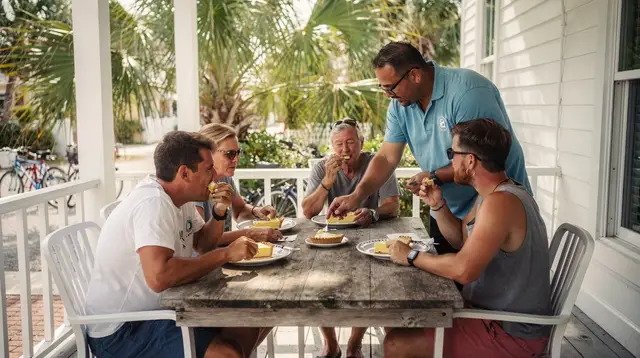
Workshops and classes in Miami
What kinds of workshops and classes can visitors take in Miami?
Miami offers hands-on cooking classes, salsa and dance lessons, pottery and craft workshops, and perfume-making sessions, mostly in small groups of under 15 people. Sessions run 1 to 3 hours and cost roughly $40 to $150 per person, with advance booking required since spots are limited.
What sets a workshop apart from a tour
Most visitors to Miami end up eating well and watching a lot — a food tour through Little Havana, a walk past the murals of Wynwood. A workshop or class asks for something different: you show up, and you leave having made a dish, learned a few dance steps, or fired a piece of clay. The distinction matters when you are choosing where to spend an afternoon. Our guide to Miami food and drink tours covers tastings where someone else does the cooking and you move between stops. This page covers the opposite: you stay in one room, an instructor works with a small group, and the output is yours — a recipe you can repeat at home, a handful of salsa turns, a small ceramic bowl, a custom scent in a bottle.
None of this is passive. Group sizes are usually capped under 15 people, sometimes under 8, and the better sessions book out days in advance during the November-to-April high season. If you want a specific class on a specific afternoon, reserve it before you land rather than hoping to walk in.
If you’re mapping out an itinerary rather than picking a single afternoon activity, our guide to how many days in Miami and Miami for first-time visitors both note where a workshop or class slots in well — typically a half-day rather than a full one, easy to pair with a beach morning or a museum afternoon.
Cooking classes and food-making workshops
Little Havana is the obvious anchor for hands-on Cuban food experiences, and for good reason: this is the neighbourhood built by the post-1959 Cuban exile community, centred on Calle Ocho (SW 8th Street), and its kitchens and cigar rollers are the real thing rather than a themed reconstruction. Our Little Havana destination guide covers the neighbourhood itself — Domino Park, the cafes on Calle Ocho, the culture of the exile community. Here we’re pointing you toward what you can actually do with your hands.
A visit to a Little Havana cigar factory where you watch rollers at work and learn how a cigar is actually constructed sits at the boundary between watching and learning: you won’t be rolling your own from scratch, but you’ll understand the craft in a way a walk-by glance never delivers, and most sessions let you handle the leaf and try a basic fold yourself.
For a broader sense of what’s cooking (literally) in the neighbourhood, cross-reference with our guide to Cuban food in Miami, which explains the dishes and ingredients a hands-on class will assume you already recognise — ropa vieja, plantains at different stages of ripeness, the sofrito base under most savoury Cuban cooking.
What to expect from a Miami cooking class:
| Detail | Typical range |
|---|---|
| Group size | 6 to 15 people |
| Session length | 2 to 3 hours |
| Price per person | roughly $60–$130 |
| What’s included | ingredients, recipe card, the dish you cook |
| Booking window | a few days ahead; a week+ in high season |
Prices swing with group size, whether alcohol pairing is included, and whether the venue is a restaurant kitchen or a private cooking studio. Treat any number here as a range and check the GetYourGuide or Viator listing for the day’s confirmed rate.
Salsa and dance lessons
Little Havana and the wider city carry a genuine social-dance scene, not a tourist pantomime of one — salsa, son and bachata are danced socially in local clubs on weekend nights, and a class beforehand is less about performance and more about not standing frozen at the edge of the floor later. A salsa lesson built for beginners and couples, with a partner rotation so you’re not stuck dancing with only the person you arrived with runs through the basic steps, turns and timing over roughly an hour to ninety minutes.
If music rather than movement is your interest, a one-on-one or small-group guitar lesson in Miami Beach, useful whether you’re a rank beginner or brushing up technique you already have is worth booking as a quieter counterpart to the dance-floor energy of a salsa class — a different kind of hands-on skill, taught by a working musician rather than a tour guide.
Neither of these requires a dance or music background. Instructors default to teaching complete beginners, since that’s most of who books.
Who books these sessions varies more than the venue suggests. Couples treat a cooking class or dance lesson as a built-in date night — see our guide to Miami for couples and romantic trips for how a salsa lesson or shared pottery session fits into a broader romantic itinerary. Families travelling with kids should check the age minimum on each listing rather than assume; our Miami with kids guide flags which hands-on activities tend to work for younger children and which skew toward teens and adults. Larger groups — a birthday party, a work trip, a family reunion — sometimes have the option of booking a private session rather than joining a scheduled public class; our group tour vs private tour guide explains the trade-off in price and flexibility, which applies to workshops just as much as to sightseeing tours.
Art and craft workshops around Wynwood and the Design District
Wynwood built its identity on murals and open-air street art — our Wynwood street art tour guide and the Wynwood and Design District destination page cover walking the walls and galleries themselves. A workshop in this part of the city takes the next step: instead of photographing someone else’s work, you make something under instruction, in a studio rather than on the street.
A pottery class held in a calm studio setting away from the crowds, where you shape and glaze your own piece on the wheel or by hand is the clearest example: no prior experience assumed, materials included, and you leave with (or later collect) an actual ceramic object rather than a photo of one.
Scent-making workshops have also become a fixture of Miami’s small-group class scene, distinct from a shopping-mall perfume counter because you’re building the fragrance yourself rather than choosing from bottles already mixed. A compact perfume-making session where you blend and bottle your own scent from a guided selection of notes takes roughly an hour and suits travellers short on time, while a longer perfume bar format goes deeper into layering and adjusting a fragrance before you commit to a final bottle — check both listings, since the shorter and longer versions differ in depth and price rather than just duration.
Rough price bands for art and craft workshops:
| Workshop type | Typical duration | Typical price per person |
|---|---|---|
| Pottery / ceramics | 1.5–2.5 hours | $50–$100 |
| Express perfume-making | 45–75 minutes | $40–$80 |
| Longer perfume bar session | 1.5–2 hours | $70–$140 |
| Guitar lesson | 45–60 minutes | $50–$90 |
Confirm the current price and exact inclusions on the individual listing — these move with instructor, group size and season.
Choosing between a workshop, a food tour and a neighbourhood walk
It’s worth being explicit about what each option actually gives you, since the names can blur together when you’re scanning a list of activities:
- A destination guide (Little Havana, Wynwood and the Design District) tells you what’s in the neighbourhood and how to get there.
- A food or drink tour (Little Havana food tours, Miami food and drink tours) moves you between stops to taste what other people made.
- A workshop or class (this page) keeps you in one room and has you make the food, the object, or the dance steps yourself.
- A street art tour (Wynwood street art tours) walks you past murals with a guide explaining the artists and history.
If you’re deciding between a Little Havana food tour and a Little Havana-anchored workshop, the honest answer is that they’re not competitors — a food tour in the morning and a cigar-factory visit or dance lesson in the afternoon cover different ground without repeating either one.
For a fuller list of what else fills a day in either neighbourhood beyond the workshops above, see our guides to things to do in Little Havana and things to do in Wynwood and the Design District.
Workshops around Art Basel and other packed weeks
Miami’s calendar has a handful of weeks where every workshop, restaurant and hotel room in the city gets harder to book. Art Basel Miami Beach, held over a few days in early December, is the biggest of these — galleries, pop-up installations and satellite fairs pull crowds citywide, and the small-group cooking classes, dance lessons and craft workshops covered on this page fill their slots faster than usual; see our Art Basel Miami Beach guide for the dates and what else changes that week. Spring break, roughly March into April, raises demand for a different reason — younger travellers filling South Beach — covered in our spring break in Miami guide, and the same tightening happens around Christmas and New Year in Miami. None of this means workshops are unavailable; it means booking a week or more ahead during these specific windows matters more than the general guidance above suggests.
Practical notes on booking
Reserve ahead. Small-group formats are the entire point of these sessions — nobody wants a cooking class with forty people crowding one stove — which means capacity is limited and popular time slots (Friday and Saturday evenings especially) fill up. Booking two to seven days out is reasonable most of the year; during the November-to-April high season, or around Art Basel in early December, push that to a week or more.
Prices quoted above are in US dollars and exclude Florida’s 7% sales tax where applicable; they are ranges, not guarantees, and shift by group size, season and whether the operator includes drinks or extra materials. Always check the current price and exact start time on the GetYourGuide or Viator listing before you commit.
If it’s raining — which happens most afternoons in the May-to-October wet season, usually as a short, sharp storm rather than an all-day washout — an indoor workshop is one of the more reliable ways to fill a few hours without losing the day. See our rainy day things to do in Miami for more indoor options if the weather turns.
Hurricane season runs June 1 through November 30, with the highest chance of a storm actually disrupting plans concentrated in August, September and October; our Miami hurricane season guide covers what a storm watch or warning actually means for a short visit. In practice, most days even in peak season are unaffected, and an indoor workshop is a reasonable way to wait out the short, heavy afternoon storms that are far more common than an actual hurricane. Travelling in the hotter, more humid stretch from roughly June to September, described in our Miami in summer guide, also makes an air-conditioned studio session an easy way to break up a day otherwise spent outdoors.
Getting to a workshop venue mostly means a short rideshare or a walk once you’re already in Little Havana or Wynwood and the Design District; neither neighbourhood requires a rental car, and parking in Wynwood on a weekend evening is tighter than the neighbourhood’s grid suggests. If you’re staying in South Beach or Downtown and Brickell, budget 20 to 30 minutes each way by rideshare depending on traffic.
Frequently asked questions about Miami workshops and classes
Do I need experience to join a workshop or class in Miami?
No. Almost all the sessions listed here are built for complete beginners, with an instructor guiding the group step by step. Check the listing’s description for any age minimum before booking.
How far ahead should I book a Miami workshop or class?
Book at least a few days ahead, and a week or more in the December-to-April high season. Group sizes are kept small on purpose, so popular slots (weekend cooking classes, evening salsa lessons) sell out.
What is the difference between a workshop and a food tour in Miami?
A food tour, covered separately in our guide to Miami food and drink tours, moves you between stops to taste dishes prepared by someone else. A workshop keeps you in one place and has you cook, dance or make the object yourself, then take it home or perform it.
Are these classes taught in English?
Most are taught in English, though some cooking and dance sessions in Little Havana are bilingual English-Spanish. Confirm the language on the GetYourGuide or Viator listing before booking if it matters to you.
Can I take a cooking class or dance lesson as a couple or solo traveller?
Yes. Most sessions accept solo travellers and couples alongside larger groups, and pricing is usually per person rather than per group.
Do workshops in Miami include the ingredients or materials?
Yes, in nearly every case. Cooking classes include the ingredients you cook with, pottery and craft workshops include clay or materials, and perfume-making workshops include the bottle and scent components. Check the listing to confirm before you book.
Is there an age minimum for salsa lessons or cooking classes?
It varies by operator. Some cooking classes and dance lessons welcome children with an adult, others are adults-only or set a minimum age around 12 to 16. The individual GetYourGuide or Viator listing states the exact policy.
Cooking, dance and salsa classes in Miami
Verified deep-linked GetYourGuide tours. Book through these links and we earn a small commission at no cost to you.
GetYourGuide does not provide a product photo for this activity — the image shows the meeting point, photographed by us.