Things to do in Key Biscayne
What is there to do in Key Biscayne?
Key Biscayne is a barrier island reached from Downtown Miami by the Rickenbacker Causeway, built around Crandon Park's beach and the Bill Baggs Cape Florida State Park lighthouse. Activities stay outdoor and low-key: paddleboarding, snorkeling, cycling and walking, rather than nightlife or museums.
An island, not a neighbourhood
Key Biscayne sits south-east of Downtown, across Biscayne Bay, and it’s reached by a single road: the Rickenbacker Causeway, a toll crossing that lifts over the bay before dropping onto the island. That distinction matters more than it sounds. Key Biscayne is not a district of Miami, and it is not part of Miami Beach either, even though visitors sometimes lump the two together because both sit on barrier islands. Miami Beach is reached by its own set of causeways further north; Key Biscayne is a separate town with its own zip code, its own beach patrol, and a noticeably slower pace.
That slower pace is really the point of this guide. If South Beach is where Miami Beach puts its Art Deco Historic District, Ocean Drive, and nightlife on display, Key Biscayne is where the same broader region goes quiet. There’s no boardwalk of bars here, no strip of pastel hotels. What there is: a long stretch of public parkland, a working lighthouse, and water calm enough for a first-time paddleboarder. For visitors staying in South Beach or Downtown and wanting a half day that isn’t another museum or another bar crawl, Key Biscayne is the answer, not a substitute for South Beach’s own attractions but a genuinely different kind of day.
Worth saying plainly: with around 17 bookable tours and activities on the island, compared with well over a hundred for South Beach, this isn’t a place that rewards over-planning. A short list, chosen well, covers what Key Biscayne actually offers.
Getting there over the Rickenbacker Causeway
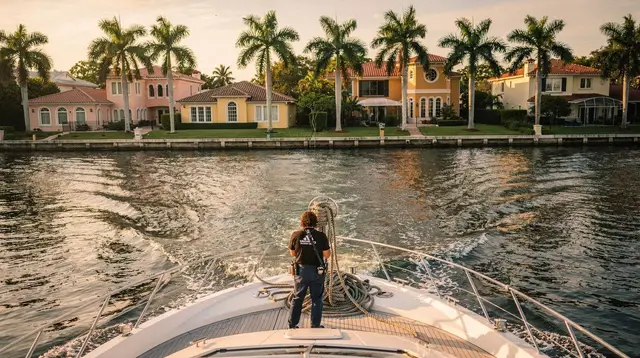
The Rickenbacker Causeway starts near Brickell and Downtown and runs about 4 miles (6.5 km) to the island, with a toll for cars (a few dollars each way, paid electronically — check current rates before driving if renting a car, since tolls are cashless and often rebilled by the rental company with an added fee). The crossing itself is part of the appeal: open bay on both sides, sailboats moored below, the Miami skyline receding in the mirror.
There’s no Metrorail or Metromover service to the island, and public bus service is limited, so most visitors arrive by car, taxi or rideshare. Cyclists and runners use the causeway’s separated path, which is popular enough on weekend mornings that it can feel more like a fitness event than a quiet ride — worth knowing if the plan is a leisurely bike day rather than dodging pelotons of road cyclists.
Parking is available at Crandon Park and at Bill Baggs Cape Florida State Park for a modest day fee, on top of whatever the causeway toll already added. None of it is expensive by Miami standards, but it does add up compared with a day spent walking South Beach for free.
Crandon Park: the working beach
Crandon Park is the island’s main public green space, a long stretch of protected beach backed by mangroves and Australian pines rather than hotel towers. The beach here reads differently from Ocean Drive’s crowd: more local families, more quiet stretches, less see-and-be-seen. Facilities include picnic areas, a marina, a golf course, and a nature centre, plus paved paths that make it as much a park for cycling and walking as for sunbathing.
Hobie Beach, a narrower strip along the causeway itself, is where much of the island’s water sports activity concentrates. Shallow, calm water and easy roadside access make it the default launch point for kayaks, paddleboards, and small sailing craft like Hobie Cats. Renting a Hobie Cat at Hobie Beach is a straightforward way to get on the water without a guide, weather permitting; conditions are usually mild enough for a first attempt.
For a guided outing rather than a solo rental, a paddle and snorkel trip out to the island’s fossilized reef combines the two activities in a few hours, with equipment and some instruction included — a reasonable option for visitors who haven’t snorkeled before and don’t want to figure out currents alone.
Bill Baggs Cape Florida State Park and the lighthouse
At the island’s southern tip, Bill Baggs Cape Florida State Park centres on the Cape Florida Lighthouse, the oldest standing structure in Miami-Dade County, first built in the early 1800s and rebuilt after an 1836 attack during the Second Seminole War. The lighthouse and its keeper’s cottage are open for tours on a set schedule (check the fiche for current times, since access is seasonal and staff-dependent), and climbing to the top gives a clear view back across the bay to Downtown’s skyline and out toward the open Atlantic.
A guided visit to the Cape Florida lighthouse covers the history in more depth than the signage alone and is worth it for anyone who wants context rather than just the climb. Around the lighthouse, the park’s beach is generally considered calmer and less crowded than Crandon Park’s, and the shaded walking trails through the surrounding hammock make for an easy hour on foot without needing a car to move between spots.
On the water: paddleboards, wing foils, jet skis
Beyond the casual rentals at Hobie Beach, several operators run more structured water activities from the island. A four-hour paddleboard rental out to Raccoon Island gives enough time to reach one of the small sandbar islands in the bay and back without rushing, useful for visitors who want half a day on the water rather than a one-hour taste. For something faster, jet ski tours around Key Biscayne and the bay run past the lighthouse and along the shoreline, typically with a guide leading the group.
Wing foiling, a newer sport that combines a handheld inflatable wing with a foil board, has also found a base here thanks to Crandon Park’s steady wind and shallow water; a wing foil rental at Crandon Park is aimed at people who already have some board sport experience rather than complete beginners, since the learning curve is steeper than paddleboarding.
Whichever water activity gets booked, exact pricing, gear specifics, and group sizes vary by season and operator — the GetYourGuide or Viator listing for each activity carries the number that matters on the day, not a figure fixed here months in advance.
Jet ski tours aren’t the only way to get further out into the bay. A dedicated jet ski and water sports guide for Key Biscayne breaks down the operators and routes in more detail than fits here, useful for anyone comparing a jet ski outing against the paddleboard and wing foil options above. For a slower, less physical way to see the same water, boat tours and yacht charters based in Miami often swing past the island and its lighthouse as part of a wider Biscayne Bay route, and a private charter can be arranged to stop at Key Biscayne specifically rather than just passing it.
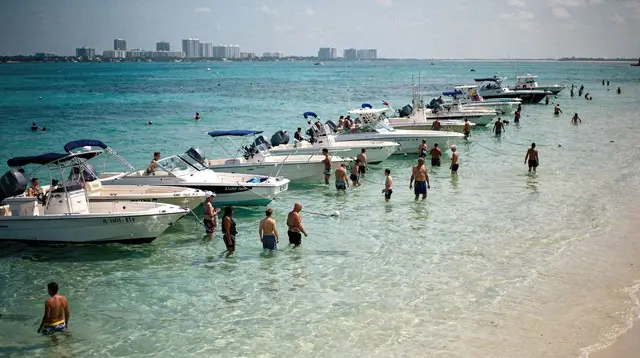
Sandbar days, where a boat anchors at a shallow patch of water in the bay for swimming and lounging rather than a fixed itinerary, are common in this stretch of water too; the general pattern is covered in the guide to sandbar days in Biscayne Bay and the Keys, and it applies just as well to the waters around Key Biscayne as further south.
Wildlife sightings around the island are a genuine possibility rather than a guarantee: manatees and dolphins both use Biscayne Bay, and boat or paddle trips out of Key Biscayne occasionally cross paths with either. The guide to dolphin and manatee watching in South Florida explains where sightings are more likely and how to behave around the animals if one turns up, since neither should be approached or fed.
Biscayne National Park, just south of the causeway
Bill Baggs Cape Florida State Park sits at Key Biscayne’s southern tip, and from there it’s a short stretch of water — not a short drive — to the northern edge of Biscayne National Park, most of which is submerged reef and mangrove rather than dry land. Visitors who want to combine the two need a boat rather than a car; the Biscayne National Park guide covers access from Homestead, which is the practical mainland gateway rather than Key Biscayne itself. It’s a different kind of day trip than anything covered above, worth knowing about but not something to squeeze into a Key Biscayne half day.
What to skip if time is short
Given the modest number of activities on the island, it’s worth being honest about what doesn’t need a special trip. Key Biscayne has no equivalent to the Art Deco Historic District’s architecture walks, no gallery scene like Wynwood, and no restaurant density approaching Little Havana’s. Visitors expecting a smaller version of South Beach’s nightlife or dining will be disappointed; that’s simply not what the island offers, and pretending otherwise oversells it.
A private vacation photo shoot with a local photographer is a niche but genuine option for visitors wanting professional photos against the lighthouse or beach backdrop — worth mentioning because it’s one of the few “extra” bookings on the island beyond water sports and the lighthouse tour itself, without stretching the destination’s actual range of things to do.
Suggested half day vs full day
| Plan | What it covers | Rough time needed |
|---|---|---|
| Half day | Drive the causeway, Crandon Park beach time, walk to the lighthouse grounds | 3–4 hours |
| Full day, active | Add a paddleboard or snorkel outing, lunch on the island, cycling on the park paths | 6–8 hours |
| Full day, relaxed | Beach morning at Crandon Park, lighthouse tour, afternoon at Hobie Beach | 6–7 hours |
None of these plans require booking more than one or two activities in advance; the beach and park are walk-in, and only the water sports rentals and lighthouse tour benefit from a reservation, especially from November to April when the island sees its busiest weekends.
Comparing Key Biscayne with South Beach
Visitors deciding between the two, or trying to fit both into a Miami Beach itinerary, should think of them as different registers rather than competing options. South Beach delivers the classic postcard Miami Beach: Ocean Drive’s Art Deco facades, Lincoln Road’s shopping, and a nightlife scene that runs late. Key Biscayne delivers open air, a working lighthouse, and water calm enough for a first paddleboard attempt. Neither replaces the other, and cramming both into one day means shortchanging both, given the causeway drive alone eats into the schedule. A more realistic itinerary treats them as separate half-day or full-day outings, ideally on different days of a longer Miami stay. For a broader look at how the wider region’s beach neighbourhoods differ, see the Miami Beach destination guide or the dedicated South Beach guide.
Fitting Key Biscayne into a longer Miami stay
For visitors still deciding how many days to give Miami overall, Key Biscayne is best treated as a half-day add-on rather than a reason to extend a trip by itself. It slots naturally into a stay based in Downtown, Brickell or South Beach, since none of those put the causeway more than a short drive away; the choice of where to stay in Miami matters more for nightlife and dining than for reaching Key Biscayne, which is roughly the same distance from most of the popular base neighbourhoods.
Families travelling with children generally find the island easier than a nightlife-heavy neighbourhood, given the calm water at Hobie Beach and the flat, paved paths through Crandon Park; the broader guide to Miami with kids covers how a stop here compares with the region’s other family-friendly options. General safety on the island is not meaningfully different from the rest of greater Miami, and the same common-sense precautions apply; the guide to whether Miami is safe for tourists covers the wider picture in more depth.
Practical notes before heading over
The causeway toll and park entrance fees are modest but real, and neither is included in any tour price, so budget for them separately from whatever’s booked through GetYourGuide or Viator. Hurricane season (June through November, peaking August to October) can affect outdoor water activities with little notice; operators generally rebook or refund weather cancellations, but it’s worth checking a tour’s cancellation policy before paying. Sun exposure on the island is intense with little shade outside the park’s hammock trails, so sunscreen, a hat and water matter more here than in a shaded neighbourhood like Coconut Grove.
Coconut Grove itself, across the bay on the mainland, makes a reasonable pairing with a Key Biscayne morning: it’s a short drive from the Rickenbacker Causeway’s mainland end, shadier than the island, and covered in full in the Coconut Grove and Coral Gables destination guide and the dedicated things to do in Coconut Grove and Coral Gables guide, for visitors who want a lunch stop with tree cover after a sunny morning on the water.
Frequently asked questions about visiting Key Biscayne
Is Key Biscayne part of Miami or Miami Beach?
Neither. Key Biscayne is its own island town, reached from Downtown Miami by the Rickenbacker Causeway. It sits south of Miami Beach across open water, not connected to it by road.
How do you get to Key Biscayne from Miami?
By car or taxi/rideshare over the Rickenbacker Causeway, which has its own toll. There’s no Metrorail or Metromover connection; a rental bike or the causeway’s separated bike path is also an option for the fitter and less time-pressed.
Is Key Biscayne worth visiting if I’m already doing South Beach?
Yes, as a change of pace rather than a duplicate. South Beach covers Ocean Drive, the Art Deco district and nightlife; Key Biscayne is the outdoor counterpart, with a quieter beach, a park built for walking and cycling, and a lighthouse to climb.
What is there to do besides the beach?
Climb the Cape Florida lighthouse, cycle or walk the park’s paved paths, paddleboard or kayak out to the sandbar area, or snorkel the fossilized reef near the island. Most of it is self-guided; the handful of bookable tours cover water sports and the lighthouse tour specifically.
Is Key Biscayne good for a half day or does it need a full day?
A half day covers the essentials: beach time, the lighthouse grounds, and a short walk or ride. A full day makes sense if adding a paddleboard, snorkel or jet ski outing, since travel time over the causeway and parking add up.
Do I need to book anything in advance?
Not for the beach or park itself, which are walk-in. Water sports rentals, guided paddle-snorkel trips and the lighthouse visit tour are worth booking ahead in high season (November to April), when demand for boats and equipment on the island rises.
Trip planning guides for Miami and the Keys
Verified deep-linked GetYourGuide tours. Book through these links and we earn a small commission at no cost to you.
GetYourGuide does not provide a product photo for this activity — the image shows the meeting point, photographed by us.